
October 6, 2018
“Projects are the means by which NASA explores space, expands scientific knowledge and performs research on behalf of the nation.” — NASA/SP-2010-3407
Scientists, engineers, mathematicians and all highly skilled people bring an “extra dose” of informational diversity—which is based on different functional, educational and industry backgrounds that constitute information and knowledge resources upon which the team draws.
Organizations often create cross-functional teams that enhance informational diversity (the effort is typically too complex for a generalist to have all the answers). Members with different expertise are chosen to achieve a common goal and are mutually accountable for the team’s success
Reasons for cross-functional teams include:
How well does this actually work?
There is also difficulty in motivating members to work together effectively:
The following is a list of the top four techniques I’ve developed over 25 years of handling project teams composed of “firm-minded” experts in the hopes of developing a project’s outcomes. (Note that I didn’t do these things at the start; after many, many failures, I started to zero in on things that work.)
1. Instill a “sense of mission” in all who work on your projects—including yourself. As the story goes, during a visit to the NASA space center in 1962, President John F. Kennedy noticed a janitor sweeping the floor. He interrupted his tour, walked over to the man and said, “Hi, my name is Jack. What do you do here?” The janitor responded: “Well, I’m helping put a man on the moon.”
The janitor got it. He understood the vision and mission of the project—and that he played a role. Every day when the janitor came to work, he knew what he was doing counted toward a larger goal—the product of the project.
I’ve always felt the project manager must first understand the mission of their project and do their best to instill in each project team member what the janitor knew instinctively. When everyone understands the mission and vision of where they are trying to get to with all the efforts they are expending, it all becomes easier—it all makes sense. Things that don’t add to the mission don’t make sense.
Here are a few test questions to ask:
“That business purpose and business mission are so rarely given adequate thought is perhaps the most important cause of business frustration and failure.” — Peter Drucker, 1973
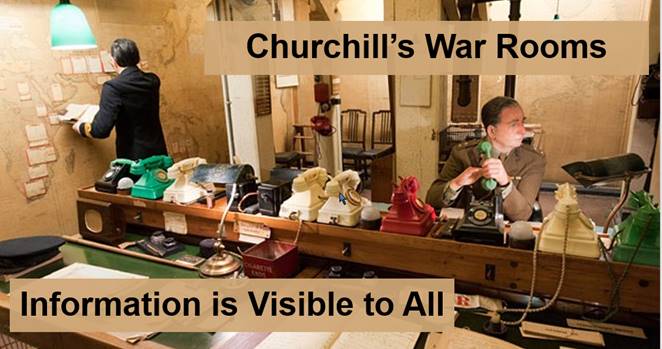
2. Establish a communications framework that works. Good communications among the project team and stakeholders are, simply put, vital to the success of a project. One in five projects is unsuccessful due to ineffective communications (2013 PMI Pulse of the Profession®: The High Cost of Low Performance in-depth report). This is not new information—it’s known that William Churchill used a very good communication technique during World War II. Project information posted on walls for all to see has since been called a “war room.”
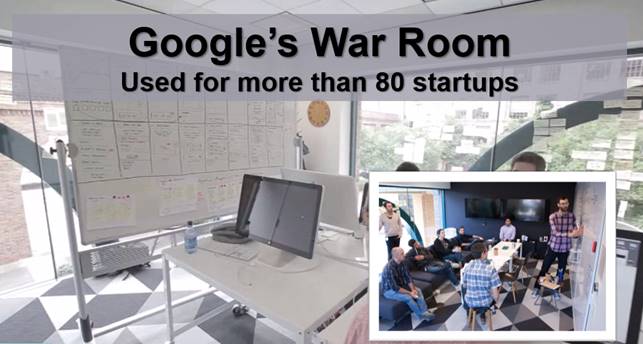
I have personally used war rooms for complex projects with great success. While this is best if everyone is co-located, it can be remotely broadcast and discussed over various communications methods to ensure that everyone is in-sync. I’ve used it with several overseas locations on the same project at once. There are also computer-based methods that accomplish the same thing. The purpose is simple—to aid in communication to the entire team.
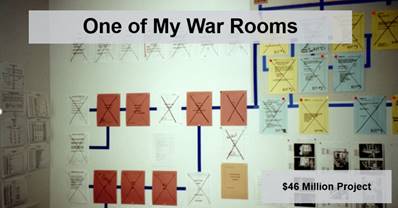
Meetings: All status meetings were held in the control room, where we were all surrounded by the status of each area and the entire project.
Control room rules: As a further assist in communications, we would jointly create rules for our meetings (develop your own!). This sounds corny, but the rules worked very well—and we would delight in calling out a rule violation during a meeting:
Control room benefits:

3. Focus on measures that matter. It’s the “time versus information dilemma”:
We need to focus on leading versus lagging information. Not “We just got in trouble,” but “We’re about to get in trouble.” With the latter situation, you have a chance to deal with it.
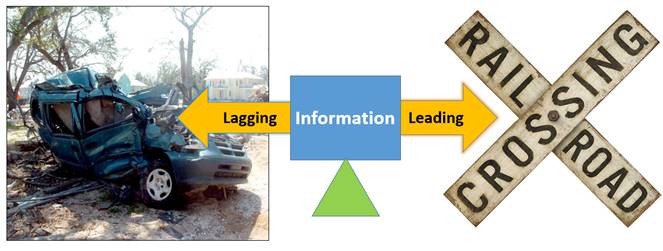
The railroad crossing sign above is leading information—it allows the driver to slow down, stop, look and listen. Without it, the driver may plunge directly across the tracks and find out later (too late?) that there was a train on the tracks (lagging information!). Project managers must spend time focusing on leading information. “If we don’t change something, we’re going to be behind schedule” is more valuable than “30 days ago, we fell behind schedule” (lagging information).
Lagging indicators:
Leading indicators:
4. Use peer and independent reviews. In standing review boards, a group of independent experts assess and evaluate project activities, advise projects and report their evaluations to the responsible organizations. They are responsible for conducting independent reviews of a project and providing objective, expert judgments. I’ve seen experts brought in from all over the world based upon the stage the project is in and the expert’s area of specialty. While some were often familiar faces, many were not. They all took their assignments very seriously.
The reviews were big events—and the project manager was in charge of arranging all status reports, presentation materials, discussion groups…whatever was needed to present and communicate the status of the project and future plans.
This could get to be quite a “charged” atmosphere, but the idea was not to punish the project manager or the project team. The idea was to help find areas of weakness in the project and help wherever possible. It was certainly intimidating at first. A hundred or so experts in every area listening closely to your concepts, plans and conclusions can be very scary. But that wasn’t the point! The point was to help. The point was that everyone wanted the project to succeed and we would all, as a big team, “pull out all the stops” to make sure it did succeed.
It was also a wonderful learning environment. It had captive experts reviewing your plans and ideas each month, with constructive feedback documented and given to the PM (you!) at the end of the meeting. It was intense project management training. The whole thing was about making sure you did the right things in the right order (and that you didn’t forget something).