
 Mentoring without burning out


Guessing is not a strategy: How to build decision velocity with AI and real-time data
June 10, 2026 | Live Webinar

Who really owns the project budget? Clarifying financial accountability
How to learn AI the sensible way
Making sense of project cost reports
How real PM mentoring actually works
The Accidental Product Manager: What project managers need to know
accounting, agile, ai, appraisals, Artificial Intelligence, audit, Backlog, Benchmarking, benefits, Benefits Management, Benefits Realization, Bias, books, budget, Business Case, business case, business case, Career Development, Career Development, carnival, case study, Change Management, checklist, collaboration tools, communication, Communications Management, competition, complex projects, Conferences, config management, consultancy, contingency, contracts, corporate finance, corporate finance, cost, Cost Management, cost management, credit crunch, CRM, data, data security, debate, Decision Making, delegating, digite, earned value, Education, Energy and Utilities, Estimating, events, FAQ, financial management, financial management, forecasting, future, GDPR, general, Goals, Governance, green, Information Technology, Innovation, insurance, interviews, it, Knowledge Management, Leadership, Lessons Learned, measuring performance, Mentoring, merger, methods, metrics, multiple projects, negotiating, Networking, news, Olympics, organization, Organizational Culture, outsourcing, personal finance, Planning, pmi, PMO, PMO, Portfolio Management, portfolio management, presentations, privacy policy, process, procurement, product management, productivity, Program Management, project closure, project data, project delivery, Project Success, project testing, prototyping, qualifications, Quality, quality, Quarterly Review, records, recruitment, reports, requirements, research, resilience, Resource Management, resources, risk, Risk Management, ROI, salaries, Schedule Management, Scheduling, scope, Scope Management, security, small projects, Social Impact, social impact, social media, software, software, software, Stakeholder Management, stakeholders, Strategy, success factors, supplier management, team, Teams, testing, testing, timesheets, tips, training, transparency, trends, value management, vendors, video, virtual teams, workflow


If you work in a matrix environment, you’ve probably had this thought: who really owns the budget? I’ve certainly had situations in past roles where I’ve thought I could make decisions and then found out these were overruled, or held back from making decisions only to find someone else thought I was empowered to do so.  Budget ownership confusion is common, especially in matrix environments, and leads to weak financial control. It sometimes happens because people don’t know who has final sign off, and sometimes because people don’t want to take responsibility for fear of getting it wrong or overstepping. However, if there are assumptions about budget accountability but these aren’t made explicit, then how is anyone supposed to know what’s going on? It ultimately doesn’t matter where accountability sits, as long as the person who is accountable knows it is them, and so does everyone else. Typical budget ownership modelsTypical budget ownership models, in my experience, fall into three buckets: Sponsor-owned: Where all budget decisions run through the exec sponsor. PM-managed: Where you get given a pot of funding and are expected to manage it. Shared accountability: The hardest type, where there is a mix of what needs to be approved by the sponsor and what the PM can sign off. Different organisations adopt different models. In some cases, the sponsor owns the budget and the project manager runs day-to-day tracking. In others, the project manager has delegated authority within agreed tolerances. And it can differ between projects as well, so just because you used one model on your last project doesn’t mean it will be the same this time round. Risks of unclear ownershipWhen you don’t know who owns the project budget, you risk slow decisions and surprise overruns, neither of which are great for the project. When changes are needed, you should know who to go to for approval for the change, if there is a cost aspect to it. And definitely avoid surprises – I’ve never met a stakeholder who is happy to be kept in the dark about financial pressures! Clarifying financial decisionsWe can help the situation by clarifying financial decision rights early. Who approves changes that affect cost? Who decides how contingency is used? Who is accountable for explaining variances to senior stakeholders? These conversations can feel awkward (especially if the answer is, “you, of course!”), but they prevent much bigger issues later. And clear ownership doesn’t mean working without help. Good financial governance relies on collaboration between the project team, sponsor, and finance colleagues aligned to the project, maybe the vendor as well. When everyone understands their role, financial conversations become more straightforward. At least you know who to ask! Clarity on budget ownership reduces friction and creates space for better decisions, and it’s not that difficult to sort out. As part of project governance, these are the kinds of conversations to have early on, to make sure that you know who’s doing what, and in particular, what falls to you. Then you can plan your time appropriately so you’ve got time to focus on the financial management of the project in the right way. How does it work for your projects? Let us know in the comments whether you’re “in charge” of the budget or whether the accountability sits elsewhere. I’m sure there will be lots of variations! |
AI was the talk of last year, and this year seems like it’s still up there in terms of things we need to know, learn about and absorb into how we do our jobs as project professionals. The AI pressure feels relentless – there’s so much to learn. And yet we are picking it up as we go along – familiarity with AI is rising because it has to.  I talk to project managers who are worried about falling behind. Learning new tech shouldn’t feel like a second job. However, gone are the days when you could go on a 3-day classroom Microsoft Project course and feel like you knew what to do. These days, tech in the cloud is updated regularly and new features come out all the time. And, of course, AI is no different – if anything, the rate of development and adoption feels like it’s significantly faster. What do we actually need to know about AI?The good news is that you don’t have to know it all. It’s worth focusing your learning on where AI fits into delivery work and where it doesn’t. You don’t need to code anything, in fact, even experienced coders are coding less these days as AI responds to natural language prompts as well as it does to code inputs. Low-effort learning areasLet’s say that you do want to put some effort in. You should start with PMI’s courses in AI, which are great, tool-agnostic learning resources which will help you build your vocabulary and the basics. Then think about where you could use the tools you already have access to – likely a generative AI office ‘companion’ type chat tool. Then think about where you could advance your use of AI for specific use cases like decision support, scenario exploration, drafting communications or identifying risks. Boundaries and risks to be aware ofLearning all the cool stuff you can do with AI is one thing, but you also have to balance that with boundaries and risks. Think about how bias and overconfidence might show up in your data or processes. What might data sensitivity look like for your data sets? Is there a risk of over-automation, and what does that mean for the humans in the process? A sustainable learning approachThink about learning in small loops, on a just-in-time basis so you can apply knowledge immediately. Then it’s more likely to stick and also to feel worthwhile, not like you’ve just spent time watching a video on AI theory knowing you can’t put it into practice. Let the experts in the business focus on the larger, complex projects – you’ll be brought in to support with project management best practice as and when you are needed, so ignore the pressure of becoming a subject matter expert in AI if it doesn’t feel like a natural fit for you. You’ll learn better through doing, so think about how you can develop AI literacy over AI mastery. You want to be competent in the tools that you have so you can make the best use of them, but there’s no need to be at the cutting edge, trying every product in your spare time. Organisations are typically quite slow to change, so you’ve got time and the fact that you’re even asking yourself the question about how best to learn AI puts you ahead of some of your colleagues! |
| Argh, cost reports have landed in my inbox and now I have to look at them… Do you feel like that? Project accountants are sending out end of month financial reports for us to reconcile or review and somehow cost reports feel harder than schedules. So let’s whisper it: if you receive financial reports you don’t fully understand, you are not alone!  The numbers might look familiar, but the relationships between them are not always clear. This can make financial conversations uncomfortable and reactive – not a good look when you’re sharing the budget position in Steering. Definitions project managers should be confident usingWe should be able to confidently understand and use these terms, as project managers: Actuals Actuals are what has already been spent and recorded. This includes money that has been spent outside the organisation e.g. to suppliers, and any internal costs you have to take like resource costs for colleagues working on the project. Forecast Forecasts are estimates of what the project is expected to cost in total, or in your organisation it might mean what is left to spend. In a view of a year, you’ll have actuals for the months that have closed and forecasts for predicted spend in the months to come. Commitments Commitments sit in between: money that has been contractually committed but not yet spent. These are normally reflected in purchase orders or statements of work, where you’ve told the vendor it’s OK to go ahead but they haven’t invoiced yet, or maybe even done the work yet. However, you can’t look at these figures are viewed in isolation. A common misunderstanding is assuming that unspent money is still available – it’s not because some of that will already be committed to suppliers (through POs or SOWs) or in internal resource costs (for example, if you have fixed term contractors on the job). In reality, committed costs may already consume much of the remaining budget – yikes. That doesn’t give you much to play with if you need to move things around. Another issue is focusing only on current-period actuals, rather than cumulative spend and future obligations. The current month might be looking great, but if all the other months are overspent, that’s not a good big picture. Financial fluency is a core skill for project managers, but I find that we don’t get taught it. The trouble is, you can understand it in theory and read the relevant sections of the PMBOK® Guide, but in practice, your own country-specific accounting rules and organisation-specific processes mean that it’s a bit different wherever you work. You can start building confidence with cost reports starts with asking basic questions. What is included in actuals this month? What commitments are expected to convert into spend next month? What assumptions underpin the forecast? And are these still what we believe? Financial fluency doesn’t require accounting expertise (thank goodness). You can get there with curiosity, a willingness to ask questions, and regular engagement with the numbers. Book a monthly chat with your project finance person. The more comfortable you get with what the cost reports, and all the other financial reports, are telling you, the easier you will find it to manage your project budgets and answer questions about the money side. |
| Does your organisation have a mentoring scheme? Some companies have schemes where they match individuals to mentors. Others publish mentoring ‘packs’ or training information so individuals can work it out between themselves, but within the guidance and expectations of the Learning & Development Team. The trouble with formal schemes – in my view – is that they make it hard to sustain meaningful mentoring relationships, and it’s not because of motivation, it’s part of the design. Formal mentoring can stallIf your company has a structured scheme, you might find it takes ages to be matched with someone, because normally there are more people wanting a mentor than there are mentors to go round. The mentor matching process is structured and that puts a big burden on the HR team to do the matching. Plus, you might end up with someone with whom you don’t ‘click’. In a formal scheme, it feels like there is pressure to ‘add value’ and show that to be the case. Mentoring in practiceWhat mentoring looks like in practice is short, focused conversations. It’s those calls when a colleague rings you and asks for a second opinion. It’s context-specific advice, often between peers. It’s you sharing some insight with your manager (reverse mentoring) and informal check ins when you know a colleague has had a hard day. As project managers, we mentor all the time, probably without thinking much about it. Any time you’ve said, “I know where that policy is, let me show you,” or, “Here’s how to raise that request, I know because I did it last week,” that’s mentoring.
|
I don’t know about you, but it sometimes feels as if me, and my project management colleagues, are already doing some product work. If you’re a project manager but have ended up pigeonholed in a particular software environment, or you’re attached to an agile team or unit, then you might find that a lot of your work centres around one product (or a few).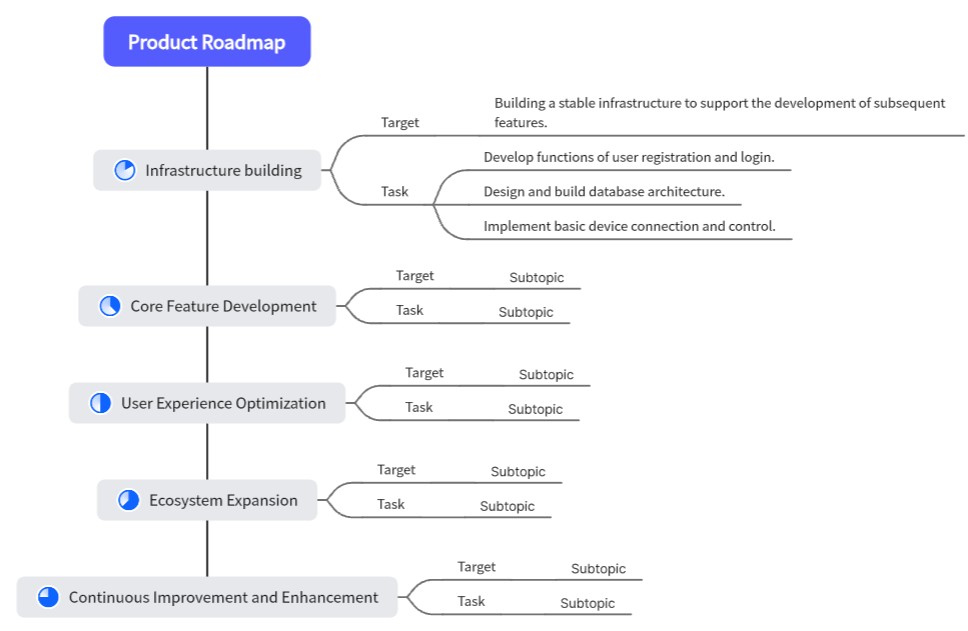 hat can feel quite unsettling, and several times on mentoring calls project manager have asked me if it’s normal that they are doing work that could feasibly be considered as BAU. I think, the answer is yes. The job title might lag behind reality, but in practice, there could be a bit of merging of roles if that is what the company needs. Whether that makes it a ‘proper’ project management job? The jury is still out on that one. hat can feel quite unsettling, and several times on mentoring calls project manager have asked me if it’s normal that they are doing work that could feasibly be considered as BAU. I think, the answer is yes. The job title might lag behind reality, but in practice, there could be a bit of merging of roles if that is what the company needs. Whether that makes it a ‘proper’ project management job? The jury is still out on that one. Project managers can drift into product roles because they are on long-life teams with continuous delivery models. There’s a focus on outcomes over outputs, so you’re naturally thinking in business terms, value and benefits. There are iterative deliveries and the work never seems to end. All these factors feed into making the job feel like it’s a long-term product delivery role, instead of a traditional ‘work on a project, close it and move to the next’ type role. And that might suit some people who want to build subject matter expertise, and who enjoy working with the same team and technology. There’s certainly nothing to worry about if this is how your project management role has ended up (as long as that fits with your career plans). We all know that a project is defined by a distinct time horizon. It will have measures of success and relationship to customers and users (as a product role would have). Projects have funding and prioritisation, and product roles will need to work within those parameters as well. If you’re keen on product management, then that gentle shift could be a great move for you. There are a lot of project management skills that translate well into a Product Owner role. Like stakeholder facilitation, risk and dependency management, structured decision-making and communication under uncertainty – all these things will put you in a good position to be able to make smart product-led choices, whether it is formally part of your role or not. If you do want to make the shift more permanent, it would help to develop some skills in value framing for those stakeholder conversations, being able to work with a hypothesis and being comfortable testing things out, and definitely living with ambiguity. You’ll also need to be comfortable feeling like you can put together a product roadmap, like the (very simple and incomplete) one I've shared above as an example. In my experience, project managers tend to be a little bit more comfortable living with control, and you might find a product role naturally has less of that, but it depends. Product thinking can make us valuable as project managers, even if you are working alongside a Product Owner or team, because it helps us empathise with stakeholders. It’s an extension of what you do and you can adopt that product-based mindset without changing your job. And then, if you want to shift roles, it could be quite a straightforward shift. What do you think? Does your project management role include elements of product-based work, especially where there isn’t a Product Owner in post yet? Let me know in the comments! |
|
Can't this wait till I'm old? Can't I live while I'm young? - Phish |