

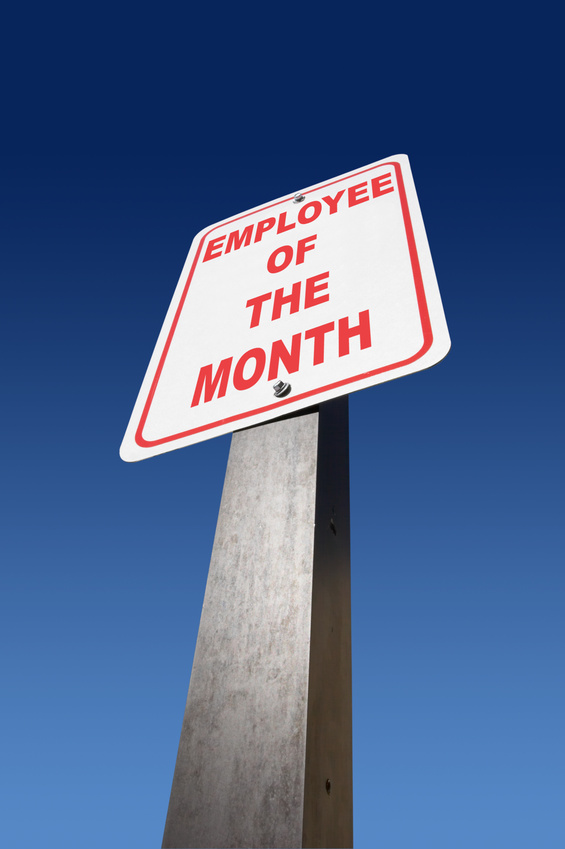
 It’s January. Budgets are stretched, it’s still a long time until pay day and if you haven’t given up on your New Year’s resolutions soon, you know it won’t be long until you do. How do you motivate the project team to give their best through the long, gloomy winter days (at least in this hemisphere) when you don’t feel very cheerful yourself?
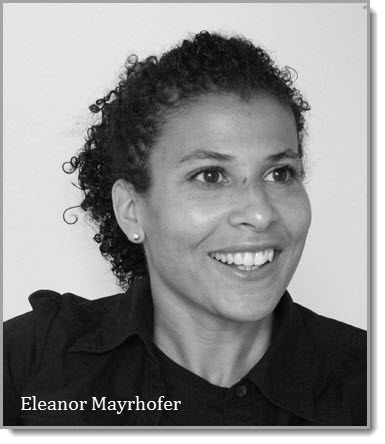 Today I'm interviewing Eleanor Mayrhofer, who has built a project management methodology specifically for small, indie businesses.
  Imposter Syndrome is not a medical condition. It is a convenient term for the feeling you have when you believe that you do not really know what you are doing. You attend a meeting where the discussion goes over your head and you suddenly feel like an idiot. You believe that you are in completely the wrong job and the wrong company and you are in no way worthy of holding your current position. Surely it is only a matter of time before someone notices that you are not up to the job and fires you?
 Value Management: Translating Aspirations into Performance is a new book by Roger H. Davies and Adam J. Davies (Gower, 2011). It’s heavy going, but if you are into getting the best value out of the change programmes you are delivering, then it makes useful reading.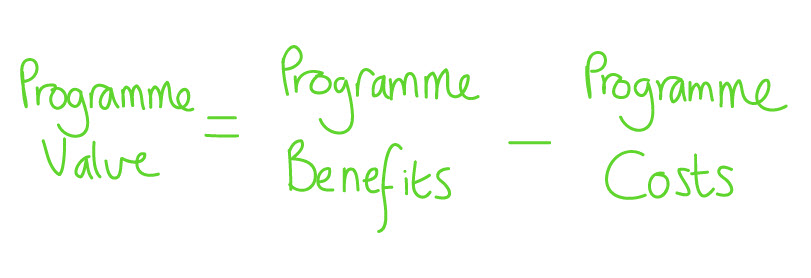



Guessing is not a strategy: How to build decision velocity with AI and real-time data
June 10, 2026 | Live Webinar

Who really owns the project budget? Clarifying financial accountability
How to learn AI the sensible way
Making sense of project cost reports
How real PM mentoring actually works
The Accidental Product Manager: What project managers need to know
accounting, agile, ai, appraisals, Artificial Intelligence, audit, Backlog, Benchmarking, benefits, Benefits Management, Benefits Realization, Bias, books, budget, Business Case, business case, business case, Career Development, Career Development, carnival, case study, Change Management, checklist, collaboration tools, communication, Communications Management, competition, complex projects, Conferences, config management, consultancy, contingency, contracts, corporate finance, corporate finance, cost, Cost Management, cost management, credit crunch, CRM, data, data security, debate, Decision Making, delegating, digite, earned value, Education, Energy and Utilities, Estimating, events, FAQ, financial management, financial management, forecasting, future, GDPR, general, Goals, Governance, green, Information Technology, Innovation, insurance, interviews, it, Knowledge Management, Leadership, Lessons Learned, measuring performance, Mentoring, merger, methods, metrics, multiple projects, negotiating, Networking, news, Olympics, organization, Organizational Culture, outsourcing, personal finance, Planning, pmi, PMO, PMO, Portfolio Management, portfolio management, presentations, privacy policy, process, procurement, product management, productivity, Program Management, project closure, project data, project delivery, Project Success, project testing, prototyping, qualifications, Quality, quality, Quarterly Review, records, recruitment, reports, requirements, research, resilience, Resource Management, resources, risk, Risk Management, ROI, salaries, Schedule Management, Scheduling, scope, Scope Management, security, small projects, Social Impact, social impact, social media, software, software, software, Stakeholder Management, stakeholders, Strategy, success factors, supplier management, team, Teams, testing, testing, timesheets, tips, training, transparency, trends, value management, vendors, video, virtual teams, workflow


|
In this video I recap the discussion at the APM Round Table debate on project management in the collaborative age, specifically the ideas we had about the future of project management software. If you would rather read, here is the transcript: My name is Elizabeth Harrin and I’m from The Gantthead Blog, The Money Files. I’ve spent the morning with a group of people discussing collaboration tools and the future of project management technology which was a really interesting discussion and there were few points that came out that I thought I wanted to share with you. Good collaboration tools can basically save project managers money because they can increase efficiency and they can reduce the need to travel to meetings. So there’s a lot to be said for making sure that you are up to date with the best technology that you can possibly have and that you know how to use it effectively. And those were some of the things that came out of the discussion today. We had a representative there from the software provider Projectplace called Fredrik and he raised the issue around the future of technology in this particular type of project management tool being collaborative planning. So the way the tools are moving, it looks as if people are putting out functionality that allows project managers and their teams and their other project customers and stakeholders to collaborate effectively on the plan and make sure that is kept up to date at any one time which gives your customers more engagement in the schedule which has to be a good thing. He also talked about mobility and the fact that project managers now are expected to travel to work and that technology needs to evolve more so than it already has to do with being able to be used on mobile phones, on iPads, tablets, touchscreen PCs and things like that. We had a project manager there who was called Anne and she talked about the vision that she had for the future around interconnectivity between tools. She raised the point that project managers often have several different tools that they have to update especially if they’re working with social media tools both in their personal lives and in their professional lives. It ends up with a number of different logins. Interconnectivity allows software and products to talk to each other. So hopefully, tools in the future will become a lot more open in the way that they share information between each other so that we can start seeing portal style tools which consolidate feeds of information from various different places and again that should help us be more efficient. There was a project manager there from Transport for London and he was talking about the challenges of being in a construction environment and not being able to access the information that you want to be able to run your project while you’re on a building site or in his case, potentially underground. And he said that real-time communications in construction is a really big challenge and the introduction of 4G next year will be a step in the right direction and as long as the software that project managers are using can tap into that. It helps network capability, the requirement on the bandwidth is lower then information can move backwards and forwards in real time and that’s a good thing as well. We talked about the perceived barrier to entry for a lot of project management software products and potentially stakeholders see it as: “Oh that’s project management tool. That’s very complicated to use,” and really that isn’t the case. So we’ve got to find a way to get over this perceived barrier to entry and the fact that people don’t want to use the project management software because it seems too difficult. So maybe there’s something there in the future that software vendors can do to make it seem easier to use or to make software more intuitive so it can be used by a greater number of people. That creates another problem which is getting the information to the right people at the right time and you want one product that serves all of your needs and as a professional project manager, you would want that to be a tool that will do scheduling, risk management, budget handling potentially, time sheets, all kinds of different bits of information that you require to manage the project effectively. If you are a stakeholder or if you’re the project sponsor, you want to see a dashboard potentially of the major risks: ‘Are we on track; are we not on track’ for the budget and what are we doing with the scheduling: ‘Are our main tasks on time?’ which is very high level, dashboard information which is not useful for a project manager at that level. Then you’ll have project team members who perhaps doesn’t understand a lot about the project methodology but know that they have to do certain tasks at certain times and so they will want to see the information related to them in a different way. So tools have got to be able to allow different stakeholder groups to carry out all of these different functions. We also talked a little bit about biometrics because currently, tools require you to log in and they trust that you are who you say you are and this is particularly an issue with social media where you can create a profile on Facebook or Twitter and pretend to be whoever you want. Biometrics, which is if you log in with an eye scan or with a fingerprint, will then enable technology to determine that you are who you say you are. That sounded like an interesting way forward for software as well so that you would automatically be able to log in to different sets of tools with fingerprints or eye scanning. Apparently, that technology is already out there. It’s used on some corporate laptops, used on some tablet PCs and obviously it is used in the security industry. So it’s there. It’s just not being adequately used within the project management software arena. So we’ve spent the morning really looking at collaboration and how technology can help us engage with our project customers more effectively. As a result of that, we thought about ways where the technology can evolve in the future and how that would help us be more effective to save more money, be more collaborative and get better engagement from the people that we are working with. So I think a lot of ideas that came out of that and hopefully the software vendors who were there will look at ways of educating the project managers and their PMOs in those particular bits of functionality and perhaps develop some of that functionality that we’re looking for. |
|
The main challenge (complaint?) I hear from project managers about motivating their team members is that they have no authority to give financial reward. Project managers are not line managers. They have no control over salary and they don’t have the ability to authorise overtime payments, let alone bonuses. And we all know that money is a motivating factor, isn’t it? Well, actually it’s not that much of a motivating factor as you’d think. Tom Kendrick writes about the work of Frederick Herzberg in his new book Results without Authority. You may have heard of Herzberg before – he’s the one who came up with the six motivating factors: achievement, recognition, the work itself, responsibility, advancement and growth. You may also have heard of the ‘hygiene factors’ – the things that Herzberg considers pre-requisites for happy workers. Salary falls into this bracket, along with topics like corporate policy and working conditions. “If the hygiene factors seem okay, people mostly ignore them,” writes Kendrick. “However, when workers view these aspects of their jobs as inadequate, especially when compared with other available job opportunities, they are grump and uncooperative. Sooner or later, they vote with their feet and leave.” Hygiene factors may be largely out of your control: you can’t set company policy or spruce up the office so it’s a nicer place to work. But if those are all okay, they won’t provide a problem for your team. So forget about the hygiene factors. Think about those motivating factors instead. Achievement, recognition, the work itself, responsibility, advancement and growth. You can provide those for your project team, can’t you? Achievement: create an environment where people can complete tasks. Don’t set anyone up to fail. Help team members by providing what they need to get the job done. Recognition: another easy one! Say thank you. Put a note in your diary to thank someone weekly. Tap into corporate recognition schemes or local awards. Give credit in your status reports or presentations. The work: make sure that the team members know why they are working on that particular project. Make the work meaningful by ensuring they understand the value of what they are doing and how it contributes to the organisation’s goals. Responsibility: delegate. And don’t delegate everything to your right-hand man (or woman). Find a way to give responsibility for tasks to everyone in the team, so everyone feels accountable for their section of the project. Advancement: this is a bit trickier. You may not be in a position to promote someone, but you can help them gain the skills they need to advance in their career. You could also provide direct feedback to their line manager to support their promotion or advancement. If the team member is really stuck for career prospects at your company, you can help them build their CV or resume and support them in their quest for a job outside your organisation. Growth: everyone should get something out of the project on a personal level. Is the team learning something new? Building new skills? Trying out new technology? Find ways to highlight how the project is providing them with opportunities to improve and grow in their careers. And the best thing about all this? It’s free! You don’t have to spend any money on motivating people if you understand how motivation works and you take the time to understand what motivates your team members. How do you motivate your team? |
|
Eleanor, how did you come up with the idea of the toolkit? My last role at my corporate job was on the methodology team, developing how-to guides and templates for the company’s global creative practice. Many of these templates had to be used in conjunction with or integrated with templates for enterprise level technology implementation projects. By necessity some of the tools like the WBS, estimation and scope matrices were complex, but the concepts behind them were simple. I figured that a bare-bones, less-complex set of tools for people doing creative work or running very small businesses would be helpful. You say in the toolkit that you learned a lot from working for The Man. What was the most important project management lesson The Man taught you? Scope! Everything comes back to properly defining scope and then managing it consistently (and sometimes ruthlessly!). It seems to me whether on large scale IT projects or a small business making crochet patterns, delivery issues can almost always be traced back to problems in scope definition and management. The design of STP is beautiful. Thank you! Did you enjoy putting your web and print design skills to good use on this project? Why was that important? I did very much. It was important to create content that was in a visual language that my target audience would understand. Project management is a very analytical, left-brained and mechanistic subject, but I heartily believe that it is something that right-brained creative people can not only benefit from but can easily grasp and excel at. A large part of the battle is just presenting it right. I still vividly remember how intimated I was by Excel, Gantt charts and the like when I only did graphic design. One look at this type of documentation sends all kind of symbolic messages to the creative brain such as: Math! Rigidity! Rules! Mechanism! Constraints! All of this creates an immediate instinctive aversion to the content. However if you can present the same content in a compelling visual way, defences go down and the concepts can be absorbed. Witness the popularity that beautifully designed informational graphics are getting. When analytical information is beautifully presented it can be quite sexy. How do you feel good project management helps small businesses be more effective? Small business owners tend to wear multiple hats and have to carry out more than one role. This can cause a lot of overwhelm which good project management can alleviate. In my own business working with defining scope and converting it into tracks (marketing, continuous improvement, product development, operations, etc.) really has helped me get realistic about what I can accomplish as well as get focused on certain projects. In some ways it’s not so much about finishing on time and on budget, since you are your own client, but rather structuring all of the work, projects and activities that are part of running a small business. Reusable templates can help with structuring the work, and you provide these in the toolkit. They must save companies a lot of time, and, if you are working for yourself, time is money. You’d be surprised at how many non-indie businesses don’t have a suite of templates. How much time do you think they saved you when you were setting up your print and design company em.papers? It’s hard to know because by the time I had started e.m.papers planning was second nature and I just re-purposed templates that I had from my old days on the job. It was only after talking to crafters and folks with creative businesses that I realized that defining scope, estimating work and doing high, mid and low level planning wasn’t ‘normal’for most indie businesses. I think it’s fair to say, though, that being able to grab some templates and just run with them probably saved me at least 6 months of churn. Wow, that's a lot of time! You no doubt learned a lot along the way so what is your top tip for people implementing project management and time management practices in their companies? To do less better. Everyone –including myself –is usually too ambitious about what can realistically be accomplished. Overly aggressive scope and planning will only lead to discouragement. It’s all about setting achievable goals and projects, then executing well against them. Thanks, Eleanor! You can download the Steal This Process project and time management kit from Eleanor's website, here. |
|
In reality, lots of people feel that they don't measure up. I’ve spoken to men and women who have said they occasionally (or regularly) feel like a fraud at work. At one conference I spoke at earlier this year, when I asked if anyone had ever felt like they didn’t really know what they were doing in their job, nearly every hand in the room went up. Lots of people feel like this, but we don’t talk about it much. Why is that? When you take on something new – a new project, a new responsibility – you might be surrounded with people who are subject matter experts or who have been in a similar role as yours for years. It feels as if they know everything, and you don't know anything at all. Who wants to confess that they don’t feel they fit in when everyone around you looks like they have always belonged here? That's how Imposter Syndrome manifests itself: it undermines your self-confidence. It can hit anyone, at any time. And the truth is that nearly everyone feels like this at some point – some people are just better at hiding it than others! Ring any bells? If it does, my new ebook could help. Overcoming Imposter Syndrome: Ten Strategies to Stop Feeling Like a Fraud at Workdiscusses how you can feel more confident at work. It explains what Imposter Syndrome is, why we feel like we aren’t measuring up, and shares practical strategies that have been proven to work addressing the feelings of Imposter Syndrome. You can get your copy at www.OvercomingImposterSyndrome.com or on Amazon Kindle. May 2012 be the year that you feel better about your abilities at work! |
|
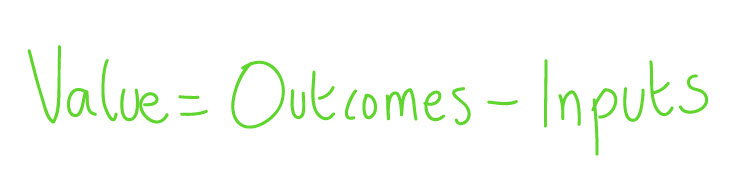
There is a fair amount of theory, but there are techniques in here that you can apply to your programmes straight away. I’d say that it is aimed at people in a pure programme management, portfolio office or senior executive role, as there is not much here that project managers will be able to put into practice without senior support. Defining valueThe authors define value as:
Or, to describe it less financially:
I would argue that value means different things to different people, but I understand that you need a common ground on which to base the rest of the book. Asking the right questionsThe book starts with a really nice feature that I’ve never seen before: executive questions. Here’s an example: Q: How does Value Management address the challenge of delivering greater value from change programmes? A: Value Management provides the means to deliver more benefit for less cost and risk. Value Management targets, times and aligns initiatives to maximise overall value. This is achieved by linking programmes explicitly to attributable benefits. This requires precise quantification of cause and effect relationships between programme deliverables, the drivers of business performance and consequential stakeholder benefits. Reference: See Chapter 7 (Programming Value) and Chapter 8 (Aligning Value) This is a neat way of explaining to people picking up the book the kind of questions that will be answered by reading it, and forms a kind of annotated table of contents so you can flick to the section that most interests you first. Is it a good read?Value Management is not an easy read, but perhaps I’m just not in a role where I can act effectively on the information in here. There is also a good glossary and lots and lots of graphs, figures and tables, so the authors make it as easy as possible to understand the concepts discussed. They also draw on real life examples and their own anecdotes, including examples from the movies, so they have tried to make the theory as accessible as possible. One of the authors was obviously very taken with neuro-linguistic programming (NLP) and there are a number of references to how powerful this can be. The authors write: “The ability most relelvant to Value Management is to produce radical shifts in performance by re-programming limiting perceptions and ... enable clients to release latent potential through change.” They call this a value breakthrough, but this was one of the weaker points of the book for me. I’m sure you could achieve similar results with cultural change without having to ‘NLP’ your entire organisation. If you are looking to drive savings and ensure that your change programmes and portfolio of projects delivers the best possible value for your company – and you work in an organisation with a high level of maturity when it comes to PMO practices and project thinking – then you could get a lot from this book. If your company doesn’t have a mature approach to programme management, you could struggle to get any of this implemented, but at least understanding the concepts will help you assess which are likely to be the best programmes for your business, and how to get the last drop of value out of them. |
|
"I'm glad I did it, partly because it was worth it, but mostly because I shall never have to do it again." - Mark Twain |