

 Over the past months we have looked at payback period, internal rate of return, benefit cost ration and net present value. Today I want to introduce two other financial metrics.
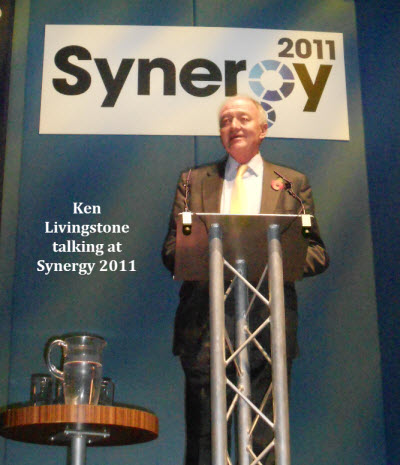 Ken Livingstone, former Mayor of London, spoke at Synergy 2011 last month in London for International Project Management Day.
 Welcome to the October/November 2011 edition of the Carnival of Project Management, hosted this time here at Gantthead.
 Malcolm Gladwell, author of Blink and Outliers, was the keynote speaker at the PMI Global Congress North America in Dallas last month. He spoke about the paradox of successful cultures. “They’re followers and borrowers, not leaders and inventors,” he said. In other words, our culture puts a premium on new things but actually in organisational cultures, new isn’t the best thing. There is value to be had in letting someone else try out the ideas first and then you adapting and blending them to produce something of real value. In short, you don’t need a lot of money and a huge research team to be a business success story.


Guessing is not a strategy: How to build decision velocity with AI and real-time data
June 10, 2026 | Live Webinar

Who really owns the project budget? Clarifying financial accountability
How to learn AI the sensible way
Making sense of project cost reports
How real PM mentoring actually works
The Accidental Product Manager: What project managers need to know
accounting, agile, ai, appraisals, Artificial Intelligence, audit, Backlog, Benchmarking, benefits, Benefits Management, Benefits Realization, Bias, books, budget, Business Case, business case, business case, Career Development, Career Development, carnival, case study, Change Management, checklist, collaboration tools, communication, Communications Management, competition, complex projects, Conferences, config management, consultancy, contingency, contracts, corporate finance, corporate finance, cost, Cost Management, cost management, credit crunch, CRM, data, data security, debate, Decision Making, delegating, digite, earned value, Education, Energy and Utilities, Estimating, events, FAQ, financial management, financial management, forecasting, future, GDPR, general, Goals, Governance, green, Information Technology, Innovation, insurance, interviews, it, Knowledge Management, Leadership, Lessons Learned, measuring performance, Mentoring, merger, methods, metrics, multiple projects, negotiating, Networking, news, Olympics, organization, Organizational Culture, outsourcing, personal finance, Planning, pmi, PMO, PMO, Portfolio Management, portfolio management, presentations, privacy policy, process, procurement, product management, productivity, Program Management, project closure, project data, project delivery, Project Success, project testing, prototyping, qualifications, Quality, quality, Quarterly Review, records, recruitment, reports, requirements, research, resilience, Resource Management, resources, risk, Risk Management, ROI, salaries, Schedule Management, Scheduling, scope, Scope Management, security, small projects, Social Impact, social impact, social media, software, software, software, Stakeholder Management, stakeholders, Strategy, success factors, supplier management, team, Teams, testing, testing, timesheets, tips, training, transparency, trends, value management, vendors, video, virtual teams, workflow


|
Discounted Cash FlowAs with a lot of these metrics, different companies have different ways of calculating them. Discounted cash flow is all about the time value of money. You use it to work out how much stuff in the future will cost you at today’s prices. You can use it to value a project in terms that the project board – or whoever is assessing the business case – will understand. If we do this project, the value is £x, and that project has a value of £y. In other words, you work out how much cash your new fancy project will generate for the company, knock a bit off of because prices go up in the future, and that tells you the value of the income today. OK, that is a terribly simplistic view of discounted cash flow. The good thing is that you probably won’t ever have to work it out yourself. Your Finance team or your project office accountant will be able to plug the right figures into the equation, use the standard discount rate for your type of project and you just add the numbers to the business case. The only other useful thing to know is that discount rates are normally linked to the cost of the capital. So, if it costs you 5% a year to borrow money to invest in your new engineering product or to hire the land that the new shop is going on, then that will factor into the discount rate calculation. In other words, it’s not just about inflation. Activity-Based Cost ManagementDon’t you just love all this terminology? I think it’s important for project managers to understand these terms because even if we never have to work them out for ourselves you don’t want to be bamboozled by your colleagues in Finance, or even business people who are used to dealing with profit and loss accounts and business cases. Activity-based cost management, or ABC/M, just means working out how much each activity costs. It’s a bit more scientific than just assigning day rates to different types of resources as it also looks at processes. The idea is to calculate how much different routes through the processes cost, using different types of resources including customers. That gives you the activity-based part. You can then do the management part, which is analysing the results and working out if there are smarter ways to do things. If you know the elements that add the most cost to the process, you can work out how to influence these and deliver more stuff for less money. Personally, I can see the value in doing this in manufacturing and engineering environments, but up until recently I couldn’t see the value in doing it in other sectors. After all, so much is non-standard, as we try to give personal service to everyone. But actually there are a lot of things that can be standardised, and even standard costs give you an indication of the success (or value) of the process. Projects drop out of this data. For example, turnaround times in airports. If you knew which type of planes, terminals, crews and passenger combinations took the most time to get the flight in the air, you could launch a project to assess the process and speed it up. Or you could look at locations and crews that had great turnaround times and replicate the success where you could. The same goes for the cost of surgery in hospitals, supply chains, and customer service teams handling different types of customer problems. While ABC/M takes a lot of effort and number crunching, it’s a useful tool. Does your Project Management Office do anything like this? Let us know in the comments. |
|
When Livingstone was leader of the Greater London Council, it was at a time when there was no central government funding for capital investment projects. He also said that during the Thatcher years a law was passed making it a requirement for local councils to have their capital spending plans reviewed by the government before they took place, so even if there was the money, there was no chance that investment projects would happen. Implementing the congestion chargeLivingstone was elected Mayor of London in 2000 and one of his first challenges was to deal with the transport situation in the capital. He said he did not want to be remembered as the Mayor for failed projects, so when he decided to implement the congestion charge, he brought in a team of people with the experience of delivering this type of thing.
Livingtone bemoaned the situation in the UK that meant he had to look elsewhere for the skills required. His overseas team settled in London and took on the job of implementing the congestion charge. Every fortnight they had "an incredibly bruising meeting where all the assumptions were tested,” he said. “That level of real scrutiny, done that scale, meant that it worked perfectly from day one, with one small glitch." That small glitch was that there were not enough people available to answer the phone when drivers called in with questions. The congestion charge project was launched as expected and the introduction was remarkably smooth. Londoners now have come to accept paying to drive into the capital, and we even manage to keep up to date when the boundaries of the congestion zone change or the rates are amended. Working with the Olympics team
Livingstone was Mayor during the time that the UK was preparing a bid for London to host the Olympics. Despite having no interest in sport himself, Livingstone saw the Olympics as a great opportunity for the city, because the country would be forced to invest in a transport infrastructure in East London. He also knew that the government would want to run the construction if they were successful in winning the bid. "Every change you make magnifies the cost," Livingstone said. The Olympic site is virtually complete and £800 million under budget at the moment. He said that he had to bring in an American woman to plan it and an Australian man to build it. It’s unfortunately, he said, that we don’t have enough of those types of skills in the UK. It’s the legacy of not having investment projects during the 80’s, as we didn’t learn the lessons from capital initiatives. "What worries me so much at the moment,” he said, “in response to the economic downturn, is cancelling all the investment projects and losing another generation of competent project managers." |
|
New to the Carnival? It's a round up of interesting blog posts related to project management, to help you discover some new blogs and some new ideas. It runs every two months and is hosted by a number of project management blogs including A Girl's Guide to Project Management and PMTips.net. So, without further ado, here are this edition's great articles. Rodney Maley presents Effective To Do Lists posted at Life-fficient. This is an interesting take on to do lists. Ken Lange presents Grace Under Pressure posted at Kenneth Lange. CA presents On estimating project tasks posted at Project Management - The Kanban Way, saying, "The post talks about issues surrounding project task estimation process". CA also submitted two other articles: Speed up project delivery using Critical Chain and Making Kanban work in matrix organizations. Useful reading if you are working with Kanban. VyrtuNet presents Did I Do That? How to Stop “The Urkel Effect” posted at P3 Peak Performance, saying, "The Urkel Effect is a syndrome that often consumes certain key members of a project team, whereas they are often seen spinning seamlessly in multiple directions until they disappear altogether. One begins to observe this phenomenon when certain delusional symptoms appear, often followed by the words “Did I do that?” So where do project team members turn for relief? Enter the Project Manager equipped with just the right tool. Thokk the Project Troll has come up with a solution; a cure that may finally put an end to this awful spectacle." Bob Lieberman presents The Can-Do Attitude posted at Cultivating Creativity – Developing Leaders for the Creative Economy. Rich Maltzman, PMP presents The Elephant and the Swiss Army Knife posted at Earth PM. Rich is one of the authors of the book that won the Cleland prize for literature at PMI's awards last month, for his book, Green PM, so his views are certainly worth reading. Anna Farmery presents 6 Tips to Reinvent your Next Meeting posted at The Engaging Brand. I particularly like the tip to decide before the meeting, not during it. Stuart Arthur presents The Challenges of Project Management posted at Stuart Arthur. This is an interesting discussion of the differences between Scrum and PRINCE2, although I dispute the idea that a PRINCE2 approach can't be at least a bit Agile. There's also another link worth sharing, particularly if you are looking for the best value for an investment in your PMO. Find The Best is a human-curated website with a section for project management software tools, so if you are working out where to spend your 2012 budget, you could find that useful. The good thing about being human-curated is that it's more intelligent than a search tool that just crawls the internet automatically. |
|
Obviously someone has to come up with the new ideas, and the world is a better place because of it. “There are costs to having a culture arranged around innovation,” Gladwell said. For example, the very culture that makes some companies good at innovating makes it hard to do the things critical for implementation, like working collaboratively and being able to operationalise innovations for public use and commercial value. Followers and borrowers take ideas from others, put them together and put them into practice. This is a different kind of innovation. Don’t be first: follow “The first clear advantage of this way of innovation is that it gives an organisation the chance to properly understand a technology before it implements it,” he said. Gladwell talked (without notes or slides) about the early social networking site, Friendster. MySpace took those ideas and developed them, but Facebook was the one that really took off. Facebook had the chance to see how the technology was evolving. Friendster was too narrow: it was only used for dating. MySpace had a focus on music. Facebook could see that people wanted something wider than that.”Nobody could have known at the beginning that this was the way the technology was going to end up,” Gladwell added. Adapt the ideas of others Tweaking other people’s ideas is positive, he said. “It’s a reminder of the fact that innovation at its best is a mass phenomenon and not an elite phenomenon. Google tweaked online search. “There’s a real benefit to being the one who toys with the idea and gets to be the one who perfects it,” he said. Money constrains creativity Finally, he addressed the topic of cost. “Invention requires a great amount of resources but implementation – the kind of culture that thrives on something real – doesn’t need resources at all.” Gladwell said that creativity and daring are the key criteria for taking an idea and making it into a practical, implementable idea. Too much money, he said, compromises creativity and can be stifling. “We privilege resources far too much and we privilege being first far too much,” he said. So there you have it. Follow, borrow, tweak. And don’t let money be a barrier to creativity. |
|
We are ready for any unforeseen event that may or may not occur. - Dan Quayle |