

 Joseph Onstott, PMP, is the Budget and Cost Manager for the
 This month on ProjectManagement.com we’re talking about portfolio management. Portfolios are ways to organise the business of change so that companies can achieve their strategic objectives. You are probably most familiar with portfolios made up of projects and programmes. The OGC, the group behind the PRINCE2 standard, defines portfolio management like this:
 Project expenses aren’t always spread evenly throughout the life of a project. Understanding how costs are split is one way to make sure that your project budget is appropriately phased. For example, if you will incur more costs at the beginning, then you’ll need to factor that in to the budget. If you will pay out lots of money at the end, you need to factor that in as well, to make sure that you have some money left!
 Think of your project like a computer.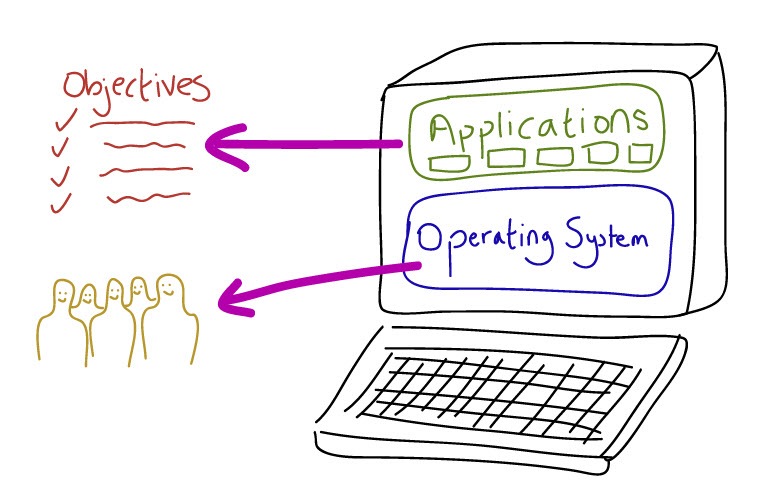



Guessing is not a strategy: How to build decision velocity with AI and real-time data
June 10, 2026 | Live Webinar

Who really owns the project budget? Clarifying financial accountability
How to learn AI the sensible way
Making sense of project cost reports
How real PM mentoring actually works
The Accidental Product Manager: What project managers need to know
accounting, agile, ai, appraisals, Artificial Intelligence, audit, Backlog, Benchmarking, benefits, Benefits Management, Benefits Realization, Bias, books, budget, Business Case, business case, business case, Career Development, Career Development, carnival, case study, Change Management, checklist, collaboration tools, communication, Communications Management, competition, complex projects, Conferences, config management, consultancy, contingency, contracts, corporate finance, corporate finance, cost, Cost Management, cost management, credit crunch, CRM, data, data security, debate, Decision Making, delegating, digite, earned value, Education, Energy and Utilities, Estimating, events, FAQ, financial management, financial management, forecasting, future, GDPR, general, Goals, Governance, green, Information Technology, Innovation, insurance, interviews, it, Knowledge Management, Leadership, Lessons Learned, measuring performance, Mentoring, merger, methods, metrics, multiple projects, negotiating, Networking, news, Olympics, organization, Organizational Culture, outsourcing, personal finance, Planning, pmi, PMO, PMO, Portfolio Management, portfolio management, presentations, privacy policy, process, procurement, product management, productivity, Program Management, project closure, project data, project delivery, Project Success, project testing, prototyping, qualifications, Quality, quality, Quarterly Review, records, recruitment, reports, requirements, research, resilience, Resource Management, resources, risk, Risk Management, ROI, salaries, Schedule Management, Scheduling, scope, Scope Management, security, small projects, Social Impact, social impact, social media, software, software, software, Stakeholder Management, stakeholders, Strategy, success factors, supplier management, team, Teams, testing, testing, timesheets, tips, training, transparency, trends, value management, vendors, video, virtual teams, workflow


|
ITER was conceived in 1985 and is a global project with the aim of making fusion energy a reality. Fusion takes intense pressure and a temperature of 100 million degrees Centigrade to create a reaction, Onstott explained, so the technology is complex. In order to develop the technology to use in the power generation, a treaty was signed in 2006 between the EU, India, Japan, Korea, Russia, the US and China. “Sharing in the design and fabrication of components, each participating country could create its own infrastructure and propagate the technology around the world,” Onstott said. The world uses enough energy per year to fill 28,218 supertankers. Per capital, that equals 24 light bulbs on for 24 hours a day every day but of course this energy consumption is not equally split. The US uses twice as much energy as the UK and 48 times as much energy as Bangladesh. As populations and incomes grow, and the developing nations expand their industrial horizons, world energy consumption will grow too. Onstott said that the prediction is that we’ll be using 50% more energy globally in 2030. Currently most of our energy, 87% comes from fossil fuels (most of that is oil) and the remainder comes from nuclear power and other sources. Given that our reliance on oil is not durable, the fusion project aims to find an alternative way of creating energy – effectively by “bringing a star to Earth.” A challenging projectThe fusion project has a number of objectives. Project objective:
Technical objectives:
There are also a number of project management and technical challenges on a project of this size. Distributed manufacturing Each member country is responsible for a piece of the overall system (which when put together is called a tokamak – the machine that does the fusion). The correction coils are being built in China. The cryostat is coming from India and other bits are coming from other technical teams around the world. Tight schedules The timeline for the project is long. After signing the treaty in 2006, construction finally began in 2010. By the end of 2014 the design and infrastructure will be finalised. 2015-19 is the test and construction phase. The system will be activated in 2020, so we are some way off having our household energy needs being provided by fusion power. That might not seem like a tight schedule, but every country has to get their contribution ready at the same time. Seven party collaboration The seven treaty signatory states all need to work together. “One of the greatest strengths as a project is the ability to tap into the scientific know-how of our seven members,” said Onstott. However, this is also a challenge as each member has their own staff, budget, links to government and must come together to agree objectives. Budget Between 2007 and 2025 Onstott estimates the total project budget will be €2.5bn. As Budget and Cost Manager, it’s his responsibility to manage this mammoth budget. However, he doesn’t know the overall cost of the project as members provide their contributions in kind. Europe has provided an estimate of €6bn, so using that to extrapoloate, Onstott feels that the whole fusion project will cost €13-17bn. Complex design and challenging assembly The unit will be 30m in diameter and about the same in height when it is built. So far the building to house the Tokamak is underway and 493 antiseismic supports (see photo) have been put in place to protect against earthquakes and shifts in the Earth’s crust. The coil building, which is where the tokamak will be put together, is complete. Prototypes have been built in various countries so that the design can be finalised and large scale mock-ups have also been put together.
“We’ve moved from finalising the requirements to detailed designs, and from prototyping to actual manufacturing,” Onstott said. At the moment this project is in the transition from design to construction. With so many cultural, social and technical challenges, it’s going to prove to be an interesting project to watch over the coming years. Photo of seismic isolation pit (c) ITER.org |
|
“Portfolio management is a coordinated collection of strategic processes and decisions that together enable the most effective balance of organisational change and business as usual.” But portfolios can do more than just manage change as a result of projects. Portfolios can also be used to make investment decisions, and managing work by portfolio is one way to get a view of financial data. Pat Durbin and Terry Doerscher, in their book, Taming Change with Portfolio Management, write this: “No matter how you characterise your portfolio objectives, almost all portfolios include some form of financial data as one or more of the parameters used for analysis. Aligning financial information to the demand-related information structures offers you a way to improve the quality and visibility of information about money, the most ubiquitous portfolio characteristic.” They go on to say: “As a basic accounting practice, every organisation has a mechanism to allocate and track money based on how it is distributed to the organisation. While this organisational view of financial expenditures shows you how money is spent, it does not show you why.” For most project managers, what happens at portfolio level is a bit of a mystery. We get on a do our jobs, delivering the stuff that is required for the project, and let other people work out how it all joins together into an organisational and business strategy. As a result, portfolios can seem a bit remote from what we do day-to-day. However, you have to realise that whatever you do as a project manager automatically feeds in to the bigger picture. If you don’t know what that bigger picture is, you can’t be sure that you are achieving it in any way. That doesn’t mean that you have to have an intimate understanding of what is going on ‘way up there’ but I do think you should have some understanding of how what you do contributes to the organisational strategy. This does work both ways. After all, as Durbin and Doerscher say, there is no way that portfolio managers can tell why money is being spent just by looking at a corporate balance sheet. The story behind the expenditure is your story. It’s project business cases and project budgets that explain why money is being spent. They can’t get to the bottom of where the money is going without your input. It is the project manager and the project team members who play a critical role in making all this happen. It’s your tracking that shows how the budget is being spent, if it is realistic and whether or not the project will meet its goals. It’s your evaluation and recommendations that may lead to a project being sped up so the company gets the benefits earlier, or slowed down if something else takes priority for the resources, or stopped completely. Numbers are just numbers – without the narrative, there is no way of telling whether the project, programme or portfolio is performing as you would expect. Of course, those in charge of corporate financial portfolios may not agree with how the money is being spent. If that’s the case, there are routes to redeploy those funds and resources using the standard corporate governance channels like project steering groups and boards. It could result in your project getting shut down, and if that does happen you should ask why. It could simply be that the company has a higher priority project elsewhere and your project has drawn the short straw. Don’t take it personally. Management by portfolio is becoming more and more common. As businesses shift towards managing knowledge work, portfolios become the sensible way to get things done. Project managers have a huge part to play in making sure that portfolio managers have the information they need to make the right decisions. Just make sure that when you tell your story it’s a good one! |
|
Here are 3 ways that costs can be linked to project activities. Start of activitySome projects incur the majority of their costs at the beginning. Examples would be:
In this case, you’ll want to make sure that your project budget is available to you as soon as you start the project, and isn’t phased by quarter or reliant on some cash flow issue being resolved. You’ll need to spend a large chunk of your budget from day 1, so talk to your project sponsor or your project accountant and make sure that the provisions are available for you. End of activitySome projects incur costs at the end of the project. This could be, for example:
In this situation, you’ll need to make sure that your project funds are still available to you at the end of the project. Finance teams often review budgets and if it looks as if you aren’t spending much of your project budget, they might ask for some of it back! It’s good to be able to justify why you need to hang on to the cash, so that you guarantee it is still available to you when you come to need it at the end. Uniformly spread across activityThe third way that project costs can be linked to activities is through being spread evenly across the lifecycle of the project. Some examples of this are:
This is probably the easiest type of split to manage. Regular payments for regular activities means that your budget will be consumed in an even way across the lifecycle of the project. You can quickly see if you are half way through the project then you should be about half way through your budget too. Of course, one project could use all of these, as different activities could have different spreads of costs. You’ll have to take that into account when you plan how your budget is phased. If that is the case for you, you’ll also have to consider phasing per task/activity/item as well as what the overall profile looks like. That way you can build up a picture of how much money you’ll need when. Which is the model that your project uses, or do you phase your project budget in a different way? |
|
In my last video I talked about the role of the Accounts Payable team and how they can help you as a project manager. There’s another team in the Finance department that can also help you, and that is the team that are the general accountants who maintain the books for the company because they will be doing some reports on the finances that you can then compare to your own reports. Again, in a large company you may well have a team of accountants, capital accountants tend to deal with capital expenditure and the majority of project expenditure, at least under UK regulations, would come under capital expenditure. So you may well have capital accountants and accountants that deal with other things or you may have a multi-functional accountant who does all kinds of expenditure tracking as part of his or her daily role. As a project manager you’ll be tracking your project expenditure especially for goods and services for the things that you buy for carrying out your project. But you are not the only person in your company who has an interest in how the company’s money is being. The accts will also be looking at overall where the organisation’s money is going. They will then keep a track, and if they can keep a track of the money that is related to your project, perhaps with a particular project code, you can then compare the reports that coming out of the Finance department from the accountants with your own project logs. That’s really important as it’s quite likely that the company’s senior stakeholders will take what is recorded on the Finance reports as the final state of play. After all, they are the accountants, they know exactly what invoices have been paid and they know everything there is to know about accruals. And your spreadsheet is likely to just be a list of things that the project has spent. So in terms of recognising expenditure in terms of formal accounts, what the accountants have is likely to be the truth, at least in the eyes of the senior stakeholders. So every so often I would recommend that you find the accountant who is responsible for tracking the area of the company where you project falls and sit down with him or her and compare your reports, your tracking spreadsheet with the data that that person is reporting as part of the overall company expenses. I have done that recently and it is very interesting to see where there is a discrepancy. And we did find a discrepancy and we then found out what the issue was and why the two sets of reports were different. So it’s important to be able to dig down into the data if you do find problems and make sure you are on the same page as your company Finance team. |
|
The culture of your project team is the operating system. The project objectives are the applications you run on it. You can set any objectives you want for the team. You can ask them to deliver on time, on budget and on scope. You can ask them to be customer-centric. You can encourage them to schedule their own time effectively, using any number of software products. But, if the culture doesn’t support it, you will struggle to get your objectives done. Understanding organisational culture will help you manage project risk and get a better outcome for your project!
|
|
"If you can't be a good example, then you'll just have to be a horrible warning." - Catherine Aird |