






Guessing is not a strategy: How to build decision velocity with AI and real-time data
June 10, 2026 | Live Webinar

You Can't Get They-ah From Hee-yah
Floating an idea into reality: the other side of the AI Project Paradox
The Environment of the Built Environment: an AI Paradox
6th, 6th Edfition, 6th Edition PMBOK, 7th Edition, 7th Edition PMBOK, 8th Edition PMBOK, 8th Edition PMBOK Guide, Activism, actuarial, actuary, adapt, addition by subtraction, Africa, africa, agriculture, airforce, ajaita, Alaska, amazon, analogous, analytics, ancient, and more power, antarctica, anti-science, apple, apps, architecture, arctic, arrakis, Artificial Intelligence, asch paradigm, Assistant, asthma, astronomy, automobile, automotive, autonomous cars, b, bankhar, Banksy Crypto, basalt, baseball, bats, batter, beauty products, benefit, benefits, Benefits Realization, beyond epica, biases, bicycle, big data, big dfata, big dig, bike, biodiversity, biomedicine, birdhouse, blockchain, blood, blue blood, blue trees, bluefin, bluefin tuna, book review, boston, boston university, Boyce, Brazil, brazil, Breakdown Structures, BS, building, buildings, built environment, built environment, bumblebee, cake, capacitor, car, Carbon, carbon, carbon capture, carbon negative, carbon neutral, carbon pool, carbon sequestration, carbonate, careers, CEO, ChatGPT, chatGPT, chatgpt, chatgpt, chess, China, china, chopsticks, citrus, cli-fi, climate, climate change, climate resilience, climeworks, Clumsy, CO2, co2, CO2 Utilization, coalition, cobalt, coffee pods, cognition, cognitive, Collabortion, colombia, concrete, Conflict, construction 5.0, cool projects xyloscope, cooling, coral, corn, cost of good quality, cost of poor quality, cost of quality, crazy, criticism of project management, cryptocurrency, CSR, csr, data, data analytics, data privacy, datacenter, dataset, death spiral, Decision Making, decomposition, Defense and Climate, definition of a project, deforestation, dependencies, dependency, desert, DIKW, dikw, dimopoulos, disposal, dna, DOD, dogs, dolphins, dream, drilling, drink, dune, dune, dutch, early start, earth, eatlocal, eco-tourism, ecological, economic, economics, EKC, electric grid, electricity, electronics, elysis, embodied carbon, emerging technologies, empower, Energy, energy efficiency, environmental degradation, escalate, escalation, ESG, extreme weather, fallacy, FARC, farming, finance, fish, fish brains, fishing, fix, fixing the earth, flint water, Flint Water Supply, flood, flooding, Food supply chain, food waste, forest, forest for the trees, forestation, forrestgump, frank herbert, Fruitcake, fungus, fusion, Galvao, garage, gas, gasoline, geese, gender equality, gender partnerships, generational differences, Generative AI, gladwell, gold, Goodness, google, Government, GPT, great pacific garbage patch, green, green building, green buildings, green energy, green iguana, green project, green project management, greening, guest post, gyre, harkonnen, Harvesting Benefits, hawasina, hedgehogs, heursitics, historical data, hlb, holitsic, holland, horseshoe crab, human-caused climate change, hydrogen, hydrology, ice, iceland, ignition, iguana, imagery, impact, india, inequality, information, initiatives, injection, insurance, intelligence, interacting risk, internal combustion engine, invasive species, investment, isomer, issue escalation, issues, ITER, jobs, Jupiter, justification, kids, kill point, knowledge, koch brothers, Kuznets, laboratory, LAL, landscape mode, lapampa, launch, LCA, Leadership, Leadership, life cycle analyses, life cycle analysis, lifecycle, Linkedin, liquid, lizard, local, long term, long-term, long-term thinking, look up, loud, maintenance, maker, makermovement, malcolm gladwell, management, marathon, marine biology, market, mars, Martin Luther King, mean, megawatt, MeHg, melting, mercury, metal, Microgrid, microplastics, migration, military, millennial, mindset, minerals, mission, mitigate, MLK, mongolia, museum, museum of london, nature, nematodes, net gain, Net Project Success Score, net zero, netherlands, network, New book, New Jersey, New Practitioners, new york, NFT, nitrogen, noise, noreaster, norway, nova, NPSS, NREL, ocean, ocean cleanup, ocean life, oil rig, oil rigs, oklahoma, oman, only murders in the building, opportunity, overall risk, oxygen, packaging, pareto, PBS, permafrost, persistence, peru, Pharmaceutical, planet, planet.com, planning, plant, plasma, plastic, playground, pm, pm education, pmbok, pmbok guide, pmnetwork, PMXPO-2018, podcast, pollutants, pollution, poop, poor, portfolio, power, power skills, privacy, privacy concerns, professors, program, Program Management, project, project leader, project leadership, project management, project management 3.0, project on fire, project progress, Project Success, project success, projecticity, projectleadership, projectmanagement, projects, psychology, pulse of the profession, purple bacteria, purpose, quiet, rainforest, rationale, reef, refugees, renewable, renewables, Repair, repair, repeatable process, repeatable processes, repurpose, research, resource breakdown strucuture, Resource Management, reversing climate change, revisionist history, rich, rigs2reefs, ripe, risk, risk avoidance, Risk Management, risk mitigation, risk response, risk responses, river, robots, rocks, rules of thumb, rural, rural India, russia, Sarcasm/Irony, satellite, saudi, schedule, sci-fi, Science, science, science-fiction, scientific american, screaming monkeys, sea, sea life, Sea-Level Rise, sea-level rise, seagreens, seawall, seawater, seawater temperature, seaweed. beat;es. farming, secondary risk, selena gomez, sequestration, shipping, skyscraper, SLR, smart cities, smart city, smelting, social, social pressure, soil, solar, solar panels, solar perovkites, solar saheli, sonic, sponge cities, SRI, stage-gate, stagegate, stakeholder, stakeholder management, steward, stewardship, storage, strategy, stupid, success, suffer, sulphur, sunk cost, supercapacitor, supply chain, survey, Sustainability, sustainability, Sustainable Investing, Sustainable Tourism, sybiosis, symbiosis, system 03, TBL, temperature, terraform, terraforming, test, threat, threats, totem, touchscreen, tour, tower, Trains, transparency, transportation, trash, tree, tree species, trees, trillion, triple bottom line, triple constraint, truth to power, UMass, us army corps of engineers, USDA, vacuum, value, venus, vision, voice, voltage optimization, vw scandal, washing machine, waste, wastewater, water, we mean business, whales, Whirlpool, wind, wisdom, women, Women in Project Management, wood wide web, woonerf, Work Breakdown Structures (WBS), world breakdown structure, worms, xian, xylotron, Yale


|
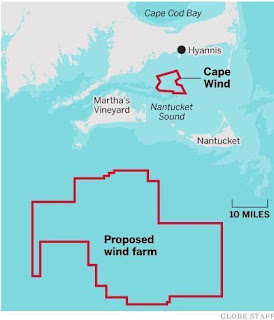
Yeah, okay, okay, so it's Rhode Island. Still, Today's Boston Globe is reporting that ten developers are lined up to potentially build what would be a wind energy area larger than the US State of Rhode Island. We blog about this for two main reasons. 1. This is huge. Literally. Many project managers may gain employment from the project as it is conceived and built. 2. The connection to PM planning - especially in light of the Cape Wind project and its delays, this is huge. Figuratively. Number 1 above is so obvious, given the cpacity of 4 Gigawatts of power, that we'll leave that to your imagination.
Here is what we do not want to leave to your imagination: the importance of stakeholder management and its deep connection to project risk identification, analysis, and response. See, you thought this post was going to be all about renewable energy and Mother Earth, and butterflies and unicorns, didn't you? But there are hardcore PM lessons to be learned in the area of sustainability and PM, and many of them are in play based on this article alone. Here is an introductory snippet from the article: "The wind farms would be built in an expanse of federal waters larger than Rhode Island, about 14 miles south of Martha’s Vineyard and identified by the US Bureau of Ocean Energy Management as an ideal place for such development. After more than two years of talks with local and state officials, environmentalists, fishermen, and tribal leaders..." You see? The tribal leaders were included up front, as were environmentalists and the fishing industry. This was not the case with Cape Wind. Here is another piece: Developers say wind energy areas will also be the proving ground for the next generation of wind turbines, each capable of generating 5- to 7-megawatts worth of power and being located far enough offshore so they would not be visible to many people. The prospect of turbine towers visible to Cape Cod landowners sparked much of the opposition to Cape Wind. Our favorite overall quote is here - indicating the benefit of long-term thinking when identifying risk and stakeholders, and how the two go hand-in-hand: “The federal government is working with the state to try and ensure that by investing a lot of their energy on the front end, it will be easier for a company to take a project through the permitting and approval process". What they are saying is that by doing a thorough job of identifying a wide variety of stakeholders, and through that expanded list of stakeholders fully and deeply identifying their areas of concern, we have a more intelligenlty articulated set of risks (both threats and opportunities) that we can analyze and respond to properly, rather than uncover haphazardly as we start (trying to do) the construction of the project. Note the comments from Tommy Beaudreau, director of the Bureau of Ocean Energy Management: "one of the main goals of designating the wind energy areas is to streamline the approval process for offshore wind projects". Beaudreau’s agency was particularly deliberate in determining the wind energy area off Massachusetts in an effort to minimize conflicts like those experienced by Cape Wind, which faced a decade of opposition and legal fights before winning federal and state approval in 2010. The project still faces appeals. “It’s really about trying to design or make available areas up front that have buy-in from the states and communities,’’ Beaudreau said. “There are a lot of takeaways from Cape Wind.’’ We're sure you read that like we did. Takeaways = Lessons Learned. Do a better job of stakeholder identification. This will enable you to do an exponentially better job of risk identification, which will yield a significantly better job of risk analysis and response. And what that means is that the project - whether it be something as important as this and as large as a US state - or a new deck for your back yard, has a much better chance of getting done, and getting done properly. |
|
We were recent guests of The Sustainability Learning Centre - a partner of the prestigious Network for Business Sustainability. We gave a 45-minute presentation and took some questions. And they captured the whole thing on WebEx, for you to view for absolutely free – here . Rather than a long blog post - we invite you to let the webinar literally speak for itself! |
|
We've often covered "green-by-definition" projects - those where the ultimate deliverable is reduction of waste, generation of renewable power, preserving biodiversity, and so on. We also continue to stress that projects of any kind can have a green (or at least sustainability) component. This is the concept behind our "Spectrum of Green" as discussed in our book, Green Project Management. Well, here is an example of a green project which has folded two green objectives into one - generating renewable energy, and preserving a precious resource (water). A first of its kind, Gujarat (a state in northwestern India) will dedicate India’s first 1 MW Canal-top Solar Power Project on the Sanand Branch Canal of the Sardar Sarovar Project. Here's another photo:
This project was developed by Gujarat State Electricity Corporation Limited (GSECL) with support from the Sardar Sarovar Narmada Nigam Limited (SSNNL). It will generate 1.6 million units of clean electricity per year and 90 lakh litres of water will be prevented from getting evaporated. We won't give all of the technical details, you can read them all here. And, if you want to hear about it directly from Narendra Modi, the CM (Chief Minister) of the state of Gujarat, he has actually blogged about this right here: So think about it. Are there any "regular" projects on which you're working where there may be a possible sustainability benefit? Or, if you're already working on a 'green by definition' project, is there a way that a secondary benefit may be an outcome? Just some food for thought if nothing else... |
|
One thing that's always been interesting to us as consultants in project management is stakeholder identification and analysis. One thing that's also interesting and often left out is the interaction between stakeholders. This could be a pair (or trio, or quad) of stakholders with similar interests, wildly different interests, or a mix. In our opinion, one of the columns on a stakeholder register should be "Interactions", to capture this complex and important human aspect of your project. This couldn't have been illustrated better than with this article featured on Earth Day in the Cape Cod Times. In the article you'll discover the interaction between potentially green-minded, well-intentioned folks, in a project involving installation of 3,150 solar panels. The project also involved the clearing of a bunch of trees in what is one of the few remaining undeveloped plots of land in Hackensack, NJ, USA. Last year, a similar situation occurred when 100 eucalyptus trees were cut down to make room for solar panels in a regional park. Which "green" is better? This is the question posed in the article. We tend to side side with the considerations explained in the article by Ashwani Vasishth, of Ramapo College's Center for Environmental Studies, who explains that trees don't only sequester carbon - they provide habitat, capture rainwater to prevent erosion, help provide shade and cooling, and remove particulate matter. So it's similar to our points about long-term thinking in general. Full consideration is important. And this case it it's literally a matter of seeing the forest for the trees. |
|
Recently, three North American Civil Engineering organizations - The American Society of Civil Engineers (ASCE), the Canadian Society for Civil Engineering (CSCE) and the Institution of Civil Engineers (ICE) came together and published a joint document, Civil Engineering for a Sustainable Future.
A family member (thanks Dipak!) forwarded this to us and we were quite pleased with what we saw. Now. Can you think of another discipline in which sustainabiity plays a key role? Think about it. I'm thinking of a discipline that - for example - works with civil engineers on - what shall I call them - hmmm, okay, projects, that's what I'll call them. Now, what would one call the discipline used to manage these projects? Let's see. Manage projects, managing projects.... hmmm. How about project management? That seems like a logical name! So wouldn't it be sweet if the key institutions that help codify, organize, and promote our discipline of project management would make this kind of statement? We think so. Maybe PMI and APM could do something like this? Dare we dream that? Click here to read the press release about this from the ASCE. And below, so you can see what other disciplines - very project-intertwined disciplines - are doing, is the text of the statement: -------------Statement of the American Society of Civil Engineers, the Canadian Society for Civil Engineering and the Institution of Civil Engineers Following the 2012 Triennial Conference Background The American Society of Civil Engineers (ASCE), the Canadian Society for Civil Engineering (CSCE) and the Institution of Civil Engineers (ICE) believe that emerging global challenges over the last decade, including the financial crisis, population migration, and food and energy crises, have reinforced the need to secure and fulfill internationally agreed commitments to sustainable development. The three organizations also believe that sustainable progress toward achieving the UN Millennium Development Goals is necessary to address water and food scarcity. For such commitments to be realized, critical infrastructure must be adapted to the impacts of climate change and resilient to natural and man-made disasters. The role of civil engineers The three institutions commit to lead internationally on the delivery of sustainable infrastructure. Civil engineers of the 21st century are called on to play a critical role in contributing to peace and security in an increasingly challenged world. Civil engineers have an obligation to protect cultural and natural diversity, and they are central to the planning, design, construction, operation, maintenance and decommissioning of infrastructure networks that underpin civil society and economic activity and protect human health and welfare. Emerging challenges have reinforced the key role of these networks in enabling global societal resilience. Approximately 75% of the issues outlined in Agenda 21, the main action document from the 1992 Earth Summit, involve engineering and technical issues. Action by civil engineers is essential. Society needs the skills of civil engineers to attain sustainable development, yet civil engineers require global political will to enable them to apply their knowledge and expertise to appropriately adapt infrastructure to attain meaningful progress.
While ASCE, CSCE, and ICE are committed to a civil engineering profession able to address the global challenge of sustainable development, they recognize that engineers cannot deliver this vision on their own. Civil engineers must develop new skills for a changing world, foster greater collaboration with other professionals, and promote multidisciplinary approaches. Civil engineers are committed to provide the tools and advice to governments and policymakers at national and supranational levels on the skills and infrastructure required for a sustainable future. Recognizing the central role of their profession in addressing global challenges, ASCE, CSCE, and ICE developed a Sustainable Development Protocol in 2006, agreeing to develop sustainable development strategies and action plans. This was followed in 2009 by a civil engineering and climate change protocol that further identified priorities for action by engineers. The three organizations have since adopted and regularly reviewed action plans and undertaken a range of activities to advance sustainability in civil infrastructure. Progress in line with commitments is exemplified in adapting critical infrastructure, utilizing environmental accounting tools, addressing the water crisis and delivering on the UN Millennium Development Goals.
Environmental, social and economic impacts and costs—the triple bottom line
Condition and capacity of infrastructure
Adaptation of infrastructure to climate change
Millennium Development Goals Commitments Within the following areas of leadership with respect to sustainable infrastructure, ASCE, CSCE, ICE commit to:
Signed by:
----- Talk it up at your PMI chapter meetings, and if you're involved with APM, IPMA or any other PM umbrella organizations, propose that this is something we could and should do just as well as our colleagues in civil engineering. |
|
"Anyone can become angry - that is easy, but to be angry with the right person, to the right degree, at the right time, for the right purpose and in the right way - that is not easy." - Aristotle |