





Guessing is not a strategy: How to build decision velocity with AI and real-time data
June 10, 2026 | Live Webinar

You Can't Get They-ah From Hee-yah
Floating an idea into reality: the other side of the AI Project Paradox
The Environment of the Built Environment: an AI Paradox
6th, 6th Edfition, 6th Edition PMBOK, 7th Edition, 7th Edition PMBOK, 8th Edition PMBOK, 8th Edition PMBOK Guide, Activism, actuarial, actuary, adapt, addition by subtraction, Africa, africa, agriculture, airforce, ajaita, Alaska, amazon, analogous, analytics, ancient, and more power, antarctica, anti-science, apple, apps, architecture, arctic, arrakis, Artificial Intelligence, asch paradigm, Assistant, asthma, astronomy, automobile, automotive, autonomous cars, b, bankhar, Banksy Crypto, basalt, baseball, bats, batter, beauty products, benefit, benefits, Benefits Realization, beyond epica, biases, bicycle, big data, big dfata, big dig, bike, biodiversity, biomedicine, birdhouse, blockchain, blood, blue blood, blue trees, bluefin, bluefin tuna, book review, boston, boston university, Boyce, Brazil, brazil, Breakdown Structures, BS, building, buildings, built environment, built environment, bumblebee, cake, capacitor, car, Carbon, carbon, carbon capture, carbon negative, carbon neutral, carbon pool, carbon sequestration, carbonate, careers, CEO, ChatGPT, chatGPT, chatgpt, chatgpt, chess, China, china, chopsticks, citrus, cli-fi, climate, climate change, climate resilience, climeworks, Clumsy, CO2, co2, CO2 Utilization, coalition, cobalt, coffee pods, cognition, cognitive, Collabortion, colombia, concrete, Conflict, construction 5.0, cool projects xyloscope, cooling, coral, corn, cost of good quality, cost of poor quality, cost of quality, crazy, criticism of project management, cryptocurrency, CSR, csr, data, data analytics, data privacy, datacenter, dataset, death spiral, Decision Making, decomposition, Defense and Climate, definition of a project, deforestation, dependencies, dependency, desert, DIKW, dikw, dimopoulos, disposal, dna, DOD, dogs, dolphins, dream, drilling, drink, dune, dune, dutch, early start, earth, eatlocal, eco-tourism, ecological, economic, economics, EKC, electric grid, electricity, electronics, elysis, embodied carbon, emerging technologies, empower, Energy, energy efficiency, environmental degradation, escalate, escalation, ESG, extreme weather, fallacy, FARC, farming, finance, fish, fish brains, fishing, fix, fixing the earth, flint water, Flint Water Supply, flood, flooding, Food supply chain, food waste, forest, forest for the trees, forestation, forrestgump, frank herbert, Fruitcake, fungus, fusion, Galvao, garage, gas, gasoline, geese, gender equality, gender partnerships, generational differences, Generative AI, gladwell, gold, Goodness, google, Government, GPT, great pacific garbage patch, green, green building, green buildings, green energy, green iguana, green project, green project management, greening, guest post, gyre, harkonnen, Harvesting Benefits, hawasina, hedgehogs, heursitics, historical data, hlb, holitsic, holland, horseshoe crab, human-caused climate change, hydrogen, hydrology, ice, iceland, ignition, iguana, imagery, impact, india, inequality, information, initiatives, injection, insurance, intelligence, interacting risk, internal combustion engine, invasive species, investment, isomer, issue escalation, issues, ITER, jobs, Jupiter, justification, kids, kill point, knowledge, koch brothers, Kuznets, laboratory, LAL, landscape mode, lapampa, launch, LCA, Leadership, Leadership, life cycle analyses, life cycle analysis, lifecycle, Linkedin, liquid, lizard, local, long term, long-term, long-term thinking, look up, loud, maintenance, maker, makermovement, malcolm gladwell, management, marathon, marine biology, market, mars, Martin Luther King, mean, megawatt, MeHg, melting, mercury, metal, Microgrid, microplastics, migration, military, millennial, mindset, minerals, mission, mitigate, MLK, mongolia, museum, museum of london, nature, nematodes, net gain, Net Project Success Score, net zero, netherlands, network, New book, New Jersey, New Practitioners, new york, NFT, nitrogen, noise, noreaster, norway, nova, NPSS, NREL, ocean, ocean cleanup, ocean life, oil rig, oil rigs, oklahoma, oman, only murders in the building, opportunity, overall risk, oxygen, packaging, pareto, PBS, permafrost, persistence, peru, Pharmaceutical, planet, planet.com, planning, plant, plasma, plastic, playground, pm, pm education, pmbok, pmbok guide, pmnetwork, PMXPO-2018, podcast, pollutants, pollution, poop, poor, portfolio, power, power skills, privacy, privacy concerns, professors, program, Program Management, project, project leader, project leadership, project management, project management 3.0, project on fire, project progress, Project Success, project success, projecticity, projectleadership, projectmanagement, projects, psychology, pulse of the profession, purple bacteria, purpose, quiet, rainforest, rationale, reef, refugees, renewable, renewables, Repair, repair, repeatable process, repeatable processes, repurpose, research, resource breakdown strucuture, Resource Management, reversing climate change, revisionist history, rich, rigs2reefs, ripe, risk, risk avoidance, Risk Management, risk mitigation, risk response, risk responses, river, robots, rocks, rules of thumb, rural, rural India, russia, Sarcasm/Irony, satellite, saudi, schedule, sci-fi, Science, science, science-fiction, scientific american, screaming monkeys, sea, sea life, Sea-Level Rise, sea-level rise, seagreens, seawall, seawater, seawater temperature, seaweed. beat;es. farming, secondary risk, selena gomez, sequestration, shipping, skyscraper, SLR, smart cities, smart city, smelting, social, social pressure, soil, solar, solar panels, solar perovkites, solar saheli, sonic, sponge cities, SRI, stage-gate, stagegate, stakeholder, stakeholder management, steward, stewardship, storage, strategy, stupid, success, suffer, sulphur, sunk cost, supercapacitor, supply chain, survey, Sustainability, sustainability, Sustainable Investing, Sustainable Tourism, sybiosis, symbiosis, system 03, TBL, temperature, terraform, terraforming, test, threat, threats, totem, touchscreen, tour, tower, Trains, transparency, transportation, trash, tree, tree species, trees, trillion, triple bottom line, triple constraint, truth to power, UMass, us army corps of engineers, USDA, vacuum, value, venus, vision, voice, voltage optimization, vw scandal, washing machine, waste, wastewater, water, we mean business, whales, Whirlpool, wind, wisdom, women, Women in Project Management, wood wide web, woonerf, Work Breakdown Structures (WBS), world breakdown structure, worms, xian, xylotron, Yale


|
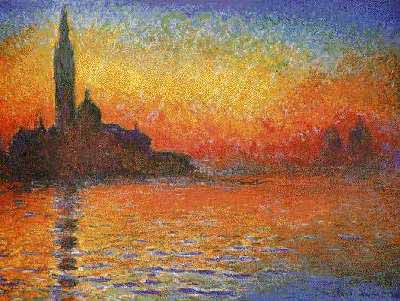
A very interesting (and sustained!) discussion on LinkedIn is also very much in line with the philosophy of sustainability thinking in project management. This discussion also keys off of Dave Shirley's excellent post here at Projects At Work, using the Survivor show as an analogy. Like many interesting questions in life, the question is very simple but has very deep implications. Robert Lewis, the original poster, asked – in December of 2009 (!) - for people’s reaction to this statement: "Project managers should take responsibility for project success, not just the magic triangle of schedule, scope and budget. Success - achievement of the planned business benefits - takes much more." The conversation has been lively, already collecting well over 250 comments, and a conversation which has been going on for a year and a half. Some are taking an environmental angle, which is appropriate here, in our opinion, but the broader – triple bottom line – aspect applies as well, and that’s what’s generating a lot of the interest. In fact, we chose today’s blog post image carefully. It’s about your impression. And it’s about – to paraphrase Tom Cruise’s character in Jerry Magure, “Show me the Monet!”. Can we, should, we, must we, as project managers, be connected to the long-term success of the product of the project? Or are we bound to respect the triple (and with the 4th Edition PMBOK® Guide, now multi-faceted) constraints of scope, schedule, resources, risk, and quality of the project itself? This, in turn, forces a few very provocative and productive thought processes in which we should definitely engage ourselves and our teams as project managers, forgetting (for the moment) the ‘green’ aspects of the project. What does success look like for our project?
By asking these questions we:
So we’d like to thank Robert Lewis for posing his original question and the 200+ people who have energized it.
We invite you to participate in that LinkedIn conversation or to contribute here with your comments. This is not trivial. This debate over whether (or from our view, request that) project managers take on a longer-term view, is fundamental to project managers increasing their value to their enterprises and to projects having a greater chance at true (lasting) success. Feel free to jump in the discussion – here and/or on LinkedIn. |
|
We are down to our last two contestants, and the differences between the two are significant. Frank is a traditional project manager, faithfully following the project management discipline we’ve all come to know and love. He has a very successful career managing project after project within budget, meeting stakeholder expectations, and on the pre-defined schedule. Beth, on the other hand, sees the scope of project management (excuse the pun) expanding. She believes that project managers are really business leaders and should have a “seat at the executive table.” She sees the chief project officer (CPO) as the natural progression of the field.
So let’s look at some specific differences. Frank believes that his role begins when the project charter is delivered. In that charter is the project’s purpose, a high-level project description, some initial risks, summary milestones, acceptance criteria, and the authorization of his power. It is typically prepared by the project sponsor. The project charter is considered outside of the project boundaries, boundaries that traditional project manager color within. On the other end of that boundary is delivery of the product of the project and the collection of artifacts, etc, better known as the closing processes. Beth doesn’t believe in coloring within the lines. She believes that a project manager has significant input into the project charter, not because that is where the project manager is often appointed and given the power to plan, organize, and control the project, but because previous project experience can help steer the business. Additionally, she believes that she can help not only with connecting the organizations “business mission”, but also connecting its environmental or sustainability mission. And if there isn’t either or both, then she believes that her project management experience can help her craft them. Project managers are the “business end of business”. Projects are where the rubber meets the road, where ideas turn into reality. Projects are how companies survive. Whether organizations are repairing or replacing internal processes, procedures, or equipment, or producing new products, projects oil the mechanism. Further, Beth believes that once a project is operationalized, it is still not over. There are long term considerations that the project manager can see, because of the global view project managers have. Those long term issues, or as McDonough and Braungart put it “Cradle to Cradle”, should be part of the project manager’s plan, at the least, a consideration of same. Frank, however, thinks that by pushing the boundaries of traditional project management, that a true project focus will be lost. The triangle of cost, time, and quality will be compromised. After all, it should be enough to successfully complete a project within those boundaries. It comes down to America’s vote. Which way do you think that project management is headed, continuing to fine tune traditional project management functions or expanding the role of project managers to “the board room?” At the next “tribal council” someone will get voted off the island. Or, will they both get voted off in favor of a yet to be determined survivor? |
|
A primer... Today we step back. Way, way back to some fundamentals – fundamentals which are important to ‘ground’ us in understanding the concept of sustainability and how it possibly could have anything to do with us as project managers – our projects – our organizations.
We’re really enthusiasts of vocabulary-building and common understanding of terms, so let’s start with the term ‘bottom line’ itself. It’s a phrase which is used often in today’s sound-byte, instant-gratification-oriented world. How often have you heard (perhaps from your boss, spouse, or customer): “just give me the bottom line”? The expression “bottom line” has its origins in accounting, referring to that number at the bottom of a list (below a summary line) of positives and negatives that, when all is said and done, represents the net value, income or loss. But it has also come to mean ‘a final result or statement’ or upshot, and also the ‘main or essential point’, as in a “Cliff Notes®” version of a long novel. So let’s just say that the “bottom line” is the net effect, condensed version of something much bigger – how you would summarize a large effort in an encapsulated form. As far as the Triple Bottom Line, that term was “first coined in 1994 by John Elkington, the founder of a British consultancy called SustainAbility. His argument was that companies should be preparing three different (and quite separate) bottom lines. One is the traditional measure of corporate profit—the “bottom line” of the profit and loss account. The second is the bottom line of a company’s “people account”—a measure in some shape or form of how socially responsible an organisation has been throughout its operations. The third is the bottom line of the company’s “planet” account—a measure of how environmentally responsible it has been. The triple bottom line (TBL) thus consists of three Ps: profit, people and planet. It aims to measure the financial, social and environmental performance of the corporation over a period of time. Only a company that produces a TBL is taking account of the full cost involved in doing business.” We can derive the concept of sustainability from the three “legs” of the triple bottom line. These three legs support sustainability(per the figure below) – but also concepts like viability of interactions between economy and environment, equitability of arrangements between society and economy, and bearable interactions between society and the environment (i.e. what’s endurable by people as well as by nature over time). Only where the interactions between the three aspects themselves - viable, equitable and bearable, are all considered can we find actions, processes, materials, and industries acting in a way which can be considered sustainable. So – as project managers – do we care about this? Do we have a connection? Of course we do. And if you read the 200+ blog postings on earthpm.com you will get much more detail about how. Here we will just assert that we are already trained (or should be) to conserve a project’s resources, which normally we think of as human resources, raw materials, money (budget), time (schedule), and so on. So in a way, we already think in terms of a multiple bottom line.
Visually, the Triple Bottom Line can be represented in the nearby figure. How can you apply it? We always recommend one simple thing: go to your company’s (or organization’s) external website and find out what your leaders are saying to the world about their goals. We’re willing to wager that they’re saying things along the lines of People, Planet, Profit. Your project – it’s really a microcosm (or to use a less fancy word, a ‘core sample’ of your organization’s operations and behavior. Then, use the messages your enterprise gives the world to make sure that your project is on the same “frequency”. For example: what happens to the product of your project in the long term? Yes, you, the project manager can (and should, we assert) think beyond the handoff of your project’s product to its ongoing and steady-state use. As we said above, there are many blog posts on earthpm.com cover this angle so we won’t preach too much here. So, let’s put the final coat on our primer. There is a larger, more ‘holistic’ bottom-line that includes not only profit, but also environmental concerns as well as concerns for the human community. And we think that by understanding at least the concept, but perhaps the vocabulary, and even better, the way your own organization interprets this, you position yourself to do a better job on your projects. ----
References and further reading: http://www.economist.com/node/14301663 http://www.ccl.org/leadership/pdf/research/tripleBottomLine.pdf |
| Is Healthcare Project Management Different? Well, there is no doubt about, Rich Maltzman and I straddle the world of traditional project management and what might be termed, different (or maybe non-traditional) project management. While we deliver training in the principles of project management, PMP preparation, and project management certification, among others, we have also expanded our view of project management. As Rich so eloquently blogged about, we have assertions about project managers and sustainable project management. We are also interested in project managers and healthcare project management. One of the questions I am often asked is what is so different about healthcare project management (similar to the question, what is different about green project management)? Some would argue that there is no difference between managing any project and managing a healthcare project. But if you think about it, each and every industry has their own quirks, uniqueness if you will, therefore, managing a project in different industries, whether it is IT, construction, entertainment, etc., requires knowledge of those unique qualities. I assert that the healthcare industry has some significant qualities that deserve further study. During the last nine years of teaching, I had my students take a personality test available on-line. I keep a record of the results, by personality type, not student. I compiled those results into an informal study of my student’s personalities. There are much different results from my students in the healthcare industry as opposed to those on-campus or at the various business locations I teach. While not surprising to me, and probably not to you, those results tend to support the uniqueness of health care workers. Most of the workers fall in to the category of guardian. A guardian personality tends to more protective of those they interact with. They are family oriented, and I don’t necessarily mean immediate family, but adoptive of those around them to form a family. They are serious and concerned, traits that are critical to their jobs. Additionally, guardians are very much procedural oriented, and follow processes, another great trait for health care workers. There are projects themselves within the health care environment that make it unique. While one can argue that other industries have life and death situations, there is no doubt that the healthcare industry has them. Therefore, some, and I’ll go out on a limb and say most, projects initiated in the healthcare environment have some aspect of life and death involved. Some examples that I have seen over the years are:
The team leader for an air ambulance service was “reinventing” an approval process every time there was a request from a medical facility to take advantage of the service. Because the requirements were standard; distance from the buildings, size of the landing area, approach procedures, etc, it was logical to undertake a project to build a template that only needed to be tweaked for a medical facility’s request. By developing the template, reduced the approval times, thus potentially saving lives.
A need was determined that there weren’t ample facilities to accommodate agitated psychiatric patients. A project was undertaken to design, plan, and implement a safe room, with padded walls and flooring to accommodate a patient who may become agitated in a particular situation and needs a safe place to recover. The padded walls and floors allowed the patients to thrash without danger of injuring themselves against unforgiving floor and walls. While the primary purpose was to insure the safety of the agitated patient, it also protected the staff by allowing them to take the patient somewhere safe, away from the general population and potential weapons like chairs, tables, and lamps.
Sharp injuries are better characterized by being pricked by a dirty needle. The potential of injury by exposure to Human Immunodeficiency Virus (HIV), Hepatitis B Virus, or Hepatitis C Virus, are real risks to hospital staff, especially nurses. According to some studies done by the International Health care Worker Safety Center, University of Virginia, and their Global Initiative for Health care Worker Safety and Occupational Exposure, “Needle sticks and sharp injuries are the most common cause of occupational infections among health care workers, responsible for an estimated 1,000 HIV, 66,000 hepatitis B and 16,000 hepatitis C cases annually to health workers around the globe (World Health Organization 2003)”[i] One of the hospital I worked with wanted to further reduce their sharp injuries. A project was developed to identify the potential areas of most exposure and to reduce that exposure by developing better hypodermic needle handling and disposal.
That was of particular interest to me because existing hospital gowns can be very uncomfortable and confusing as to which was to put them on. There was an OBGY specialist in one of my classes and we talked about my confusion with the hospital gowns. His advice was to put it on whichever way you want to because it really didn’t matter to him or other doctors. They would get to where they need to go no matter which way the gown is donned. However, while not being a life and death situation, patient comfort is a concern. Projects will be undertaken for that reason.
Those are but a few of the many projects that are initiated everyday by medical facilities all over the world. Make no mistake, they are projects and whether large or small, need to be properly managed to get as much as possible out of the limited resources available. Look for more blogs about healthcare, sustainability, and traditional project management, here. Also, for more information on healthcare project management please see my book.
[i]International Health care Worker Safety Center, University of Virginia, Protecting health care workers worldwide from occupational exposure to bloodborne pathogens…, http://www.healthsystem.virginia.edu/internet/safetycenter/internetsafetycenterwebpages/DefiningtheProblem.cfm |
| With this introductory blog post we’d like to introduce our view of what is sometimes called “Green Project Management”, or as we like to more accurately describe it, sustainability thinking in project management. You can get a great digest of our philosophy with EarthPM’s five assertions, but the gist of it isfairly simple. By taking a longer-term, more holistic view of your project’s context, you do better, your project does better, your stakeholders do better, and – the focus of today’s posting – your project’s product does better. What do we mean by better? That’s really the key. We realize that stepping back and doing a ‘deeper dive’ into how your project – and its product – fit into the areas of corporate social responsibility and environmental, and expanded economic concerns (the so-called Triple Bottom Line) is going to cause some extra work for your team, and may even involve more expense and schedule. So why the heck would you do it? We remind you of the Cost of Quality teachings of Philip Crosby, who, in effect, said, you can pay me now or pay me later. Build quality in. If you try to bolt it on later, you will pay dearly later. To answer the question, “what do we mean by better?”, we assert that investing in up-front sustainability thinking pays off in:
Doing the above does require a sort of mind-shift for many project managers. These folks – for very good reasons – will tell you (paraphrased composite of actual quotes): “I am not a product manager, I’m a project manager. As long as I deliver a product that meets customer requirements, I’ve done my job. I could care less about long-term impacts of the product, especially if dealing with them now them makes the project more expensive, late, or causes the product to fail to meet the basic requirements. Also, I have enough to worry about with the constraints I already face. I don’t need more constraints. Go away and leave me alone”. We’re here to tell you that it’s not that simple today. We’re here to tell you that your enterprise likely has mission, vision, and value statements aspiring to new heights of corporate social responsibility, sustainability, and transparency, and that they are intended to reach you as project managers.
Even better, watch the video of the interview here. We think one way to do that is to think of yourself as a “prod-ject” manager, using the double meaning of the word “prod”, first to evoke the word product, and also to use its meaning “to rouse or incite”. So this is the crux of our posting. Think about your project’s outcome. Think hard not only about what it is supposed to do when it is ‘first turned on’ or ‘thrown over the wall’, but when it is running in its steady state. Are there any attributes of that steady-state operation that are warning signals to you as project manager on CSR, environmental, or long-term economic problems? Shouldn’t those signals be read and used in your planning? Of course they should. Projects, programs and portfolios are the essential channel for your organization’s ideas and strategies into longer-term operations. For reference, see Stanford Univerisity/IPS Learning's Stragegic Execution Framework, pictured below.
We’ll blog again about that soon. But for now, know this: without you as the key “prod-ject”manager, the full and true intent of your company’s mission, and its resulting execution strategies, which NEED to get to your organization's operations, could get clogged-up right under your watch. Don’t be a bottleneck, be an accelerator. Be a prod-ject manager. |
|
"Failure is unimportant. It takes courage to make a fool of yourself." - Charlie Chaplin |