



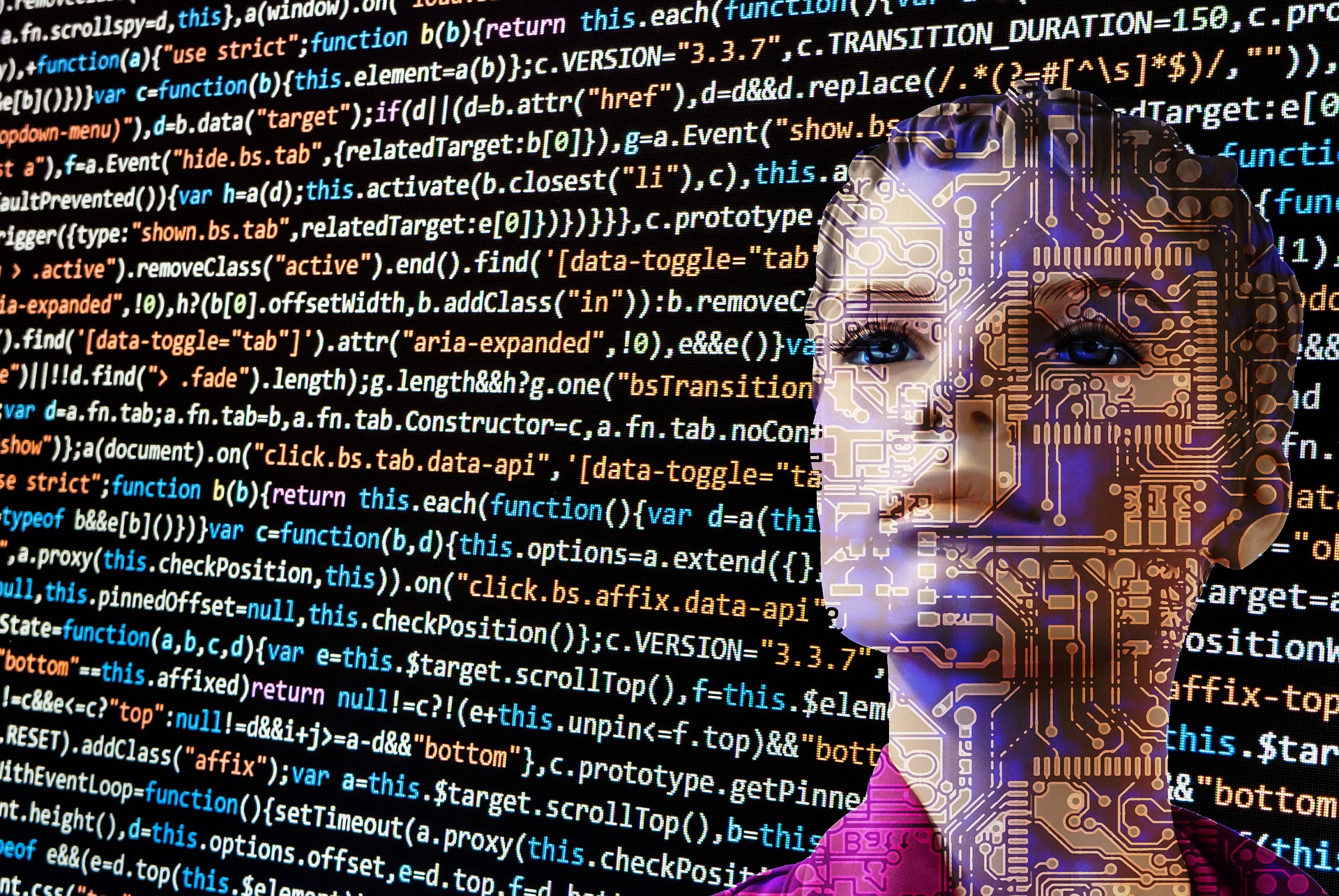
 Digital Transformation (DX) provides the critical response needed by organizations to meet rising customer expectations, deliver scalable, individualized experiences, and respond to market forces with ever increasing levels of business agility. Technologies like cloud computing, robotics, AI and big data combined with optimized operating models enable organizations to drive innovation and respond to internal and external events quicker and cheaper than ever before. All of these seem to be steps in the right direction and while they can definitely get characterized as being so, one cannot overlook the challenges posed by DX. Ethical concerns like individual privacy rights, potential job losses, implicit consent, digital trust, unanticipated consequences of innovations and decision making by machines must be carefully evaluated and addressed.



Guessing is not a strategy: How to build decision velocity with AI and real-time data
June 10, 2026 | Live Webinar

Do You Like to Pick and Choose Your Projects?
Behind closed doors: When decisions feel already made
Looking for the most important information on pmi.org? Here are the key links.
Navigating AI in Project Management: A Comparison with Racing Co-Pilots and Driverless Cars
Values and Ethics in Fintech: A 2026 Reflection on Integrity, Accountability, and Ethical Vigilance
Aerospace and Defense, Agile, AI, Ambassadors, Artificial Intelligence, Ask the Experts, Behavior, bottom line, Business Acumen, Business Ethics, Business Ethics, CEO, CFO, Change Management, Chapters, CIO, code of conduct, code of ethics, Code of Ethics and Professional Conduct, communication, Conflict, Construction, courage honesty responsibility respect fairness, Cultural Diversity, Culture, CxO, Decision Making, Decision-making, Decision-making, Digital Project Management, Digital Transformation, Diversity, Do the right thing, dugutalization project manager professionalism social media, economy, EDMF, EMAG, empathy, Ethical Dilemma, Ethical Leadership, Ethics, Ethics, Ethics, Ethics, Ethics, Ethics, Ethics, Ethics as a competence, Ethics Bistro, Ethics in Communication, Ethics Insight Team, Fairness, fairness, Governance, Honesty, honesty, Human, Information Technology, Leadership, Legal Project Management, Legilsation, Lessons Learned, Negotiation, Nexus, Organizational Culture, Organizational Project Management, PMI Program Management, PMI Talent Triangle, PMIAA, Portfolio Management, Power Skills, practitioner, Product Management, Professional Conduct, professional conduct, Professional Responsibility, Professionalization, professonal conduct, Program Management, Project, Project Management, project manager, Regulatory, research, Respect, respect, Responsibility, responsibility, Risk Management, Stakeholder Management, Strategy, Sustainability, Team Assessment, Teams, Thought leadership, tools, Trust, trust, Values, Values, values, Virtual Experience Series, volunteers, Ways of Working


|
Over years PMI Code of Ethics and Professional Conduct has been giving guidance on practicing values as Honesty, Responsibility, Respect and Fairness in an organization specifically in project management. These values have been practiced and managed with organizations working environment where people were much more in face/face interactions. This has been globally applied across different cultures and practice of values. Over last decades gradually, but specially with the Covid-19 Pandemic situation during 2020 has accelerated organizations to move with speed of light into a highly virtual and remote working environment. This implies the collaboration, communication, human interactions, and teamwork has moved more and more from office locations and meetings rooms to virtual rooms. There are hundreds if not more new normal discussions on how the collaboration would or could adapt to virtuality with regards to effectiveness and productivity. The question of HR and employee’s management from people perspective related to employee’s satisfaction and wellness have also raised much more attention than earlier. One of the key major paradigm shifts is that employees enter to an arena where the physical and mental line between professional and personal life are being merged into a grey zone. This change means among others but not limited to:
Still some obvious but complex challenges remain to look closer to with regards to ethical values as respect, fairness, responsibility, and honesty. This raises fundamental questions related to practice of these values. As obvious there is no one easy answer to these questions that can apply to all employees and functions and culture. Some questions are related to ethics could be:
These questions are not answered simply by training in how to run virtual calls. This is not a question of massive technology booms as MS teams, Zoom, Skype and more. I would appreciate to hear how you experience this paradigm shift in future of work has impacted and will impact the future of work in a more and more virtual collaboration. |
| Last week in the United States, a group named DarkSide carried out a cyberattack on one of the nation’s biggest gas pipelines. Cyberattacks are not new and often not even newsworthy. Businesses spend a lot of money to prevent (or worst case, respond to) this business risk. The attack caused the pipeline to shutdown causing gas shortages and local panic in some of the areas affected. While the supply line has slowly restarted, there was one part of the story which peaked my interest. According to news sources, a DarkSide representative said that they didn’t mean (emphasis added) to create problems, but rather to simply make money. The group claims to have an ethical code, and even a call-in number and help desk for its victims to discuss the ransom. Whoa! Let’s think about this. What are the implications of these statements? A code of ethics is important because it documents the values the organization. In this case, is having a code simply an excuse for rationalizing poor values? Surely, by using the word “poor” I am making a personal value judgment and not everyone will agree. Let’s tie this a little more closely to the PMI Code of Ethics and Professional Conduct. The four PMI ethical values are honesty, responsibility, respect and fairness. One of the guiding PMI principles is that ethics is about making the best possible decisions, with the strong assumption that the best outcome is the most ethical one. Fairness is the value that particularly sticks with me. Fairness to whom? In project management and overall business, can we always be fair to everyone? Perhaps that is why ethical decision making can be hard at times. Let’s return to DarkSide. I’m not saying that there is a one size fits all for ethical codes, nor am I trying to compare the content of the PMI code to DarkSide’s code. Far from it. I tried finding DarkSide’s code of ethics, and short of signing up for their mailing list (which I didn’t do), I didn’t find the code. Let’s just say that even if DarkSide followed their code, the impact was on many, many hardworking people who are already struggling due to the COVID pandemic. Does that make it right? Maybe they didn’t mean to create problems, but they did. Should they be held accountable? I wrote this blog simply to get people to think and talk about ethical behavior. There are many hard questions here and I leave you with a few to ponder. Perhaps we can have a discussion on this. Let me know your thoughts.
For more information about the PMI Code of Ethics and Professional Conduct, please see PMI- "The Code" |
| As a project manager, you will face situations that would require making a difficult choice between two courses of action, neither of which might be acceptable nor preferable. The Syama mine in Mali is set to be the world's first fully automated underground mine. Today, there are also a reasonable number of mining company’s globally working towards achieving 100% automation and project managers leading these projects may encounter ethical dilemmas relating to technology, stakeholders, or communities.
These ethical dilemmas arise when situations conflict with the Project Manager's Professional Standards or moral values. In terms of doing what is right for society, stakeholders, and adhering to local content laws to ensure a project fulfills its social responsibility and welfare commitments while keeping the organization's long-term goals in mind.
Some ethical issues PMs on these projects may face include:
Employee and Community Anxiety One of the significant reasons people wonder if automation is ethical is Automation anxiety, anxiety amongst employees who fear they might be replaced with robots or technology. When automated technology is first introduced, employees question their job security, and chances are it will cause panic and stress, dipping morale and affecting their output. Worst case scenario, some might jump ship, affecting completion of the project. As a project manager, you must assure your team of their role and responsibilities on the project. Clearly state the purpose of installing automation software or technology as an assistant and not a replacement for team members.
Transitioning into 100% automation is usually a decision made by the top management of the company. You might incur the community's anger or wrath and get torn between fulfilling directives from management and fulfilling your corporate social responsibility of training people within the community to take up primary roles in the company. You need to earn the people's trust and reassure them of your commitment to the community's development and growth.
Lawful Conduct It would be helpful to look at the country of operation's constitution to understand it’s regulatory requirements regarding the scope of your project. Many third world countries have laws that often take into account regulations that guarantee inclusiveness, protection of employment of unskilled and semi-skilled persons within the local communities of operations. How does a project manager leading a full automation project within this environment go around his or her work? These are tough situations that require good ethical decision making.
Fairness Do not misrepresent an employee's performance or activities in favor of technology. Even among your team members, do not play favorites when it comes to performance appraisals. Being human, you might have personal preferences for some technology interventions but over manual labor. The project manager must ensure that all these choices of technology over manpower are made in a fair and responsible manner.
Transparency and accountability There are a number of times where project managers find themselves in dilemmas where manpower must be retrenched in favor of technology to maximize ROI. Every decision that a project manager makes in situations like this have consequences, positive or negative.be that as it may, one must always remain transparent and accountable for those decision and action. It is common for project managers to give the impression that everything is going as planned in such situations, which is wrong. When a client or a stakeholder wants to know how things are going, be open and let them know whether you face difficulties, a few minor problems, or even when there is bad news.
At times, you may also be tempted to conceal your own mistakes and oversights, but such acts are unethical. Instead, be open and own up to your actions and inactions.
In conclusion, you might face these and other ethical dilemmas, but you can reach the best decisions in such instances using an ethical framework as a guide. An ethical framework allows for consistency and makes you competent. A quick search online might be handy- you can start with a global standard such as the Project Management Institute's (PMIs) Ethical Decision-Making Framework (EDMF). Going the ethical way has long term benefits that can boost your career and reputation.
https://www.pmi.org/-/media/pmi/documents/public/pdf/ethics/ethical-decision-making-framework.pdf
|
|
Through this post, I want to pick your brain regarding some of the less rosy consequences of rapid DX. According to World Economic Forum (WEF), current estimates of global job losses due to digitalization range from 2 million to 2 billion by 2030. Also, for every 1% increase in global GDP, CO2e emissions have risen by approximately 0.5% and resource intensity by 0.4%. The trend will contribute to a global gap of 8 billion tonnes between the supply and demand of natural resources by 2030, translating to $4.5 trillion of lost economic growth by 2030. According to the Edelman Trust Barometer, trust in all technology-based sectors is declining with concerns over data privacy and security being key factors. Broader ethical questions about the way organizations use digital technology also threaten to erode trust in DX. Few organizations and their leaders develop an overall approach to the ethical impacts of technology use—at least not at the start of a digital transformation. In a recent study, only 35 percent of respondents said their organization’s leaders spend enough time thinking about and communicating the impact of digital initiatives on society.
In order to be truly savvy in the age of advanced, connected, and autonomous technologies, leaders must think beyond designing and implementing technologically driven capabilities. They should consider how to do so responsibly from the start. In order to be ethically driven from the start, business leaders need to be proactive and stay ahead of potential ethical challenges and consider designing new technology-driven products and services with ethical principles in mind from the start. This can help organizations anticipate and avoid problems, rather than having to react after a situation arises. PMI’s Code of Ethics and Professional Conduct provides guidelines which can help in addressing many ethical concerns related to fast paced DX. Responsibility entails that organizations own the decisions they make or fail to make, the actions they take or fail to take, and the resulting consequences. In exhibiting Respect, an organization must show high regard for themselves, others, and the resources entrusted to their management. Resources may include people, money, reputation, the safety of others, and natural or environmental resources. Fairness requires that humans and machines trained by them take decisions and act impartially and objectively. Algorithms running the technologies must be free from competing self-interest, prejudice, and favoritism. Honesty requires that facts are interpreted in a manner which is truthful and not misleading. I strongly believe that DX is a great trend, and it may not be an option. To leverage it properly, decision makers must keep ethical values as the base of their decisions to guarantee sustainable success. Please share your perspective and experience with the rest of us so we can also learn from your insights.
|
| As I am writing this blog, Australia confronts the findings of an investigation that our special forces allegedly committed war crimes in Afghanistan, our New South Wales Premier is perceived to have broken her own health advice rules – not self-isolating after a Covid-19 Test; and our previous Federal Finance Minister; is jetting Europe at the expense of tax payers to lobby for an OECD role while at the same time, Australians overseas are waiting for repatriation flights to bring them home. Australia is facing national and global challenges[i]: Covid-19 pandemic, the future of work resulting from the introduction new technologies; AI, Robotics, Cyber Security; climate change and the impact on our environment with the diversity and uniqueness of our rare species be it in the bush or in the oceans. The fires followed by floods that we faced last year are still vivid in our memories as we are experiencing a heat wave this weekend with well above average temperatures. In addition to that our journey of reconciliation with Indigenous Australians has yet a long way to go. One cannot help but wonder: How ethical is Australia? And what difference would that make? And why would I care as a leader whose field is Project Management about how ethical the country is?
Image by Mary Pahlke from Pixabay[ii] Despite the challenges, and the current political climate, the findings of a recent study commissioned by the Ethics Centre in Australia and conducted by Deloitte Access Economics[i] draw a more positive picture, stating that:
So what are the benefits of a more ethical Australia, or any country for that matter, and where do we start? The study affirms that ethical infrastructure is to be built at the society and organisational level in both formal and informal ways;
So how ethical are we as leaders? What’s our ethical score? And, do we have any PMI Ethics tools that will enable us as individuals to be more aware of our ethical values and behaviors?
How about taking the Ethics Self-Assessment questionnaire as a self-reflection tool? How ethical is each and every one of us? What is the gap and how can we address it? Share your thoughts - What other activities do we undertake as individuals and professionals to build ethics and professional conduct awareness in our teams, organizations, and communities? __________________________ References: [i] https://ethics.org.au/wp-content/uploads/2018/05/The-Ethical-Advantage-4.pdf [ii] https://pixabay.com/illustrations/business-idea-style-concept-goals-1753098/
|
|
"Conventional people are roused to fury by departure from convention, largely because they regard such departure as a criticism of themselves." - Bertrand Russell |