







Guessing is not a strategy: How to build decision velocity with AI and real-time data
June 10, 2026 | Live Webinar

Do You Like to Pick and Choose Your Projects?
Behind closed doors: When decisions feel already made
Looking for the most important information on pmi.org? Here are the key links.
Navigating AI in Project Management: A Comparison with Racing Co-Pilots and Driverless Cars
Values and Ethics in Fintech: A 2026 Reflection on Integrity, Accountability, and Ethical Vigilance
Aerospace and Defense, Agile, AI, Ambassadors, Artificial Intelligence, Ask the Experts, Behavior, bottom line, Business Acumen, Business Ethics, Business Ethics, CEO, CFO, Change Management, Chapters, CIO, code of conduct, code of ethics, Code of Ethics and Professional Conduct, communication, Conflict, Construction, courage honesty responsibility respect fairness, Cultural Diversity, Culture, CxO, Decision Making, Decision-making, Decision-making, Digital Project Management, Digital Transformation, Diversity, Do the right thing, dugutalization project manager professionalism social media, economy, EDMF, EMAG, empathy, Ethical Dilemma, Ethical Leadership, Ethics, Ethics, Ethics, Ethics, Ethics, Ethics, Ethics, Ethics as a competence, Ethics Bistro, Ethics in Communication, Ethics Insight Team, Fairness, fairness, Governance, Honesty, honesty, Human, Information Technology, Leadership, Legal Project Management, Legilsation, Lessons Learned, Negotiation, Nexus, Organizational Culture, Organizational Project Management, PMI Program Management, PMI Talent Triangle, PMIAA, Portfolio Management, Power Skills, practitioner, Product Management, Professional Conduct, professional conduct, Professional Responsibility, Professionalization, professonal conduct, Program Management, Project, Project Management, project manager, Regulatory, research, Respect, respect, Responsibility, responsibility, Risk Management, Stakeholder Management, Strategy, Sustainability, Team Assessment, Teams, Thought leadership, tools, Trust, trust, Values, Values, values, Virtual Experience Series, volunteers, Ways of Working


| This past week, I caught up with several former colleagues and friends from different organisations. A recurring theme emerged in our conversations: many of them are grappling with significant challenges, with much of their time and energy consumed in trying to resolve conflicts within their teams. In several cases, these conflicts are escalating and beginning to get out of hand. By the end of the week, these discussions prompted me to pause and reflect, analysing not only what I had heard, but also how it connects with lessons I’ve learned through teaching, leadership, and practice.
Why Do We End Up in Conflict? Across these reflections, one root cause stood out: misaligned expectations. When expectations are not met, trust begins to erode. But why are expectations so often out of alignment? Each person brings their own interpretation of what success will look like working in this team driven mostly by their own sense of purpose. Over time, when those expectations are not met for a variety of reasons. Without the right guardrails in place, signs of disengagement or frustration go unnoticed until conflict surfaces. How individuals react is strongly influenced by their values and coping mechanisms. For organisations, this can result in good employees quietly leaving disruptive arguments within teams, or prolonged disputes that drain productivity and morale. Drawing from My Teaching Experience When teaching the PMI Agile Certified Practitioner (PMI-ACP®) course under Domain IV: Team Performance, one of the models I referenced often was Speed B. Leas’ Model of Conflict. It outlines five escalating levels of conflict from manageable problem solving to entrenched, intractable disputes. The lesson is simple but powerful: leaders must recognise and address conflict early. In agile environments, where transparency and collaboration are vital, even small misunderstandings can snowball into major disputes if left unchecked. Another useful framework is the Thomas-Kilmann Conflict Mode Instrument (TKI), which identifies five approaches: competing, collaborating, compromising, avoiding, and accommodating. Effective leaders learn to adapt their approach to context, while prioritising collaboration for long term trust and cohesion. Together, these frameworks reinforce a core truth: effective conflict resolution requires awareness, adaptability, and timing. Preventing Conflict Before It Escalates The best approach to conflict is prevention. From my reflections, several practices stand out as essential:
When these practices are embedded in the way we work, conflict shifts from being destructive to becoming a constructive part of problem solving. The Role of PMI Ethics Conflict also brings us back to values and ethics. How we respond under pressure whether we lash out, withdraw, resign quietly, or seek constructive dialogue is guided by both personal values and professional standards. The PMI Code of Ethics and Professional Conduct provide a compass for leaders and teams alike:
Applied consistently, these principles not only help to prevent conflict but also shape how teams respond when disagreements inevitably arise. When Conflict Becomes Beyond Repair Despite best efforts, some conflicts move beyond repair. This typically happens when:
At this stage, leadership often shifts from resolution to containment, restructuring, or separation, to protect the wider team and organisation. These conversations reinforced my belief that conflict is not a sign of failure it is an inevitable part of human interaction. When addressed constructively, it can become a powerful driver of learning, innovation, and stronger collaboration. The true test of leadership lies in how early we recognise conflict, how openly we create space for resolution, and how firmly we anchor our actions in ethical principles. By leading with responsibility, respect, fairness, and honesty, we can transform conflict into an opportunity for trust and growth ultimately strengthening the very foundations of collaboration and leadership. |
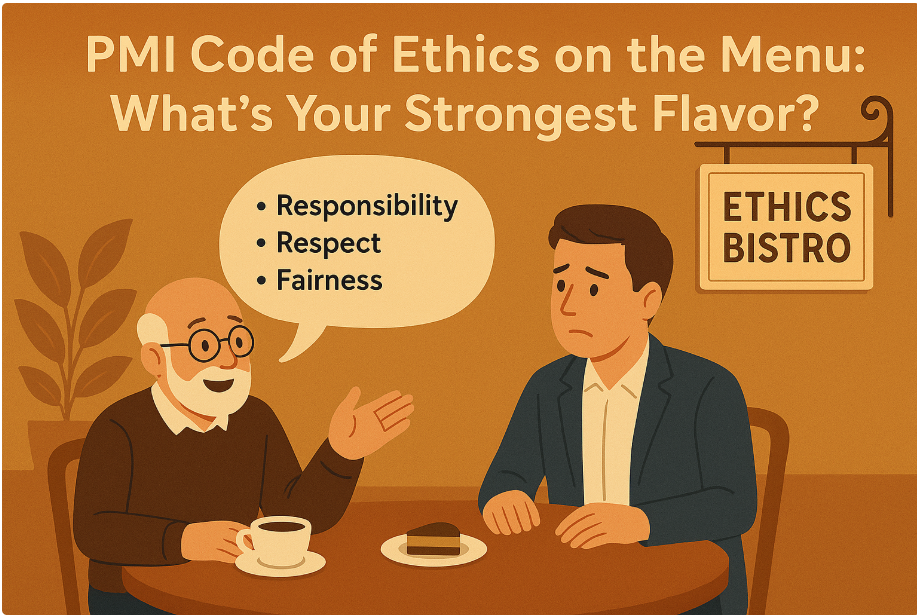
| Imagine walking into a cozy little café called The Ethics Bistro. The air smells of freshly brewed coffee, and the tables are filled with people quietly reflecting on their day. At one corner table sits a project manager named David, looking worried.
The owner of the bistro, a wise old mentor, notices David’s frown and walks over. “Why so serious, David?” the mentor asks. David sighs. “I am leading a project team, but I am struggling to make the right calls. Deadlines, clients, budgets it feels like I am being pulled in every direction. How do I know if I am being fair?” The mentor smiles and says, “Ah, then you need to taste the four-course meal we serve here every day. It is called the PMI Code of Ethics.” First Course: Responsibility “Responsibility is like the soup,” the mentor explains. “It warms the soul. As project managers, we are responsible for our decisions, both good and bad. If something goes wrong, we take responsibility instead of placing blame. Taking responsibility keeps the project honest and the team confident.” Second Course: Respect Next comes the main dish. “Respect is the heart of the meal. Just as food is seasoned with care, respect seasons every conversation. Whether it is a client, team member, or vendor, every person deserves to be valued. Respect builds trust, and trust keeps the project alive.” Third Course: Fairness Then arrives a plate of perfectly balanced flavors. “Fairness means treating everyone equally. No hidden favoritism, no secret deals. Like sharing bread at the table, fairness ensures everyone gets their piece. When the team feels fairness, they give their best.” Final Course: Honesty Finally, dessert is served sweet but powerful. “Honesty,” says the mentor, “is the sugar of relationships. Speak the truth, even when it is uncomfortable. A project can survive a missed deadline, but it cannot survive broken trust.” David listens carefully, sipping coffee. “So, the PMI Code of Ethics is like this meal responsibility, respect, fairness, and honesty. If I serve these values to my team, they will follow me with trust.” The mentor nods. “Exactly. Projects come and go, but the taste of integrity stays forever.” As David leaves the Ethics Bistro that night, the burden feels lighter. He knows that no matter how tough the project becomes, the recipe for ethical leadership will guide him. If you were serving your project team at the Ethics Bistro, which course responsibility, respect, fairness, or honesty would they say is your strongest flavor? Share your answer in the comments. Reference: |
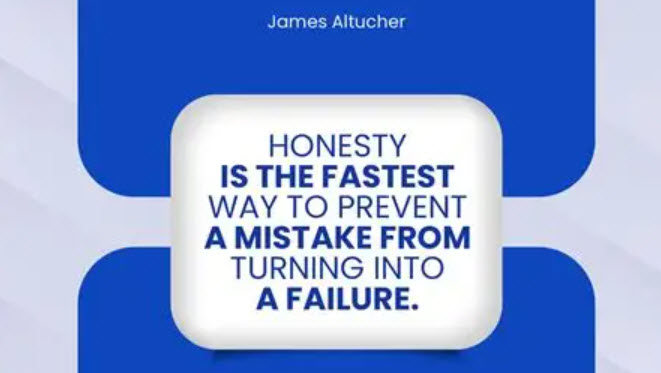
| The Honest Path: Why Truth-Telling Is a Strategic Advantage in Project Management
In the high-stakes world of project management, where deadlines loom and budgets tighten, honesty can feel like a luxury. But it is a strategic necessity. Truth-telling is not just about ethics—it is about building resilient teams, fostering trust, and steering projects toward sustainable success. 🔍 Honesty: More Than a Moral Choice Honesty in project management means transparent communication, accurate reporting, and integrity in decision-making. It is the difference between a project that survives short-term pressures and one that thrives long-term. When project managers embrace honesty, they create a culture where issues are identified early, risks are managed proactively, and stakeholders stay aligned. ⚠️ Common Ethical Dilemmas Even seasoned professionals face moments of ethical tension:
These decisions may seem minor, but they compound over time—leading to mistrust, scope creep, and even project failure. 🧭 Honesty as a Strategic Lever Truth-telling offers tangible benefits:
📜 PMI’s Ethics Code: Honesty at the Core The Project Management Institute (PMI) places honesty as one of its four foundational values—alongside responsibility, respect, and fairness. PMI’s Ethics Code reinforces this by offering practical toolkits and decision-making frameworks to help professionals navigate ethical gray zones with clarity. 🛠️ How to Lead with Honesty Here are actionable ways to embed honesty into your project leadership:
🧩 Conclusion: Honesty Is Leadership In project management, honesty is not weakness—it is wisdom. It is the quiet force that keeps teams united, stakeholders informed, and outcomes aligned with values. The honest path may not always be the easiest, but it is the one that leads to lasting impact. Please share your experiences and thoughts… |
| Collusion in the Bidding Process—A Breach of PMI’s Ethical Foundations
Source credit: istockphoto.com
In a recent workplace incident, Pamela, a project team member, conspired with Donald, a representative of an external vendor, to submit a bid with padded estimates. Their intent was to defraud the firm overseeing the procurement process by inflating costs and securing unjust financial gain. This act of collusion is not only unethical; it is a direct contravention and blatant violation of the PMI Code of Ethics and Professional Conduct, which is built upon four foundational values: responsibility, respect, fairness, and honesty. 🔹 Responsibility Responsibility requires project professionals to own their decisions and uphold the integrity of their roles. Donald’s participation in the fraudulent scheme demonstrates a clear abdication of this duty. Instead of acting in the best interest of the organization and the project, he prioritized personal or external interests. By enabling inflated estimates, he compromised the financial stewardship expected of project professionals and failed to report unethical behavior—a core tenet of responsible conduct. 🔹 Respect Respect in project management means honoring the dignity and rights of all stakeholders. Pamela’s collusion with Donald disrespected the trust placed in him by his team, leadership, and the broader organization. It undermined the collaborative spirit of the procurement process and devalued the contributions of honest vendors who participated in good faith. Respect also includes fostering an environment where ethical concerns can be raised without fear—something this scenario clearly lacked. 🔹 Fairness Fairness is the bedrock of any competitive bidding process. It ensures that all vendors have an equal opportunity to win contracts based on merit, quality, and cost-effectiveness. By padding estimates and manipulating the outcome, Pamela and Donald created an uneven playing field. Their actions disadvantaged other vendors, distorted market competition, and potentially led to the selection of a less qualified or overpriced provider. This breach of fairness erodes trust in the procurement system and damages the reputation of the organization. 🔹 Honesty Honesty is the cornerstone of ethical project management. It demands transparency, truthfulness, and integrity in all communications and decisions. The deliberate inflation of estimates and concealment of collusion are blatant acts of deception. Pamela’s failure to disclose the true nature of the bid and his relationship with Donald violates the expectation that project professionals will act truthfully and avoid conflicts of interest. This dishonesty not only jeopardizes the project’s financial health but also tarnishes the credibility of the individuals involved. Conclusion: A Serious Ethical Breach This scenario is a textbook example of unethical behavior that contravenes every principle outlined in PMI’s Code of Ethics. It highlights the dangers of unchecked collusion and the importance of ethical vigilance in project environments. The consequences of such misconduct extend beyond economic loss, such as reputational damage, legal exposure, and / or erosion of stakeholder trust. Call to Action It is time for the project management community to take a stand. We must reinforce ethical education, implement robust checks and balances, and cultivate environments where integrity is non-negotiable. Fraudulent behavior like this must be confronted—not with silence, but with decisive action. Let us recommit to the values that reflect the highest standards of responsibility, respect, fairness, and honesty define our profession. Let us share best practices, strengthen oversight, and recommit to the values that define our profession. Fraudulent behavior must be confronted—not with silence, but with action. Together, we can build a project management culture rooted in integrity. Questions for the Project Management Community
References: Project Management Institute, Inc. (2025). Ethics. pmi.org. https://www.pmi.org/about/ethics Project Management Institute, Inc. (n.d.). Ethics Guidelines. pmi.org. https://www.pmi.org/about/ethics/guidelines Project Management Institute, Inc. (n.d.). PMI Code of Ethics and Professional Conduct. pmi.org. https://www.pmi.org/-/media/pmi/documents/public/pdf/ethics/pmi-code-of-ethics.pdf
|
|
“Fields of Doubt: When AI Overshoots Human Intuition” In a well-funded agritech pilot, an Africa-based firm rolled out an AI-powered irrigation system across multiple test farms in a rural region of an African country. Based on satellite weather data, historical yield trends, and soil sensors, the AI prescribed precision watering routines down to the hour. On paper, the system outperformed manual methods — until it did not. As seasonal rainfall became erratic due to shifting climate patterns, the AI began overwatering certain plots. Local farmers, relying on generational knowledge of cloud patterns and bird migration, flagged the error. But field technicians, trusting the algorithm’s diagnostics, dismissed their concerns. Days later, root rot set in. The damage was not just agricultural; it was fundamentally ethical. The core dilemma lay in a clash between algorithmic precision and ancestral wisdom. When field workers override the warnings of seasoned local farmers due to uncritical trust in AI, it raises a pivotal question: whose judgment should guide action when technology conflicts with lived human experience? The PMI Code of Ethics and Professional Conduct (CoE&PC) emphasizes our responsibility to honor diverse perspectives, especially cultural and contextual knowledge often marginalized by automated systems. It calls for fairness, respect, and accountability in all professional interactions—not just in what decisions are made, but in how and by whom they are made. The Ethical Decision-Making Framework (EDMF) asks project leaders to systematically examine every ripple of impact: Who might be affected? What competing rights or duties are in play? Ethics here is not abstract and theoretical but downright practical. The framework serves not as a checklist, but as a compass for inclusive, humane decision-making in an increasingly digital world. In this case, accountability was not simply about flipping a switch to deactivate a malfunctioning smart pump — it was about exercising discernment, fostering dialogue, and embracing ethical stewardship in its fullest sense. The true ethical challenge lies not in the hardware or software, but in the human response to it. Technological systems can process data at lightning speed, but they lack the moral compass and contextual sensitivity that only people can bring. Accountability meant actively listening to community voices, especially those rooted in local knowledge, and recognizing when to override automation with empathetic leadership. Staying context-aware required humility to question what seemed certain and to respect the wisdom that is not encoded in algorithms. Ethical stewardship, as guided by PMI’s values of responsibility and respect, demands that professionals treat AI not as an infallible oracle but as a support tool — powerful, but subordinate to human judgment, especially in high-stakes, culturally nuanced environments. How would you decide when human insight should override AI predictions? Have you encountered a project where cultural expertise clashed with data-driven advice? Let us know in the comments as we deliberate, learn, reflect, and keep ethics at the core of innovation. References: Project Management Institute. (n.d.). Code of Ethics and Professional Conduct. pmi.org. https://www.pmi.org/-/media/pmi/documents/public/pdf/ethics/code-values-card.pdf Project Management Institute. (2015). Ethics in Project Management. pmi.org. https://www.pmi.org/about/ethics Project Management Institute. (2011). PMI Ethical Decision-Making Framework (EDMF). pmi.org. https://www.pmi.org/-/media/pmi/documents/public/pdf/ethics/ethical-decision-making-framework.pdf
|
|
"I do not know whether I was then a man dreaming I was a butterfly, or whether I am now a butterfly dreaming I am a man." - Chuang Tzu |