





Guessing is not a strategy: How to build decision velocity with AI and real-time data
June 10, 2026 | Live Webinar
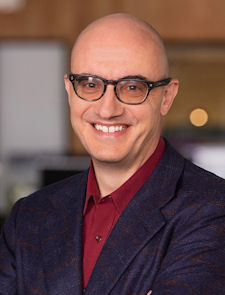
Andy Jordan is President of Roffensian Consulting S.A., a Roatan, Honduras-based management consulting firm with a comprehensive project management practice. Andy always appreciates feedback and discussion on the issues raised in his articles and can be reached at [email protected]. Andy's new book Risk Management for Project Driven Organizations is now available.
When agile first started to expand beyond software development, I had a conversation with one of the early iterations of an agile purist who was bemoaning that other areas of the business were stealing IT’s approach to projects. He complained that everyone was always blaming IT when things went wrong, but that whenever something went well, they wanted to claim it for themselves.
Now, to be fair, that person was never happy unless he was complaining about something. But it was a view that was shared by a number of people in IT. Even now, agile is seen by some as a software development approach that is also being applied to other areas of the business. And that is causing some anxiety in those software development areas, because they see change coming, and they don’t know what it means for them.
Low-code and no-code environments have been around for a while, but they have had limited impact on agile development teams. They are being used for relatively straightforward applications, and I know of some organizations who feel that they have actually been a boost for IT because they have freed up resources to work on more important, more complex initiatives that might otherwise have never been delivered.
But now, we have artificial intelligence to deal with. In the short term, development resources have rarely been in such demand, at least since the days of Y2K. …
Please log in or sign up below to read the rest of the article.
|
"You can make more friends in two months by becoming interested in other people than you can in two years by trying to get other people interested in you." - Dale Carnegie |