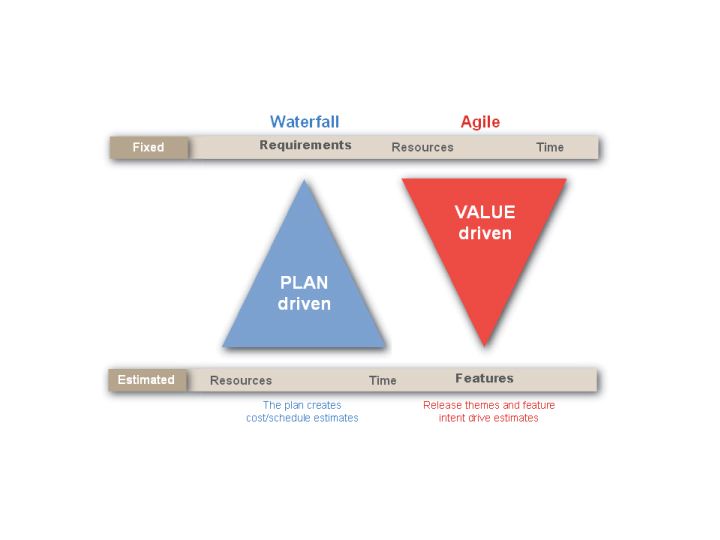
It has been said that agile project management is simple but changes everything. If you’re still interested, here’s an introduction to the principles of agile, including when, why and how it could improve your future project efforts (and 10 steps to finding out).
“If you want to teach people a new way of thinking, don’t bother to teach them. Instead, give them a tool, the use of which will lead to a new way of thinking.” — Buckminster Fuller, American inventor, author and visionary
Agile is an organizational change tool that can lead to positive changes in your projects and programs. It is a very simple and different strategy for project management than critical path and waterfall. This introduction to agile is written for traditionally trained project managers who understand and practice critical-path planning and stage-gate program management. As an introduction, it explores the topic using the familiar structure of Who, What, Where, Why and How.
What Is Agile?
The “iron triangles” below depict the constraints that any project must wrestle with. Waterfall is measured by conformance to the plan. The essential disciplines of waterfall require you to get the plan right and make the phase hand-offs of documents effective. If you get it right, waterfall can be very efficient and successful, but never early.