





Guessing is not a strategy: How to build decision velocity with AI and real-time data
June 10, 2026 | Live Webinar
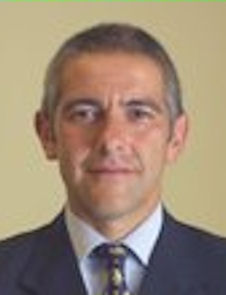
Sergio Luis Conte is a Ph.D. in Software Engineering from Carnegie Mellon University. He holds a Bachelor’s degree in Systems from the Center for Higher Studies in Exact Sciences, CAECE University, Argentina; an MBA from the University of Buenos Aires (UBA) Argentina; and a Magister in Artificial Intelligence from the Buenos Aires Institute of Technology (ITBA), Argentina. Sergio has earned Project Management Institute credentials (PMP, PMI-ACP, PMI-PBA) and the CBAP from the International Institute of Business Analysis (IIBA).
Change is inevitable, constant and permanent. Today´s world is characterized by uncertainty and change. Organizations must continually evolve and adapt to survive, grow and develop. Evolution and adaptation is achieved when organizational structures and the relationships between them are transformed--and move the whole organization from an actual state to a desired state according to a previously defined strategy.
According to the Enterprise Architecture Body of Knowledge (EABOK) [MITRE 2004], an enterprise architecture describes how the elements of an organization (business processes, business functions responsible for them, capabilities and infrastructure) fit together now and in the future. Enterprise architecture also describes how such elements evolve from the actual state to a desired future state to support the organization’s strategic plans.
When transformation needs arise, the business analyst acts as the “host” of change. He or she welcomes change and makes any arrangements to understand and manage all transformation needs at all organizational levels. Through system thinking [Bunge 1979], the Business Analyst is aware that the change will impact the enterprise architecture as a whole.
This article sets out a tried-and-tested way of using enterprise architecture as a road map for the business analyst when liaising between stakeholders …
Please log in or sign up below to read the rest of the article.
|
"I know the meaning of life - it doesn't help me a bit." - Howard Devoto |