





Guessing is not a strategy: How to build decision velocity with AI and real-time data
June 10, 2026 | Live Webinar
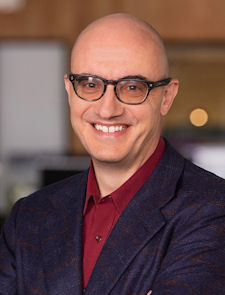
Andy Jordan is President of Roffensian Consulting S.A., a Roatan, Honduras-based management consulting firm with a comprehensive project management practice. Andy always appreciates feedback and discussion on the issues raised in his articles and can be reached at [email protected]. Andy's new book Risk Management for Project Driven Organizations is now available.
In recent years, the idea of the strategic PMO has become more important as organizations looks to tie project execution to corporate strategy. In many ways, these are comparable to second-generation enterprise PMOs (EPMOs) in that they operate at an organization-wide level. However, unlike many early EPMOs, they are more than simply an exercise in economies of scale and process standardization—they are truly driving business value into the project execution functions of the organization.
The problem with this approach is that there is a sizeable hierarchical distance between a strategic PMO and the project teams that are tasked with delivering on the strategy. This tends to result in the maintenance of departmental PMOs that oversee project execution within their own business areas as well as defining more tactical aspects of project execution: process, training, coaching, etc.
This can work very successfully, but the lack of consciously managed alignment between these PMOs can create inefficiencies and friction. I believe it is now time for organizations to implement a comprehensive PMO strategy that manages an integrated ecosystem of PMOs rather than tolerates multiple independent PMO structures. That’s what I want to explore here.
The integrated model
I believe the strategic PMO needs to be the cornerstone of this multi-PMO model; it is the …
Please log in or sign up below to read the rest of the article.
|
I hope if dogs ever take over the world, and they choose a king, they don't just go by size, because I bet there are some Chihuahuas with some good ideas. - Jack Handey |