





Guessing is not a strategy: How to build decision velocity with AI and real-time data
June 10, 2026 | Live Webinar
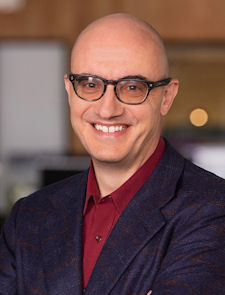
Andy Jordan is President of Roffensian Consulting S.A., a Roatan, Honduras-based management consulting firm with a comprehensive project management practice. Andy always appreciates feedback and discussion on the issues raised in his articles and can be reached at [email protected]. Andy's new book Risk Management for Project Driven Organizations is now available.
In the last few years, I’ve seen a real increase in the number of people reaching out to me to ask about new PMO models. Their organization has (finally) started to understand that the role of the PMO isn’t simply to enforce process and consolidate reporting. Now they want the PMO to help drive improvements in how projects get delivered, and understandably they are looking for some guidance on how they achieve that.
The problem? There simply isn’t a standard model for a business-focused PMO that can be implemented in a few steps, and that will then deliver everything the organization is looking for. Every organization is different, which means that they all have different needs. And that means every PMO has to be capable of offering a unique combination of services, approaches and value in order to support organizational success.
I’ve never been a fan of PMO maturity models, but nowadays they are even less relevant. The characteristics that represent high maturity under one particular model may be completely irrelevant to an organization if they aren’t experiencing “standard” challenges, or aren’t structured in a way that aligns with the assumptions of that model. And attempts to pursue maturity as defined by a model may lead a PMO—and the larger organization—to miss out on opportunities to improve performance in…
Please log in or sign up below to read the rest of the article.
|
"Nearly every great advance in science arises from a crisis in the old theory, through an endeavor to find a way out of the difficulties created. We must examine old ideas, old theories, although they belong to the past, for this is the only way to understand the importance of the new ones and the extent of their validity." - Albert Einstein |