


Project Kickoff: A Complete Beginner's Guide


| Let’s talk about how to lead a kickoff meeting in a way that brings people together and actually makes them believe in the work ahead. There’s this moment that every project manager remembers. It’s that first real kickoff meeting you’re in charge of. Everyone logs in or walks into the room. Stakeholders. Engineers. Designers. Maybe a senior manager. Some people with cameras on. Others muted. And then they all wait. And you realize… they’re all waiting for you. That moment, right there, is where many project managers first feel the weight of leadership. Not because someone gave you a fancy title. But because people are expecting clarity. Direction. Confidence. And let’s be honest, in that first kickoff, you don’t always feel like the most confident person in the room. You’re still figuring things out. Still checking your notes. Still trying to remember the difference between “deliverable” and “milestone” while also wondering if your voice sounds weird on Zoom. I’ve been there… The truth is, running a project kickoff meeting isn’t just about checking boxes or going through slides. It’s one of the most important moments in any project. It’s your chance to set the tone. To build trust. To bring people together around something shared. But nobody tells you that at the beginning. Most guides jump into agendas and templates. They forget the human part, the part where you’re trying to hold a room (or a call) full of different people, all with different goals, and somehow make them feel like they’re on the same team. This article is about that part.. I want to walk through how to prepare, how to lead, and how to follow up on a kickoff meeting, not just with tools, but with the kind of presence that makes people say, “Okay. I trust this person. Let’s go.” But first, let’s slow down and talk about what this meeting is actually for. What a Kickoff Meeting Is Really ForIf you’ve ever been in a bad kickoff meeting, you know the feeling. You join, someone shares their screen immediately, and for the next 30 minutes, it’s just a wall of bullet points. Timelines. Tools. Task lists. Then the meeting ends, and you’re left thinking… “Okay, but what are we doing? And why?” It’s about making sense of the whole thing together. Let me explain… When you’re starting a new project, especially with people who haven’t worked together before, there’s always a little fog in the air. People might have read the documents. They might have seen the goals. But that doesn’t mean they feel aligned. They don’t always know:
It creates a shared starting point. A moment of alignment. Not just around the tasks, but around the purpose, the people, and the way you’ll work together. And honestly, that’s what people want! Even if they don’t say it out loud, most team members walk into a new project hoping for some kind of clarity. Something that makes them feel like this project isn’t just another task list, but something real. Something that might actually succeed. Your job in the kickoff is to bring that feeling into the room. This is about being prepared. Being real. Being someone they can look to and think, “Okay, this person’s got it.” Next, I’ll show you how to get there. Starting with what you do before the meeting even starts. Before the Kickoff: Preparing Like a HumanMost of what makes a great kickoff happens before the meeting even starts. I know that sounds boring. Preparation isn’t glamorous. Nobody’s clapping for the person who checked the invite list twice or rehearsed the project scope out loud at 11 PM the night before. But it’s in that quiet prep work where you build confidence. So let me walk you through what actually helps. Talk to People Before the MeetingBefore you bring the full group together, talk to key people one by one. Stakeholders, product owners, tech leads, and whoever has a say in how this project goes. Ask questions like:
And you start seeing things that don’t show up in documents. You catch early tensions. You learn about side expectations. You find out someone already feels stretched and is worried this project will make things worse. And once you know all this, you can lead the kickoff in a way that actually lands with the people in the room. Get Clear on the “Why” and the BoundariesBefore you run a kickoff, you need to understand the project. I don’t mean memorizing the dates or deliverables. I mean understanding the purpose. What problem are we solving? Why now? What happens if this project goes well? What happens if it fails? When you have that kind of clarity, you speak differently. You don’t sound robotic. You sound like someone who cares. Also, you need to be clear about what’s in and what’s out. The scope. The limits. The assumptions. Because if you’re not clear, you’ll notice something: People will ask questions during the kickoff, and you’ll start saying things like, “Hmm, I think so… maybe? We’ll figure it out later.” And that slowly deteriorates trust. So spend the time… Read the documents… Ask questions… Play with a whiteboard if it helps you think. Whatever your way is, use it. Get clear before you go live. Build a Simple AgendaYou don’t need a 20-slide presentation. But you do need a plan. Something like:
Share it ahead if you want. Or just bring it into the meeting and walk through it calmly. Either way, having a structure helps people feel safe. They know where the meeting is going. They don’t feel lost. Learn the Names and RolesThis one is small, but I promise it makes a difference. Take five minutes and learn people’s names and roles. Even better if you understand why they’re in the project. So instead of saying, “I think someone from the data team is here,” you say, “I know we have Marco from the analytics team, who’s helping us validate the success metrics.” Feels different, right? When people hear their name and see their work being respected from day one, they lean in. It builds a connection. And trust grows faster when people feel seen. Running the Meeting: Calm, Clear, and in ControlThis is the moment. People are in the room. Some are staring at you. Some are multitasking. Someone’s audio isn’t working. Someone else is already late. And you’re the one everyone expects to bring the meeting to life. If this makes your palms sweat a little, that’s normal. It doesn’t mean you’re not ready. It just means it matters. So, how do you begin? Start With Presence, Not SlidesYou don’t need to open the meeting with a slide deck. You don’t need a polished speech. What you do need is presence. Take a breath. Greet people. Use names when you can. Thank them for being there. If it’s a remote call, acknowledge the small things:
It breaks the cold silence. It shows that you’re in the room, not just going through the motions. Then you start. And when you do, begin with the most powerful thing you can offer: the reason why this project exists. Talk About the WhyBefore timelines. Before Jira boards. Before delivery dates. Talk about the reason people are meeting there. This could sound like:
When people hear the “why,” their work starts to make sense. They understand how their piece fits into something bigger. And that feeling makes people care. Then You Move to the WhatOnce the why is clear, walk them through what you’ll actually deliver. Keep it simple:
Don’t hide behind slides. Use them to support the story, not replace it. Also, be honest about what’s still in progress. If something is unclear, say so. People can feel when you’re being real with them. It’s better to say: “We’re still finalizing a few requirements this week, and I’ll keep you all posted,” than to pretend everything’s locked in and then backtrack later. Now Talk About the WhoThis is a great moment to go around the room and let people introduce themselves. You can say: “Let’s quickly go around and say your name, your role, and one sentence about how you’ll be supporting the project.” You’ll be surprised how helpful this is. It breaks the tension. It lets people hear each other’s voices. And it gives you a natural opportunity to start calling people by name later in the project. After that, explain the main roles. Who’s the sponsor? Who makes final decisions? Who owns the delivery? This clears up the confusion right away. It avoids problems later where everyone’s waiting for someone else to act. Finish With the HowNow it’s time to talk about how you’ll work together. Keep it practical:
“We’ll use Teams for all our async updates, and Monday check-ins will be 30 minutes, focused on blockers and priorities.” The goal here is not to create rules. It’s to create shared habits. You’re helping people see how this team will work, how decisions will be shared, and where they can speak up if something’s off. Leave Space for QuestionsThis is big… If you want people to feel safe during the project, you need to show that questions are welcome from the very first meeting. Ask: “What questions do you have?” “Is there anything that’s unclear or missing for you right now?” And then pause. Really pause. Wait longer than feels comfortable. Let people think. Let someone unmute. Let that one person who always needs a second longer find their words. That silence is not a problem. That silence is an invitation. After the Meeting: The Follow-Up That Builds TrustYou finished the meeting. Everyone left the room or logged off the call. And you take a deep breath, maybe stretch a little in your chair, maybe feel a bit of relief. But that kickoff doesn’t really end when the meeting ends. How you follow up afterward tells the team something important. It shows them if what just happened was just another calendar slot… or the start of something real. Follow-up is where you show care. Where you give people clarity again. Where you create momentum instead of letting the meeting float away and fade by tomorrow. Let me explain what to focus on right after the kickoff is done. Send a Clear and Human SummaryIt doesn’t need to be long. But it does need to be clear. Instead of forwarding slides or sharing the meeting recording and calling it a day, write a short summary. Keep it clean. Use plain words. Focus on the key points. Things like:
And let’s be honest. Most people forget the details within hours. A short summary can save confusion and prevent the classic “But I thought you were doing that” later on. Clarify OwnershipIf there were names mentioned during the meeting, follow up to confirm them in writing. If something wasn’t assigned yet, this is the time to assign it. You don’t have to sound formal. Just direct and clear. For example: “Alex will lead the user story mapping next Thursday.” “Maria will confirm the timeline with the vendor.” “I’ll follow up with the design team for early inputs.” Simple things like that avoid tasks getting lost in the fog. And people feel better when they know who’s owning what. It gives the project some structure right from the start. Reach Out One-on-One (When It Feels Right)Sometimes during the kickoff, you’ll notice someone looks confused. Or they didn’t say much. Or maybe they asked a question that felt like they had a deeper concern, but didn’t want to say it in front of the group. It’s okay to follow up directly. A quick message like: “Hey, I noticed you had a question during the kickoff, anything you’d like to talk through?” or “Thanks for joining the meeting today. If anything felt unclear or if you have concerns, I’m here.” It’s about showing people that you’re paying attention. That they matter. People remember this kind of small gesture. And it makes it easier for them to come to you later when they really need help. Stay Consistent After the KickoffOne common mistake is treating the kickoff like a one-time event instead of the starting point of a cadence. The real work starts now. So the trust you built in that first meeting has to keep growing in the weeks that follow. That means showing up when you said you would. Keeping the next steps moving. Giving updates even when there’s nothing shiny to share yet. Trust builds from consistency. Not from big words. So if you said updates will happen every Monday morning, send that message on Monday morning. Even if it’s short. Even if there’s not much new. This tells people that the project has someone steady at the wheel. And that changes everything. Small Mistakes That Are Totally NormalEven when you prepare well, things happen. You forgot something. You speak too fast. You feel awkward when you share your screen, and it takes five seconds too long to load. And the voice in your head starts whispering, “That didn’t go well, did it?” But let me tell you the truth. That voice is wrong. So let’s talk about a few very normal things that might happen. And why they’re not the end of the world. You Forgot a NameYou know how it is. You practiced the list. You had it all written down. And then, right when you need it, your brain goes blank. It happens… Instead of panicking, just be honest. Say something like, “I just had your name in my notes, and of course, now I can’t find it, sorry, could you remind me?” People usually smile when you say that. Because they’ve done the same thing. And the truth is, being honest in the moment is much better than trying to fake it and hoping nobody notices. You Miss a Point or Skip a SlideSometimes, in the middle of presenting, you realize you skipped a section. Or you forgot to mention an important detail. That little panic rises, should you go back? Should you ignore it? Just pause, breathe, and name it. Say, “I just realized I skipped something important, let’s quickly go back to that,” and keep going. Nobody expects perfection. What they appreciate is presence. When you stay grounded and real, even after a slip, that builds more trust than pretending it didn’t happen. Someone Pushes Back on Your PlanYou might get a sharp question. Or a comment that sounds more like a challenge than curiosity. This can feel intense in the moment, especially if you’re still building confidence. But remember, your job is not to have all the answers. It’s to create clarity, ask the right questions, and keep the conversation moving forward. So when someone challenges something, try this: “That’s a fair point. Let me check on that after this call and come back to you.” or “Good question, I don’t have that detail yet, but let’s make sure we include it in our next planning touchpoint.” You’re allowed to not know everything. You’re allowed to get back to people later. That doesn’t make you less prepared. It makes you responsible. You Feel NervousThis one is quiet, but powerful. Feeling nervous is often hidden under the surface, and it can make you question yourself the most. But nerves don’t mean you’re not ready. They usually mean you care. And most of the time, people don’t even notice you’re nervous. What they do notice is whether you show up with honesty. Whether you try to make the room safe. Whether you listen. If you do those things, you’re already doing better than you think. Conclusion: The Kickoff Isn’t a Performance. It’s a Beginning.You don’t need to run a perfect meeting. You don’t need to impress the room with slides or sound like you’ve done it a hundred times. What you really need is presence. When you show up with clarity, with care, and with just enough structure to help people feel safe, you’re already leading. Even if your voice shakes a little. Even if you forget something. Even if you’re still figuring it all out. Kickoff meetings are not about showing off. They’re about showing up. And they’re powerful not because of how polished they are, but because they give people a reason to believe the project can work. That the team can work. That there’s someone holding the thread and keeping things steady. If you’ve made it this far, you probably care deeply about doing that job well. You want to serve your team. You want to build trust. And you want to feel good at the end of a meeting, knowing that you helped people take a real step forward. So next time you’re preparing for a kickoff, try this: Pause for a moment and ask yourself, “What’s the one feeling I want people to leave this meeting with?” Then shape everything around that. Because the energy you bring is more powerful than the agenda you write. And if something goes wrong? Smile, fix it, and keep going. That’s real leadership. Not the perfect kind. The humankind. Have you led a kickoff that surprised you, for better or worse? Tell me about it in the comments. Or just hit reply and share something you’re working on. I read every message. Thanks for reading! |
Posted on: February 09, 2026 10:00 AM
| Permalink |
Comments (5)
The Hidden Cost of Agreeability in Project Management
| There is a dangerous misconception in the world of Project Management. We often believe that a “good” Project Manager is a problem solver who always finds a way to say “yes.” We believe that when a stakeholder asks for a new feature, a shorter timeline, or an extra report, the mark of a high-performer is to smile, nod, and make it happen. This is a fallacy. In fact, the inability to say “no” is one of the primary drivers of project failure. When we agree to everything, we are not being helpful. We are abandoning our primary duty: to manage the constraints of reality. Psychologically, this behavior is understandable. Humans are wired for social connection. Researchers like Baumeister and Leary have documented our profound “need to belong.” Evolution has taught us that rejection from the group equals danger. So, when a senior executive asks for a change, our biological instinct is to comply. We do not want to be the “blocker.” We do not want to be the “bureaucrat.” But in a project environment, this instinct is fatal. A Project Manager who cannot say “no” is not a manager. They are simply a courier for bad decisions. The Economics of a “Yes”Let us look at this through the lens of resource management. Every project has finite resources (time, budget, and human capacity). This is the iron law of the Triple Constraint. When you say “yes” to a new request without removing an existing one, you are not creating value. You are creating a deficit. You are effectively borrowing time from the future. At first, this feels like good service. The stakeholder is happy. You feel competent. But eventually, the bill comes due.
Trust erodes. This brings us to a critical realization for any Project Manager who wants to move from junior to senior: Protecting the project often requires disappointing the people. Reframing the “No”We need a paradigm shift. We often view a refusal as a negative act. We see it as closing a door. But in professional leadership, a “no” is actually a protective act. When you say “no” to scope creep, you are saying “yes” to the quality of the current deliverables. When you say “no” to an unrealistic deadline, you are saying “yes” to the sanity and sustainability of your team. You are acting as a guardian of the project’s integrity. Once you understand this, the fear of rejection diminishes. You are not rejecting a person. You are rejecting a risk that threatens the success of the mission. This is not rebellion. It is responsibility. A Professional Framework for RefusalUnderstanding the theory is easy. Executing it in a high-pressure meeting is hard. You do not need to be aggressive to be firm. You need a protocol. Here is a 5-step framework to decline requests while maintaining (and often increasing) your professional authority. 1 — The Strategic Pause (Control the Impulse) The biggest mistake novice managers make is answering immediately. The amygdala (the fear center of the brain) wants to please the person in power. Override this. When a request comes in, pause. Say (Let me check our capacity and get back to you). This buys you time to analyze the impact rationally, rather than responding emotionally. 2 — Validation (The Human Bridge) Never start with the word “no.” It triggers defensiveness. Start by validating the request. (I understand why this feature is critical for the marketing launch). (I see the value in adding this report for the board meeting). This signals that you are an ally, not an adversary. You understand the business value, even if you cannot execute the task. 3 — The Resource Reality (The “Why”) Now, state the constraint clearly. Do not use emotional language like “we are too busy.” Use structural language. (Our current velocity is fully allocated to the Phase 1 release). (Adding this scope now introduces a risk to the critical path). You are not saying “I don’t want to do this.” You are saying “Physics does not allow this.” It is hard to argue with math. 4 — The Trade-Off (The “How”) This is where you transition from a blocker to a partner. Offer an alternative. (We cannot do this by Friday, but we can prioritize it for the next sprint). (If this is a priority, which of the current items should we deprioritize to make space?) This forces the stakeholder to share the burden of the decision. If everything is a priority, nothing is. 5 — The Firm Close (The Boundary) Do not leave the door halfway open with phrases like “we will try.” “Trying” is not a strategy. Be warm, but definitive. (I want to ensure we deliver the core scope with excellence, so we will stick to the current plan for this week). This establishes you as a reliable leader who keeps promises. Case Study: The Executive DashboardLet’s apply this to a real scenario. The Situation: It is 4:00 PM. A senior director pings you asking for a complex new data cut for a meeting tomorrow morning. Your team is already 100% utilized. The Amateur Response: (Sure! We will squeeze it in). Result: The team stays late, makes mistakes, and resents you. The Professional Response (Using the Framework): (Pause) Let me look at the schedule. (Validate) I know having this data is important for your meeting tomorrow. (Reality) However, the team is currently locked down on the migration deployment, and pulling them off puts the release at risk. (Trade-Off) I can pull a raw export for you today, or we can build the full dashboard properly by next Wednesday. (Close) Let’s do the raw export for now so the migration stays on track. Notice the difference? You did not just say no. You managed the risk. The Algorithm of PracticeIf you are accustomed to being a “yes person,” this transition will feel uncomfortable. It is like training a muscle. You cannot start with the heaviest weight. Start small. Practice in Low-Stakes Environments:
The Trust ParadoxHere is the final truth about saying “no.” We fear it will destroy trust. But in reality, it builds it. Stakeholders do not trust the Project Manager who promises the moon and delivers a rock. They trust the Project Manager who tells them exactly what is possible, who warns them about risks early, and who delivers exactly what they promised. Your “yes” only has value if you are willing to say “no.” You likely have a request sitting in your inbox right now that you know you should decline, but you have been avoiding it. Apply the framework.
Observe the result. You will likely find that the world does not end. In fact, you might find that for the first time, you are truly leading. |
Posted on: February 04, 2026 10:00 AM
| Permalink |
Comments (7)
The "Perfect" Project That Everyone Hated: A Guide to Value Delivery
| Have you ever cooked the perfect steak for a vegetarian? I mean, really perfect. You bought the finest cut of meat. You seasoned it with Himalayan salt. You seared it at the exact right temperature for the exact right amount of seconds. You plated it with a sprig of rosemary. Technically, your execution was flawless. On Time? Yes. On Budget? Yes. Scope (one steak)? Delivered. But when you put it in front of your vegetarian friend, what is the value? Zero. Actually, it might be negative value, because now they are offended and hungry. This is the tragedy of modern Project Management. We are obsessed with the cooking. We are obsessed with the kitchen. We measure the temperature of the oven every five minutes. But we forgot to ask if the person eating is actually hungry for steak. We need to talk about why so many "successful" projects—projects that hit every single deadline and budget target—are actually failures. And how PMBOK 8 is finally giving us the language to fix this. The Cult of the "Iron Triangle"For decades, we were raised in the church of the Iron Triangle. Time. Cost. Scope. If you kept the triangle equilateral, you were a hero. We built our entire careers on this. We have certifications that prove we can calculate the Critical Path to the minute. But here is the uncomfortable truth: The Iron Triangle measures constraints, not success. It tells you how you built the bridge. It does not tell you if the bridge goes to a place anyone wants to visit. I have seen projects that were six months late and 20% over budget, but they saved the company from bankruptcy. That is a success. I have seen projects that were delivered three weeks early and under budget, but the software was so annoying to use that the sales team went back to using Excel spreadsheets. That is a failure. If you are celebrating "Go-Live" as the finish line, you are missing the point. "Go-Live" is just the moment the steak hits the table. The value only happens when someone eats it. PMBOK 8 and the "Value Delivery System"The 7th Edition of the PMBOK Guide was a shock to many people because it stopped talking so much about "processes" and started talking about "value." It introduces the concept of a Value Delivery System. This sounds fancy, but it basically means: Projects do not exist in a vacuum. A project is a gear in a machine. If the gear is shiny and perfect, but it doesn't fit the machine, it is trash. PMBOK 8 tells us that "Outputs" (what you make) are different from "Outcomes" (what changes). Output: We launched the new CRM software. (Hooray, we are done!) Outcome: The sales team closes deals 20% faster. (This is the only thing that matters.) If you launch the CRM (Output), but the sales team finds it confusing and sales slow down (Outcome), your project failed. Even if you have a beautiful Gantt chart proving you did your job. The "Sunk Cost" Trap of the Business CaseWhy does this happen? Why do smart people build useless things? Usually, it is because of the Zombie Business Case. The project gets approved in January. The Business Case says, "The market needs X." You spend six months building X. But in April, a competitor released Y. Or the economy crashed. Or the strategy changed. By July, X is no longer valuable. But what do we do as Project Managers? We keep building X! Because that is the scope! If we stop, we have to explain why we "wasted" money. So we finish the project. We deliver X. Everyone claps. And then X sits on a digital shelf gathering dust. We prioritize Project Efficiency (doing the work right) over Project Effectiveness (doing the right work). PMBOK 8 encourages us to be Stewards. A steward protects the organization’s value. Sometimes, a good steward says, "Hey, I know we are halfway done, but this project doesn't make sense anymore. We should stop." That takes guts. That is leadership. Merely finishing the checklist is administration. The "Streetlight Effect"There is an old joke about a drunk man looking for his keys under a streetlight. A cop asks, "Did you lose them here?" The man says, "No, I lost them in the park. But the light is better here." We focus on Time and Cost because the light is better there. It is easy to measure if you are over budget. It is a simple math problem. It is very hard to measure if you are delivering "value." Value is fuzzy. Value takes time to appear. So, we focus on the easy metrics. We create dashboards that show "Tasks Completed." But this creates a false sense of security. You can complete 100% of your tasks and deliver 0% value. How to Bridge the Gap (Practical Steps)So, how do you stop being a "Steak Chef for Vegetarians"? How do you ensure your project actually matters? 1. Stop Celebrating the "Launch" Change the culture of your team. The launch is not the victory. The launch is the start of the value journey. Do not have the "Project Closure Party" on the day of deployment. Have it three months later, when the data shows that people are actually using the thing. This signals to the team that usage is the goal, not just deployment. 2. The "So What?" Test Every time a stakeholder adds a requirement, ask "So what?" "We need a report generator." "So what?" "So we can see weekly sales." "So what?" "So we can adjust inventory faster." Ah! There is the value. Inventory adjustment. If the report generator doesn't help adjust inventory, it is useless. Keep asking until you find the human behavior that needs to change. If you can't find it, don't build it. 3. Invite the "User" to the Kitchen Don't wait until the end to serve the steak. Give them a taste test in the middle. This is Agile thinking, but you can apply it to Waterfall too. Show the stakeholders the messy, unfinished work. "Is this what you meant?" "Does this solve the problem?" If they say no, you saved yourself three months of wasted work. PMBOK 8 calls this "short feedback loops." I call it "avoiding disaster." The Emotional Reality of "Value"There is a hard truth here for us PMs. We like to think we are builders. We like to point at a skyscraper or a software platform and say, "I did that." But if nobody lives in the skyscraper, you didn't build a home. You built a monument to your own ego. Real success is silent. Real success is when the user doesn't even notice your project because it works so well. Real success is when the business makes more money, or the employees are less stressed, or the customer is happier. That is harder to put on a resume than "Managed $5M budget." But it is the only thing that sustains a career. The next time you are staring at your project plan, asking "Are we on track?", stop. Ask a better question. "Are we merely busy? Or are we actually useful?" Because being busy is easy. Being useful is what makes you a professional. |
Posted on: February 02, 2026 10:00 AM
| Permalink |
Comments (7)
From Traffic Lights to Roundabouts: A Guide to Adaptive Governance
| When a project starts to slip, what is your first instinct? Be honest. When the deadline is at risk, or the budget is getting tight, or the client is sending angry emails... what do you do? You tighten your grip. You schedule an extra status meeting. You ask the team for a daily update instead of a weekly one. You create a new "Risk Register" that is three times longer than the old one. You demand more granular data. You think, "If I can just see everything, I can fix everything." It feels like the responsible thing to do. It feels like safety. But it is a trap. In the world of complex projects (which is basically every project today), more control often leads to less success. This is a hard pill to swallow for us Project Managers. We literally have "Manager" in our title. We are taught that our job is to control the variables. In a complex system, control is an illusion. And chasing that illusion is making your project fragile, slow, and likely to break. Let’s talk about why your steering wheel isn’t connected to the tires anymore. The "micromanagement" Death SpiralThere is a phenomenon I call the Control Paradox. It goes like this:
We do this because we confuse Complex systems with Complicated systems. A car engine is Complicated. It has many parts, but if you have the manual, you can predict exactly what will happen if you turn a screw. You can control it. A project team building software (or a bridge, or a marketing campaign) is Complex. It involves humans, emotions, weather, market changes, and technology. It is a living ecosystem. You cannot "control" an ecosystem. You cannot order a rainforest to grow faster by measuring the height of the trees every hour. If you try to impose rigid industrial controls on a living complex system, you strangle it. The Illusion of the DashboardWe love our dashboards. Green, Yellow, Red. They make us feel like pilots in a cockpit. But in a complex project, the dashboard is often a lie. If you demand strict adherence to a plan, your team will give you what you ask for. They will make the dashboard green. How? By cutting corners on quality. By hiding risks. By doing the easy work first to show "progress" and leaving the hard, messy work for later. You have created The Illusion of Safety. You are flying the plane, and all the dials say "Everything is fine," because you threatened to yell at anyone who showed you a red dial. Meanwhile, the engine is on fire. PMBOK 8 moves away from this rigid "Process" mindset. It talks about Performance Domains and Principles. One of the key principles is "Navigate Complexity." Notice it does not say "Remove Complexity" or "Control Complexity." It says Navigate. You are not a train conductor on a fixed track. You are a sailor on the ocean. You cannot control the waves (the market, the stakeholders, the tech issues). You can only control how you adjust your sails. Fragile vs. Resilient GovernanceOld-school governance is about Gates. "You cannot pass until you have these 5 documents signed." This creates Fragility. If one document is missing, everything stops. If the approver is on vacation, the project halts. The system is brittle. It breaks under stress. PMBOK 8 encourages a shift toward Adaptive Governance. This is about Guardrails. "You can go anywhere you want, as long as you stay between these lines." Think of the difference between a Traffic Light and a Roundabout. A Traffic Light is Control. It tells you exactly when to stop and go. But if the light breaks, or if there is no traffic at 3 AM, the system fails. You sit there waiting for a green light when the road is empty. That is inefficient. A Roundabout is Adaptive. It has rules (yield to the left), but it relies on the judgment of the driver. It flows. It handles heavy traffic and light traffic equally well. In a complex project, you need more roundabouts and fewer traffic lights. You need to trust the team's judgment within the guardrails (budget, timeline, quality standards), rather than trying to drive their car for them. But... How Do I Report This?This is the scary part. If you tell your boss, "I am not controlling the team, I am enabling them," your boss might look at you like you are crazy. Executives love control too. They love certainty. So, how do you manage the "Illusion of Safety" without getting fired? 1. Measure Outcomes, Not Outputs Stop counting how many tasks were completed (Output). Start measuring if the problem is being solved (Outcome). In a complex system, completing 100 tasks is useless if they are the wrong tasks. Shift your reporting to "Value Delivered." "We didn't finish the 10 specs you asked for. Instead, we built a prototype that proved the customer actually wants X. We saved the company $50k in wasted dev time." That is a better story than "We are 100% compliant." 2. Shorten the Feedback Loops Control tries to predict the future. Resilience tries to react to the present. Instead of a massive 6-month plan (which is just a guess), break it down. "We don't know exactly what will happen in November. But we know exactly what we are doing this week." The shorter your loop, the less "control" you need, because the risk is smaller. You can correct course quickly. 3. Celebrate Bad News This is counter-intuitive. If you want real safety, you need a culture where people run toward you with bad news. If you punish bad news (by adding more controls/meetings), people will hide it. When someone says, "I think this module is going to fail," you should say, "Thank you for telling me early! Now we can fix it." This removes the illusion. It puts the real data on the table. The "Gardener" MindsetPMBOK 8 is asking us to evolve. We need to stop acting like Machine Operators, pulling levers and watching dials. We need to start acting like Gardeners. A gardener cannot "force" a tomato to grow. A gardener prepares the soil. A gardener waters the plant. A gardener removes the weeds (obstacles). A gardener ensures there is enough sun (resources). And then? The gardener watches and adjusts. If it rains too much, they dig a trench. If it is too hot, they provide shade. They do not yell at the tomato for growing crooked. They put up a stake to support it. This feels less "safe" than being a machine operator. You cannot predict exactly how many tomatoes you will get. But in a complex world, it is the only way to actually get any fruit at all. So, loosen your grip. Take a breath. Look at the system, not just the spreadsheet. The project will survive without your micromanagement. In fact, it might finally start to thrive. |
Posted on: January 26, 2026 10:00 AM
| Permalink |
Comments (1)
The Economics of Project Leadership
| The Illusion of the Sudden Crisis There is a pervasive myth in project management that stakeholder problems are sudden events. We believe that everything is going fine until the day a heavy executive swoops in and changes the requirements. Or until the day a key partner suddenly refuses to sign off on a deliverable. We treat these moments like natural disasters. Unpredictable. Unavoidable. But if you analyze the anatomy of a failed project, you rarely find a sudden explosion. You find a slow leak. Stakeholder friction does not start in the middle of a project. It starts at the very beginning. It begins with small assumptions. It begins with unsaid expectations. It begins with silence. The hardest part of leading a project is not the technical execution. It is the political navigation. And the only way to win that game is to play it before the whistle blows. The Economics of TrustWe need to shift how we view stakeholder engagement. It is not a “task” to be completed. It is an investment strategy. Think of Trust as a form of capital. At the start of a project, your account is empty. You have not proven anything yet. Every time you engage early, listen without defending, or clarify a vague requirement, you are making a deposit. You are building a reserve of social capital. Most Project Managers wait too long. They wait until they have a “perfect plan” to show. They wait until they need something. This is a strategic error. If you only talk to stakeholders when you need a decision or when you have a problem, your relationship is purely transactional. You are withdrawing from an empty account. But if you engage early (when the stakes are low) you build the capital you will need later (when the stakes are high). The Psychology of the StakeholderTo manage stakeholders effectively, we must understand their psychological drivers. Stakeholders are not obstacles. They are humans operating under pressure. Behavioral science tells us that people are driven by a need for Agency (control over their environment) and Safety (freedom from threat). When a project starts, stakeholders are often quietly afraid.
Your job is not to “manage” them. Your job is to reduce the threat level. You do this by giving them Agency and Safety early in the process. A Protocol for Early InterventionYou do not need a complex strategy to fix this. You need a simple protocol for the first conversation. When you engage a stakeholder for the first time, do not start by talking about the project timeline. Start by talking about their reality. Here is a 5-point framework to structure that initial interaction. Contextual Inquiry (The Role) Do not assume you know why they are here. Ask (How does this project connect to your current priorities? What does your involvement look like in an ideal world?) This validates their status and gives you intelligence on their actual capacity. Value Definition (The Win) Success is subjective. Ask (If we are sitting here six months from now celebrating a win, what exactly has happened? What does success look like to you?) You will often find that their definition of success is completely different from what is written in the project charter. The Pre-Mortem (The Fear) This is a technique used by top strategists. Invite them to imagine failure. Ask (What worries you about this initiative? Based on your experience, how could this project fail?) This allows them to voice their fears safely. It turns them from a critic into an advisor. Communication Architecture (The Flow) Do not guess how they want to be updated. Ask (How do you prefer to receive information? Do you want the weekly details, or just the red flags?) Aligning with their communication style creates psychological safety. It shows you respect their time. Pattern Recognition (The History) They have been here longer than you. Use that. Ask (What have you seen go wrong in similar projects in this organization?) This gives you the “tribal knowledge” that is never written down in any process document. 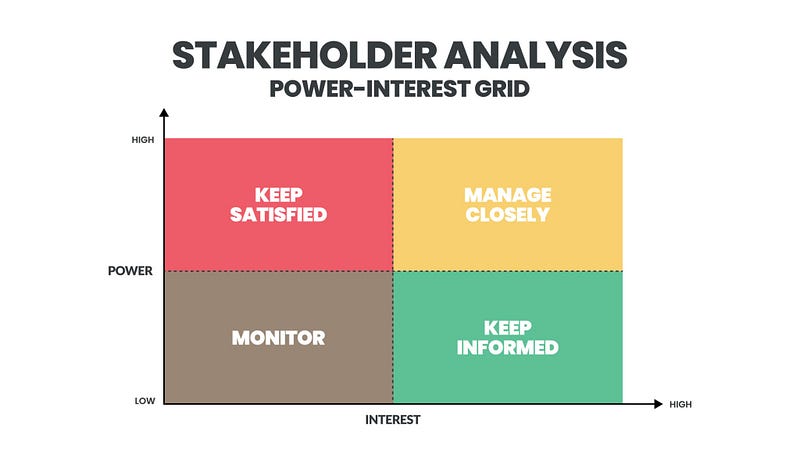 The 5 Deadly Sins of Stakeholder ManagementEven with the best intentions, we fall into traps. These are the five most common behavioral errors Project Managers make, and how to correct them. 1. The “Big Reveal” FallacyThe Mistake: You wait until the work is perfect before showing it. You want to impress them.The Reality: Silence breeds suspicion. While you are working in the dark, they are creating their own narrative about why you are late. The Fix: Show imperfect work early. Iterate in public. It proves momentum. 2. The Broadcast ErrorThe Mistake: Treating every stakeholder the same. You send one generic email to everyone.The Reality: A customized message is a signal of respect. A generic message is noise. The Fix: Segment your audience. The Executive Sponsor needs a different message than the Technical Lead. Tailor the signal to the receiver. 3. The Optimism BiasThe Mistake: Hiding risks to “protect” the relationship. You hope the problem will go away.The Reality: Bad news does not get better with age. It gets expensive. The Fix: Treat risks like data. Share them early and neutrally. (We are monitoring this risk. Here are our options). 4. The Ego Trap (Defensiveness)The Mistake: A stakeholder challenges your plan, and you argue back.The Reality: When you defend, you stop listening. You signal that being “right” is more important than the project outcome. The Fix: Be curious. Ask (Help me understand your concern. What are we missing?) 5. Selection Bias (Ignoring the Quiet Ones)The Mistake: Focusing only on the loud, demanding stakeholders.The Reality: The quiet stakeholders often hold the power to veto. Their silence is not agreement. It is often disengagement. The Fix: Proactively hunt for the quiet voices. Ask (I haven’t heard your thoughts on this yet, and I want to make sure we are not missing your perspective). The Strategic AdvantageUltimately, Stakeholder Management is not about being liked. It is about alignment. When you invest in these relationships early, you change the physics of the project. When a crisis hits (and it will), a trusted stakeholder becomes an ally who helps you solve the problem. An untrusted stakeholder becomes a judge who sentences you for the problem. The difference between those two outcomes is rarely technical. It is almost always relational. Do not overthink this. Look at your current project. Identify one stakeholder you have not truly connected with yet. Maybe it is someone quiet. Maybe it is someone intimidating. Send a simple message today. (I would love to get your perspective on how the project is shaping up. Do you have ten minutes to share your thoughts?) Then, stop talking and listen. You are not just gathering requirements. You are building the safety net for your future self. |
Posted on: January 21, 2026 10:00 AM
| Permalink |
Comments (1)


