




Guessing is not a strategy: How to build decision velocity with AI and real-time data
June 10, 2026 | Live Webinar
| last edited by: erin decaprio on Oct 2, 2006 6:20 PM | login/register to edit this page | ||
 A set of techniques used to analyze current systems and assess the degree of support provided to the set of business activities being reengineered. Data, procedures, and problems can be analyzed. Assessments of user and technical satisfaction can also be performed.
Procedures
InstructionsFor any application of this set of techniques, it is necessary to confirm the scope of the analysis and the level of detail required. If an inventory of system components and/or a set of source material has not been assembled, perform a systems component mapping. This is a vital first step in applying these techniques (see Systems Component Mapping). In addition to component systems, identify any other "systems" used to support the set of activities being reengineered. These manual systems tend to capture key business data which also needs to be analyzed. Sometimes these manual systems are uncovered during interviews (see Structured Interviewing). In addition, survey the information technology organization to identify:
After the data has been analyzed, it is often useful to analyze current procedures. The purpose of analyzing current procedures is to document the structure and dependencies of procedures in current systems in a way that facilitates ready comparison with the activity models (see Process Modeling). Other reasons include:
Create a data flow diagram of the current system. Data flow diagrams show how the procedures on a procedure decomposition list interact. Data flow diagrams not only show the basic information dependencies between procedures, but also how the dependencies occur. Show all procedures on the procedure list Perform a usability and usefulness assessment of the current systems by measuring satisfaction from a business or user perspective and a technical perspective. For each system, determine:
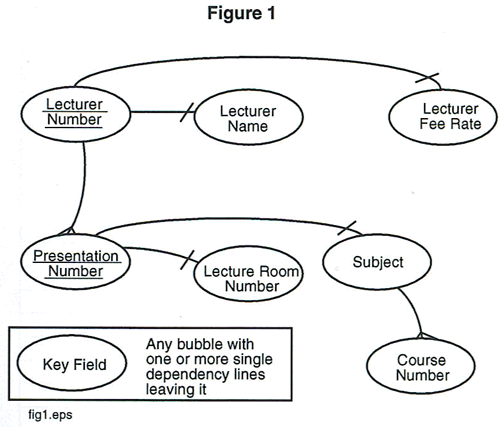
The charting is not intended to be precise. The quarter of the charts in which the plotting appears indicates the business systems that are candidates for replacement. Only the systems in the bottom-left quarter of the chart are considered to be satisfactory in terms of both usefulness and usability. The other systems are not satisfactory from either one or both viewpoints, and need to be reviewed. The analysis can be applied to show either the overall system satisfaction or the satisfaction for each major activity or value stream. Compare the implied entity relationship diagrams and the procedure list (if required) to the logical business models (information architecture) being developed to support the reengineering. Note any differences, and adjust models as required. Identify transition planning issues (see Transition Planning). Comparisons can also be made to models describing application packages. Identify options for transitioning to the future environment.
|
|||
| last edited by: erin decaprio on Oct 2, 2006 6:20 PM | login/register to edit this page | ||
|
"You cannot prevent the birds of sorrow from flying over your head, but you can prevent them from building nests in your hair." - Chinese Proverb |