Stakeholder Analysis
| last edited by: Teresa Lawrence, PhD, PMP, CSM on Apr 5, 2018 10:24 AM | login/register to edit this page | ||
 A technique used to examine the different forces affecting the various external and internal players that an organization is required to deal with. It also allows for formulation of strategies in dealing with the stakeholders, based on the cultural, structural, and resource limitations and potentials of the enterprise. A stakeholder is anyone (individual or organization) with a "stake" in the outcome of an enterprise change effort and/or is affected by the resulting change.
Procedures
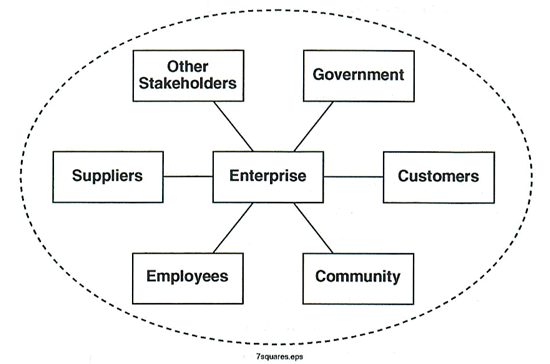
InstructionsStakeholders should be identified at the beginning of the reengineering effort to ensure that everyone with a stake in the outcome has been identified, to determine needs, to develop communication plans, and/or to manage expectations. Typically, a positioning workshop is conducted to derive this information. This workshop includes the project sponsor and other project team members. During an initial enterprise assessment or visioning session, ask the members of the team to imagine the future success of the company in some context, such as an article in a national business magazine, an interview on a talk show, or some relevant acknowledgment by the company's competitors. Make a list of these events. List all the individuals and organizations that will be most affected by the changes in the performance of the enterprise, based on these events, to identify the stakeholders. (Several techniques are appropriate to use in developing the vision of future success, as well as the list of stakeholders (see Facilitation, Brainstorming, Forced Ranking, Displayed Thinking, Nominal Group Technique, and Lateral Thinking). It can also be helpful to use a diagram, similar to the one that follows, to examine the "network" of the enterprise. By extending the view to include regulators, other governmental bodies, competitors, alliances, etc., a total perspective of stakeholders can be identified. The initial list of stakeholders may be very large. From this list, choose those individuals who will be the most affected by the reengineering or change efforts. Generate a list of the needs (see Customer Needs Analysis) that will drive the working vision of future success. Cross-reference the needs to the key performance criteria that will satisfy them. Identify the key performance criteria that will satisfy these needs and compare that to the current level of performance. This comparison will result in gaps being identified. These gaps become the potential scope of key enterprise value streams that will address the stakeholder needs. Summarize and record these gaps and any key messages for the project team. Shown in the example that follows is a matrix to assist in tracking critical stakeholder information over the life of the project. Actual stakeholders will need to be interviewed to define customer needs and satisfiers (see Customer Needs Analysis and Customer Satisfier Analysis). Stakeholder participation is also key to fostering commitment to the change effort. The list of stakeholders can be categorized to target certain key messages and/or to identify special actions or ways of engaging the stakeholders throughout the life of an enterprise change project. Other information, as shown in the example, can be captured, tracked, and modified, as needed. Such information can be tracked, using a word processor, spreadsheet, or database software. A small investment will go a long way. Applying this technique can enable more effective change management by focusing efforts on gaining commitment and managing expectations.
|
|||
| last edited by: Teresa Lawrence, PhD, PMP, CSM on Apr 5, 2018 10:24 AM | login/register to edit this page | ||

Comments (1)
|
One man can be a crucial ingredient on a team, but one man cannot make a team. - Kareem Abdul-Jabbar |


