Project-Driven Progress: A Student’s Mission to Transform Soil Health with AI and Biochar

Autumn Granza is a Content Strategist for the Project Management Institute.


For Oregon, USA-based high school student Anisha Dhoot, the journey to climate action began at age 9, sparked by curiosity and grounded in science.
“I always heard about climate change in the news, and I wanted to understand if it was real or not,” says Anisha. “So, I did a few experiments.”
She started off measuring how carbon dioxide affects heating and discovered firsthand that greenhouse gases do contribute to warming. The results inspired her to act. “Just knowing about the problem isn't enough,” she says. “I actually wanted to be part of the solution.”
Her project, Smart Carbon Recycling, integrates AI, biotechnology, and chemistry to improve soil health and carbon sequestration. She designed a kelp-based fertilizer, created a machine learning model called “Earth AI” to match crops to local soil and climate conditions, and researched biochar—a carbon-rich byproduct of recycled waste—for enhanced soil performance.
The two-time National STEM Champion divided her project into three phases, with project management being a key component of her success. “I broke my project into weekly goals, and I regularly checked in on my progress,” says Anisha. “I also made Google Docs to log daily progress and ideas.”
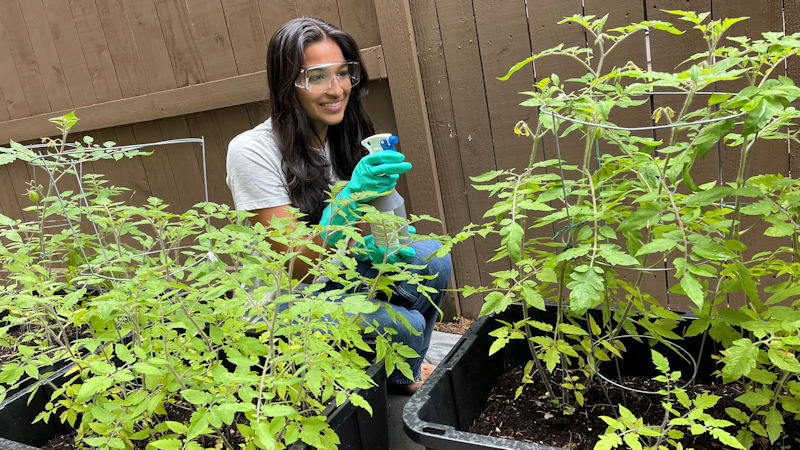
The first phase was developing and testing the kelp-…
Please log in or sign up below to read the rest of the article.


