Adaptive Project Framework: A Common Sense Approach to Managing Complex Projects


A Simple View of the Project Management Landscape
When I think of the project management landscape, I think of it as a two-dimensional grid like the one shown in Figure 1. The first dimension relates to the goal of the project. The goal is either clearly specified (and therefore known) or it is not clearly specified (and therefore not known). The second dimension relates to the solution, or how you expect to reach the goal. That also has two categories. The solution is either clearly known or it is not clearly specified (and therefore not known).
If we intersect these two dimensions as shown in the figure, then we have defined a four-category classification of projects. This classification is simple but inclusive of every project. That is, every project must fall into one and only one of these four categories.
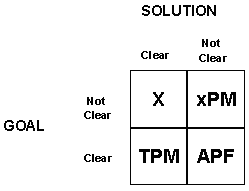
Figure 1: The Project Management Landscape
As you can see from the figure, each project classification is associated with the single approach to project management that is most recommended for that type of project. Traditional Project Management (TPM) works best when both the goal and the solution are clearly defined. Having that allows sound project planning, the creation of a complete WBS, the assignment of resources and the scheduling of project tasks. Everyone is happy and the project can proceed with full confidence that …
Please log in or sign up below to read the rest of the article.
|
"Never hold discussions with the monkey when the organ grinder is in the room." - Winston Churchill |


