Adaptive Project Framework Part 5: Client Checkpoint


APF is an approach to a class of projects for which neither the traditional nor the extreme methods are appropriate. APF is entirely compatible with the PMI PMBOK Standards. This series is derived from selected content from the 3rd edition of Effective Project Management: Traditional, Adaptive, Extreme (John Wiley & Sons Publishers, July, 2003).
Overview of the Client Checkpoint Phase
The Client Checkpoint Phase is the unique part of APF and it has no equal in either the Traditional Project Management (TPM) or Extreme Project Management (xPM) approaches. It is the closing phase in an APF cycle as shown in Figure 1. This is where the rubber meets the road in APF. It is in this phase that the project team and the client jointly conduct a number of analyses. Those analyses lead to four very serious questions that they must answer. This is not the time to be politically nice or correct. It is the time to put all of their cards on the table and make some hard business decisions. The decisions that they make will set the tone and direction of the project for the remaining cycles.
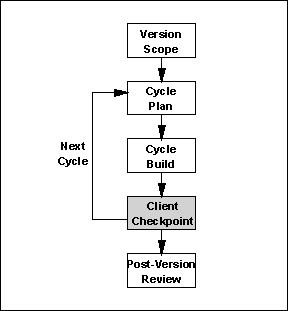
Figure 1: The Adaptive Project Framework
Major Decisions in the Client Checkpoint Phase
The following are the major analyses that are done at each Client Checkpoint:
-
assess what has cumulatively been produced to date with the project with particular …
Please log in or sign up below to read the rest of the article.
|
"Forgive your enemies, but never forget their names." - John F. Kennedy |


