Managing for Quality: It’s Not as Hard as Everyone Makes Out
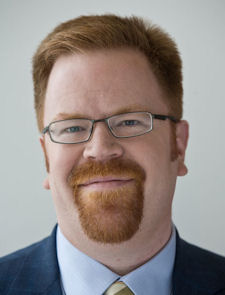
Mark Mullaly is president of Interthink Consulting Incorporated, an organizational development and change firm specializing in the creation of effective organizational project management solutions. Since 1990, it has worked with companies throughout North America to develop, enhance and implement effective project management tools, processes, structures and capabilities. Mark was most recently co-lead investigator of the Value of Project Management research project sponsored by PMI. You can read more of his writing at markmullaly.com.


Quality is one of those odd subjects in project management that seems to cause excessive cringing and eyes glazing over as people contemplate advanced statistics, control charts and process control theory.
The practice of quality management as defined in the PMBOK has largely been lifted wholesale from the total quality management literature of the ‘80s and ‘90s. The challenge with this, of course, is that much of statistical process control is applicable in a manufacturing context where there is consistency, repeatability and reliability. Projects don’t live in such world--they are inherently inconsistent, non-repeating and arguably unreliable.
So is all hope lost for managing quality on projects? Should we just throw in the towel and say “forget it”? Or is there a better way of being able to measure and manage quality?
In managing quality, it is important to distinguish between the inherent fluctuation of projects with the underlying product and service development processes. In other words, trying to measure quality inside one project is challenging. Trying to manage quality across multiple projects, however, might actually get you somewhere.
The basic principle behind managing quality is by understanding defects. In general, a defect is any deviation from the basic scope of the project. Taken literally, this could mean the inclusion of …
Please log in or sign up below to read the rest of the article.
ADVERTISEMENTS
|
If I had only known, I would have been a locksmith. - Albert Einstein |


