How to Adapt Leadership for Evolving Teams

Mike Griffiths is an experienced project manager, author and consultant who works for PMI as a subject matter expert. Before joining PMI, Mike consulted and managed innovation and technology projects throughout Europe, North and South America for 30+ years. He was co-lead for the PMBOK Guide—Seventh Edition, lead for the Agile Practice Guide, and contributor to the PMI-ACP and PMP exam content outlines. Outside of PMI, Mike maintains the websites www.LeadingAnswers.com about leading teams and www.PMillustrated.com, which teaches project management for visual learners.


Last month we talked about creating a sense of shared leadership through thought, action and encouragement. This month, we will cover some strategies for adapting leadership styles to the various stages of team formation and performance.
There is No Exact Science for People
First, a strong word of caution: People are complex, multi-faceted entities who can be helpful when engaged on one topic and hostile on another. Formulaic recommendations that are intolerant of people’s reaction, even very subtle reactions, are likely to fail. At best, these leadership strategies are suggested starting points to try gently and then gauge reaction. If they are not working, then try something else, get some training or fire the non-cooperative bastards.
So, forearmed with these warnings, consider this advice as a thinking point or starting strategy. Your final strategy should be what works best for your environment, personal style and team dynamics.
Team Needs Evolve over Time
Most people have heard of the team stages of Forming, Storming, Norming and Performing. They come from Bruce Tuckman 1 and are often depicted something like this:
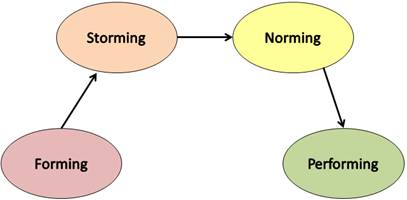
Teams start in the Forming stage (finding their way), move through Storming (challenging each other) and Norming (learning how to work with each other) before finally arriving at the Performing phase (working as one). “…
Please log in or sign up below to read the rest of the article.
|
"A common mistake that people make when trying to design something completely foolproof is to underestimate the ingenuity of complete fools." - Douglas Adams |


