Your Problems Aren't Wicked, Just Messy
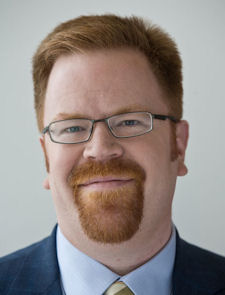
Mark Mullaly is president of Interthink Consulting Incorporated, an organizational development and change firm specializing in the creation of effective organizational project management solutions. Since 1990, it has worked with companies throughout North America to develop, enhance and implement effective project management tools, processes, structures and capabilities. Mark was most recently co-lead investigator of the Value of Project Management research project sponsored by PMI. You can read more of his writing at markmullaly.com.


For the record, the idea of wicked problems is not new. The term has been around and in use since at least the mid-1960s (so on a similar timescale to formal project management). The origins of the phrase are in social planning, which represents the top-down effort to influence behaviors on a large scale. In project management, we generally think of this as change management; that would certainly be a relevant analogue.
The basic premise of wicked problems is that they resist resolution. They are problems that can't be fixed. There is no one single solution to them. There is no end point at which we can say, "Done and dusted." Depending on your perspective, that involves everything or nothing.
Examples of wicked problems are the usual suspects of big, challenging, difficult global crises: war, pestilence, famine and the like. Nuclear proliferation is seen as a wicked problem. Climate change is viewed as a wicked problem. The current pandemic is seen as a wicked problem.
Here's the thing, though. We know how to fix most of those. War is easy: Stop resenting other people, and get rid of all of the weapons. If we want to address climate change, then stop producing so much carbon dioxide. Want to get rid of COVID-19? Couldn't be easier: Social distancing, masks and vaccinations, in that order.
The problem is not that we don't have solutions, at…
Please log in or sign up below to read the rest of the article.
|
"[Musicians] talk of nothing but money and jobs. Give me businessmen every time. They really are interested in music and art." - Jean Sibelius, explaining why he rarely invited musicians to his home. |


