Read the Culture
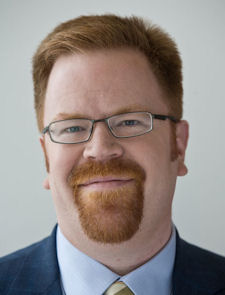
Mark Mullaly is president of Interthink Consulting Incorporated, an organizational development and change firm specializing in the creation of effective organizational project management solutions. Since 1990, it has worked with companies throughout North America to develop, enhance and implement effective project management tools, processes, structures and capabilities. Mark was most recently co-lead investigator of the Value of Project Management research project sponsored by PMI. You can read more of his writing at markmullaly.com.


My most frequent response to most questions is, "It depends." What most answers depend most upon is the context in which the question is being asked. What most influences that context is the culture of the organization that someone is operating in.
Culture is viewed as one of the very messy aspects of managing projects. This is arguably why, while frameworks, processes and standards go into the technological minutiae of how to manage something like earned value, the infinitely more complex and nuanced navigation of organizational behavior gets summarized at an incredibly high level. This isn't something you can be prescriptive about. Culture doesn't lend itself to cause-and-effect reasoning, where there can be reasonable guidance that "if this happens, you should always do this, and you are guaranteed to be successful."
In understanding culture, there are far too many permutations and considerations. This is the grey area of organizational life. You have the theoretical roadmap of the org chart—outlining hierarchies, delimiting roles and defining power structures. Beyond that, there are a multitude of informal structures and relationships that describe the political reality of the organization, and the influences, collaborations, friendships, rivalries and animosities that animate how things actually play out.
Organizational …
Please log in or sign up below to read the rest of the article.
|
"If I were two-faced, would I be wearing this one?" - Abraham Lincoln |


