Transformational Leadership and Organizational Change Management
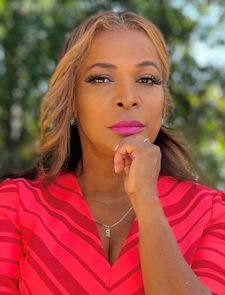
Dr. Anderson is a Forbes School of Business and Technology professor with over 20 years of experience in executive leadership and business. She has conducted hundreds of seminars and training sessions and has been featured on NBC, CBS, Fox, The Wall Street Journal’s Market Watch, Authority Magazine, and more. Dr. Anderson is a Certified Change Practitioner and holds an MBA in Management Information Systems and International Business and a Doctorate in Transformational Leadership.


Contrary to common opinion, organizational change management (OCM) is not simply a soft skill that involves conducting training. It is measurable, tangible, structured and repeatable. It is also a method to engage each individual, resulting in collective change for the organization.
Change initiatives occupy an ecosystem that requires the construction of several strategies: stakeholder analysis/management, leader/sponsor, communication, resistance, coaching, training or knowledge transfer, and reinforcement or support. I currently lead OCM initiatives for several organizations undergoing digital transformation.
Making the business case for the transformation is easier than making the subjective “What’s in it for me?” (WIIFM) case. Internal stakeholders usually ask, “What does this mean for my job? Are the computers going to take over? Are you going to automate my job?” The prospect of change usually instills emotions such as shock, frustration, defiance and resentment—so leaders need to be communicating in that social space, alleviating fear and uncertainty.
Stakeholders view proposed changes through their weltanschauung (beliefs, perceptive filters). There is a positive correlation between Maslow’s hierarchy of needs and stakeholders’ level of engagement in the change. OCM activities usually affect the esteem and self-…
Please log in or sign up below to read the rest of the article.
|
"The radical of one century is the conservative of the next. The radical invents the views. When he has worn them out, the conservative adopts them." - Mark Twain |


