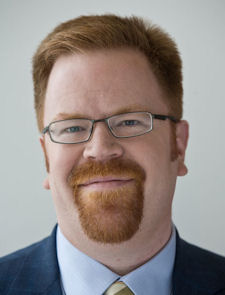
Mark Mullaly is president of Interthink Consulting Incorporated, an organizational development and change firm specializing in the creation of effective organizational project management solutions. Since 1990, it has worked with companies throughout North America to develop, enhance and implement effective project management tools, processes, structures and capabilities. Mark was most recently co-lead investigator of the Value of Project Management research project sponsored by PMI. You can read more of his writing at markmullaly.com.
This column sees the beginning of some changes in the Program Management Office department. It is with both pleasure and a little bit of trepidation that I step into the role of "subject matter expert" at gantthead.com. Pleasure because my involvement with gantthead over the last couple of years has put me into contact with scores of great people within the project management community, and this role provides a continuing opportunity to debate, interact and--hopefully--inspire. Trepidation, because I step into a role in a department well along the development path, and the challenge now is to continue to ensure its relevance and value to you, the readership.
I have long played a part in both staffing and developing PMOs (the project and the program flavors) and I have done a lot of reflecting on what has worked and not worked--and what I wished I had done differently. This involvement goes back to the early 1990s (where my first role for a company that shall remain nameless was setting up something with the relatively un-enlightened name of Project Control Office). I'll say this for the position--I learned a heck of a lot in an incredibly short period of time.
The function of PMO is beginning to take on a level of ubiquity, as even organizations that are new to adopting the discipline of project management are looking at them and saying to themselves, "I've gotta get me one of those..." From where I sit, the challenge that this presents is threefold:
While everyone claims to have one, there is an incredible diversity of understanding and opinion as to just what a PMO is. Forgetting the debate between "project" and "program" for a moment, the role as defined varies from being simply a centralized repository for reporting all the way to the other side of the continuum as the central focal point for the management of all projects within the organization. Having a PMO is one thing--defining exactly what it's role is becomes something altogether different.
In recent years, we have become exceptionally good at replacing planned communication with technology. What we may not have noticed at the time was the gradual disappearance of the conversations we never planned to have.
As part of our ongoing efforts to improve the contributor experience, we will be transitioning to new submission platforms. To help us prepare for this change and work through the current review queue, we will be temporarily pausing new content submissions.
You probably use AI for task-level improvements. But your greater opportunity is to use it to manage the entire flow of project information: from meeting to analysis to stakeholder communication to leadership action. Here's how.
Closely related to defining what the PMO is supposed to do is the challenge of determining--and in many cases managing--an executive team's expectations of what services and value the PMO should be expected to provide. PMOs are often started at the outset as a direct response to some perceived or real weakness in how projects are being managed. While this reaction is in many instances appropriate, moving beyond the symptoms to addressing and resolving the real and underlying problems is a critical transition that PMOs must (but often are unable to) make.
Finally, the PMO must be able to visibly and objectively demonstrate its relevance to all project management stakeholders in the organization, not just the senior management team. The PMO must not only provide value, it must be seen to provide value. This creates new and exciting challenges around developing performance measures, establishing business cases and marketing and communicating the role and purpose of the PMO in a way that has seldom been contemplated to date.
My challenge, then, is to continue to develop the department in such a way as to help answer these questions, and to provide useful guidance, tools and ideas that can be readily and practically applied.
As the department continues to grow and evolve, I encourage you to contribute, respond and challenge the thoughts and ideas that are presented. By getting involved--through contributing to the discussion forums, providing feedback to articles and letting me know what you'd like to see--you can help to ensure that this department continues to be relevant and valuable in defining and shaping the role of the PMO today and in the future.