Where Have All The Talents Gone?
From the PMO Bytes Blog
by Wai Mun Koo

The world of project management through the monocles of culture, design, business, technology, politics, social, education, philosophy and music.
Recent Posts
Dog and Pony Show
Risky Business of Einstein
Hello Heisenberg!
Be A Good Patient
The Missing Piece
Categories
Business,
Culture,
Design,
Education,
General,
Music,
Philosophy,
Politics,
Technology
Date
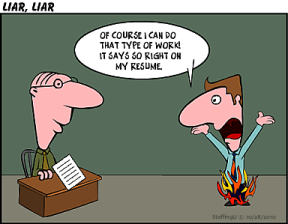 According to the recent Dice Report, nearly 900 hiring managers and recruiters that source, recruit and hire IT professionals, 65% anticipate an increase in hiring in the second half of 2011 compares to the preceding six months. However, respondents also indicate that the time to fill a position is lengthening, and 63% of them attribute talent shortages as the primary reason which compares to just 46% who felt that way six months ago. Where have all the talents gone?
Before we proceed to discuss the above question, let’s take a step back and reexamine the hiring process. When you need to hire someone for your project team, what do you usually do? Most of you will probably contact your Human Resource department and they will request a detailed Job Description (JD) from you for the new position to be hired. Without further ado, you will enthusiastically send out a 3-inches thick JD to your HR just to justify the importance of the role and to ensure that your HR is able to get you the right person for the job. In fact, this is exactly what the HR will do – find the perfect match. They will scrutinize the pile of submitted applications and drop those that do not match the criteria highlighted in your JD (I suspect they might even have a super-duper software to do that automatically). What you will be choosing from eventually are those ‘lucky ones’ that slipped through your HR’s most stringent filtering system. Good luck, if the above process sounds familiar to you. What’s wrong with this?
No, there is nothing wrong with the process; the problem lies in the screening and filtering procedures performed by your HR. Yet, do not blame your HR. They are not the experts in your domain. Hence, do not expect them to be able to differentiate between PMP vs. PgMP certification or know the significance of project management experience over domain knowledge. For example, if you are looking for a business analyst with 5 years of experience and strong investment banking knowledge; would you try someone with CBAP and 10 years of business analysis experience but no banking knowledge? Or what you need is a seasoned project manager with 10 years of experience; would you even consider a PMP certified junior project manager with 5 years of experience? Your HR will, without doubt, drop the two applicants from the above examples since they do not match the criteria in your JD. Now, isn’t this ironical? Dropping a PMP certified, and supposedly much younger and energetic, project manager just because he or she does not have the required years of working experience (assuming experience is not correlated to capability)?
What the HR are doing is typical apple-to-apple comparison to pick your champ based on what the candidate has done in the past and not on actual capabilities of what he or she could potentially contribute to your team in the future. In other words, they are selecting someone that is ‘ready-to-serve’ for the immediate needs in your team. However, are we going to rely solely on a person’s history and credentials to judge his or her potentials? While work experiences, academic achievements, domain knowledge and skill set can be easily presented and identified in a person’s resume, less quantifiable attributes like soft skills and personalities can only be validated appropriately through interviews and psychometric tests. Not to mention it is well known that resume can be easily cooked up and nicely spruced, and most of them are usually over-claimed. Should we still stick with this old way of headhunting? If you are going to continue to do so, there is a high chance that you might miss out potential talents through this kind of filtering procedures. The key question is – are you looking for someone who can fit nicely into the current role or a potential star player who may contribute beyond your expectation? If I were you, I will either do the screening myself or keep the JD as simple and short as possible. Ultimately, what I want for my team is a creative individual, a thinker and a future leader, and not someone who just wait for instructions. What about you?
Posted on: July 03, 2011 09:49 PM |
Permalink
Comments (10)
Please login or join to subscribe to this item

L M
youyou
Uganda, Uganda
Whenever I come across an organization website(job recruit session) that requires job applications to fill up tons of difficult forms, it always makes me wonder whether the organization is really keen to look for someone who fit the job or just somebody who is good at filling up form or write good reports. Good and talented people are difficult to comeby, normally they have many job offers and are not keen to fill up tons of difficult job application forms. Only those 'average and desperate Joe' (i.e. myself) will fill up these forms.
Yes, I agree that many HR and job agencies just filter the resumes by searched words or given JD. This method may work for some simple(but not necessary easy) jobs (for example labor intensive jobs, the recruiter wants someone who can lift 100kg with one hand, etc). However, this method is not suitable for complex job like Project Manager(or higher) where the job requires one to be capable to implement complex project but also to manage people(which is not easy) and resolve complex work relationships.
Just like searching for life-partner(or your lover), you will first choose the one you love before you get your parents(HR department) consent of your new relationship. Same applies to getting a suitable candidate for the job, in order to find talented and job people, you cannot rely totally on HR to do the job for you. Recommended method is to interview the people yourself first and let HR to process the one that pass your criterias. HR should not interfere with the initial interview (or filter) process. (Please don't remind me of pre-arranged marriage :P)

Wai Mun Koo
PMO Director| Intergraph PP&M
Singapore, Singapore
Well said and good analogy comparing talent hunting and life partner match-making. This reminds me that in some countries like India, a whole lot of marriages are still arranged by parents and matrimony agencies. It's time for a Change! Step out your first step to find your true love...
Michael, sometimes long forms are part of the job process. I knew of a company who had so many applicants that they made the application process harder than just 'send your CV' as it helped weed out people who really wanted to work for them.
Wai Mun Koo
PMO Director| Intergraph PP&M
Singapore, Singapore
Elizabeth, you are right. I believe usually only good companies that are well sought after (e.g. banks) have the leverage to do so, and sometimes, they just have to in order to filter out those without real interest.
L M
youyou
Uganda, Uganda
In Asian philosophy, the concept of Yin Yang is used to describe how the universe works. Ying and Yang manifest dark and light, active and passive, cold and hot. There are passive tactic and active tactic. Same applies to job application process whether the organization wants to take the active or the passive approach. It also applies to my previous post of finding a life partner, whether you want to take the active or passive approach.
In ancient China, one favorite approach used by rich parents to find the most suitable man for their daughter was to hold the public competition/contest to choose the man with the best kung fu and intellect. The winner will be allowed to marry their daughter. So all the desperate men registered and fought their guts out trying to marry the girl and enter the rich family circle. Looks like this approach has evolved into today's corporate recruitment practices.
There is no right or wrong with this approach, the questions are:
a) Did the marriage competition really help their daughter to find her Mr.Right?
b) Did the good and most suitable man register for this competition?
Compared to the modern approach where the girls have the freedom to seek(active approach) for their love ones. Which approach is better?

Don Kim
PROJECT-TO-PORTFOLIO MANAGEMENT EXPERT| Seeking opportunities
Sacramento, CA, United States
Nice post. Ironically, I think one of the best ways to identify the "potential star player" is to look for candidates such as yourself who contribute thought provoking articles, blogs and discussions posts on PM social networking sites such as this site. These kinds of creative individuals, thinkers and industry leaders will probably have to be actively searched for rather than discovered through traditional HR recruitment processes.
One caveat I would add is that if this kind of individual is sought, the hiring manager would have to make sure they can provide the kind of work environment, competitive compensation, and clear path to advancement otherwise they risk loosing this star player quickly.
Wai Mun Koo
PMO Director| Intergraph PP&M
Singapore, Singapore
Don, you're right. A lot of headhunters crawl through social networking sites and systems like LinkedIn and Facebook to hunt down the candidates they are searching for.

cristian rosu
Global Business Manager| MAHLE GmbH
Regensburg, Germany
In the past few months I recruited and applied for jobs in the same time. In both situations I felt that HR and the recruiting manager don't do enough preparation together prior to campaign launch. A long session of discussions should be done with HR to make sure they understand your needs. The manager should also work with the HR on applications screening at least at the beginning, to make sure that good opportunities are not thrown in the bin. If the father will make efforts first to understand what the daughter really wants, it would be easier to draft the contest and understand whether the people registered for competition are suitable or not.
Wai Mun Koo
PMO Director| Intergraph PP&M
Singapore, Singapore
Agree that discussion with HR to ensure they know the requirements is important. However, I once heard HR mentioned that those requirements are too technical to them and they are not able to understand. Fair enough, they are not in the same domain, and not easy for them to grasp all those lingua franca specific to our domain and not easy to explain to them as well. Even though HR understood everything, there is still this soft skill piece which is not easy to be identified from resume alone. At the end of the day, we have to ask ourselves this question seriously - "What value do HRs and headhunters add in the process of candidate selection?" I think this question is similar to most broker (middle man) related question like "What value do property agents bring in to the entire chain of property transaction?"
Wai Mun Koo
PMO Director| Intergraph PP&M
Singapore, Singapore
Please Login/Register to leave a comment.
|
"How can you govern a country which has 246 varieties of cheese?"
- Charles DeGaulle
|




