Bas de Baar is a Dutch visual facilitator, creating visual tools for dialogue. He is dedicated to improve the dialogue we use to make sense of change.
As The Project Shrink, this is the riddle he tries to solve:
“If you are a Project Manager that operates for a short period of time in a foreign organization, with a global team you don’t know, in a domain you would not know, using virtual communication, high uncertainty, limited authority and part of what you do out in the open on the Internet, how do you make it all work?”
In this video interview I am talking to Dave Shirley, co-author of the book Green Project Management about the intersection of PM and "green". For more information visit EarthPM.com.
I love the stories about the Baron Von Münchhausen. This German legend "... served until 1750, in particular taking part in two campaigns against the Ottoman Turks. When he got home, Münchhausen supposedly told a number of outrageous tall tales about his adventures."
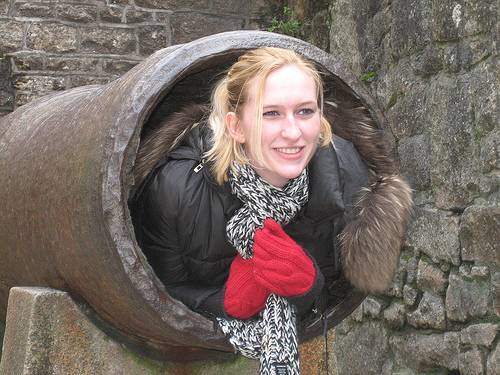
In one of the adventures he ends up on a cannonball just at the moment it is fired away to the palace of the Sultan, that is under attack by his army. If we have to believe the dear Baron himself, he guided the cannonball exactly to the place he needed to : right next to the enemy.
To be fair. I really believe that he believed that he steered the cannonball in the desired trajectory by sitting on top of the steel ball. The only thing he did in the end, was add weight.
Now, you know I am going to make an analogy, don’t you?
So here we go.
Some Project Managers are sitting on top of a project that is going at warp speed giving orders and directions, completely convinced that what they do, matters. But many teams don't need the added weight. At least, not when they are going at warp speed. And not when you are just waving your arms.
Sometimes our natural tendency is to increase our grip, be more present, making sure everyone is there and knows what to do. Communicate to the max, even if it is just through the “two cans with the string” of virtual communication. We’ll talk to people, again and again. Collect every single piece of information. Over and over again.
I am not quite sure why this happens. Perhaps we want to make sure people do the right thing, are not goofing off. Possibly we fear people cannot make the proper decisions or make promises the team cannot keep. It might even be a desire to shield information, making sure a stakeholder gets the “proper” information.
The Von Münchhausen approach creates several problems.
Problem 1: If you are the central point for information gathering, communication and decision making, you become a bottleneck. You need time to read, process, make up your mind and ask for clarification. When there is a lot going on in the project environment you get a lot of information and you need to make a lot of decisions. You suffer from an “exploding mailbox”. When delays get serious, this has huge negative impact on team performance.
Problem 2: Another problem is lack of different perspectives if you remain the principal point for interpreting information. In his book “Three Blind Men And The Elephant” David Schmalz tells the story of three blind men that are describing an elephant by just touching the animal. The first one feels its trunk and thinks it is some kind of rubber hose. The second one is standing at the side of the elephant and imagines some kind of massive wall. The third and final man is located near the tail of the elephant. He figures its a rope. The moral of this story is that while everyone is “looking” at the same thing, different perceptions create different views. If it’s “just you”, you miss out on the diversity of minds in your team.
Problem 3: When intervening your team, you are changing their behavior. By asking them over and over again how they are doing against the plan, you are changing their responses. By being too much “in their face” you might distract them and make it difficult for them to get into a productive flow.
Problem 4; People like to have influence. Being recognized as knowledgeable and use their creativity. Being able to make decisions about ones own activities is a huge motivator. By remaining the central point for everything, you miss out on a big opportunity to engage your team members.
If you involve your team members at the start of your project in constructing the project approach, you can improve commitment by participation. In this short video I share with you one awesome question you definitely should ask your team when you are discussing the project approach.
Metaphors are a great tool to explain concepts. Nothing beats a sparkling mental story.
To explain Stakeholder Management I was thinking about "The Wizard Of Oz".
Now before you get all too excited... repeat after me: "I am not a 12 year old in a dress with a dog named Toto." No dress. No dog.
You may sing if you feel like it. Later.
Dorothy has a problem: she wants to get home, back to Kansas. The only solution to this problem is the Wizard of Oz. She has to see the Wizard.
Now. I am not in favor of translating every occasion into Project Management slang. I have read about people that introduced planning and general PM into their household. Creepy.
But. For the sake of the metaphor... the goal of Dorothy's trip is to see the Wizard. So. Stakeholder. Goal. Needs. You get the idea.
Dorothy has no idea how to get to the Wizard in Emerald City. She knows the end destination. How does she know she is on the right track? How does she know the needs she has are going to be met?
Ah. Yes. The Yellow Brick Road.
As long as you see the yellow bricks, you're fine.
Awkward jump. Yellow Brick Road = Feedback to stakeholders. But you already guessed that.
During her trip, Dorothy encounters a scarecrow with no brain, a tin man with no heart and a lion without courage. They all join the road to the Wizard, as he might also solve their problems (brain, heart, courage). They all have different needs, but the single goal of the trip can satisfy them all. (Wooohooo! Lesson!)
The entire crew is motivated to get to the end of the road. They overcome a lot of problems (more about that in a second) even though they are scared. It is the power of positive expectations, knowing their wishes are going to become true, that keeps them going in a productive manner.
Not every person is happy with Dorothy's trip. The Wicked Witch of The West tries to stop her from reaching Emerald City. In the beginning of the story Dorothy kills the Wicked Witch Of The East by accident, and her sister from The West wants revenge. Flying monkeys are sent to stop the little girl.
Brave Dorothy keeps The Witch out of her way. Blocking the bad influence. Keeping her own path.
Stepping out of the metaphor... not every one you meet on your trip should be included.
And were back.
Lots of other things happen and other wise lessons are neatly hidden in the mother of all Road Movies / Musicals. But the positive attitude, the motivational style of leading, makes Dorothy herself a fabulous example of how to engage stakeholders.
Ah. In the end The Wizard seems to be like some kind of consultant. Lots of smoke, plenty of shining objects, and the request: "Please. Don't pay attention to the man behind the curtain."
"Dear Project Shrink. In your previous post you mentioned that I should make all my stakeholders happy. I have twenty people surrounding my project that all have an opinion about what we do. Who should I listen to?"
I deserve this question. I really said it. About stakeholders: "Make everyone a winner."
The logic behind this reasoning is simple: if people are happy, they are cooperative. If they are not happy, they might be thrashing your project. I like my reasoning simple.
But with all the conflicting interests, political intrigues and hierarchy, it is almost impossible to make every stakeholder a happy camper. Yeah. Reality. Argh.
So.
Who gets your attention? Who gets priority? Who should you listen to?
There is an old project saying: "He who pays for all the hoopla, he is to be called the Big Kahuna." Or, if you're more hip and happening: "Zponzor Rulez!"
But. If you are a car salesman in Beverly Hills, and the latest billionaire walks in with his 16 year old daughter to buy her a Mercedes, who should you listen to? Daddy is picking up the bill, but the daughter has to drive and show the car.
The answer?
Simple.
Both.
The parent will only become happy, when the child is.
Technically you can just focus on your project sponsor. But, as his decisions are based upon the perceptions of others in the company, it's too short sighted.
In projects deliverables are accepted, there is someone who has to sign a product off. There is someone for every piece that has to say "yes" before it can be regarded as finished (this can be someone with the formal authority, or with the informal recognition). Those are your project "sweet sixteens", when they are happy, your sponsor is happy.