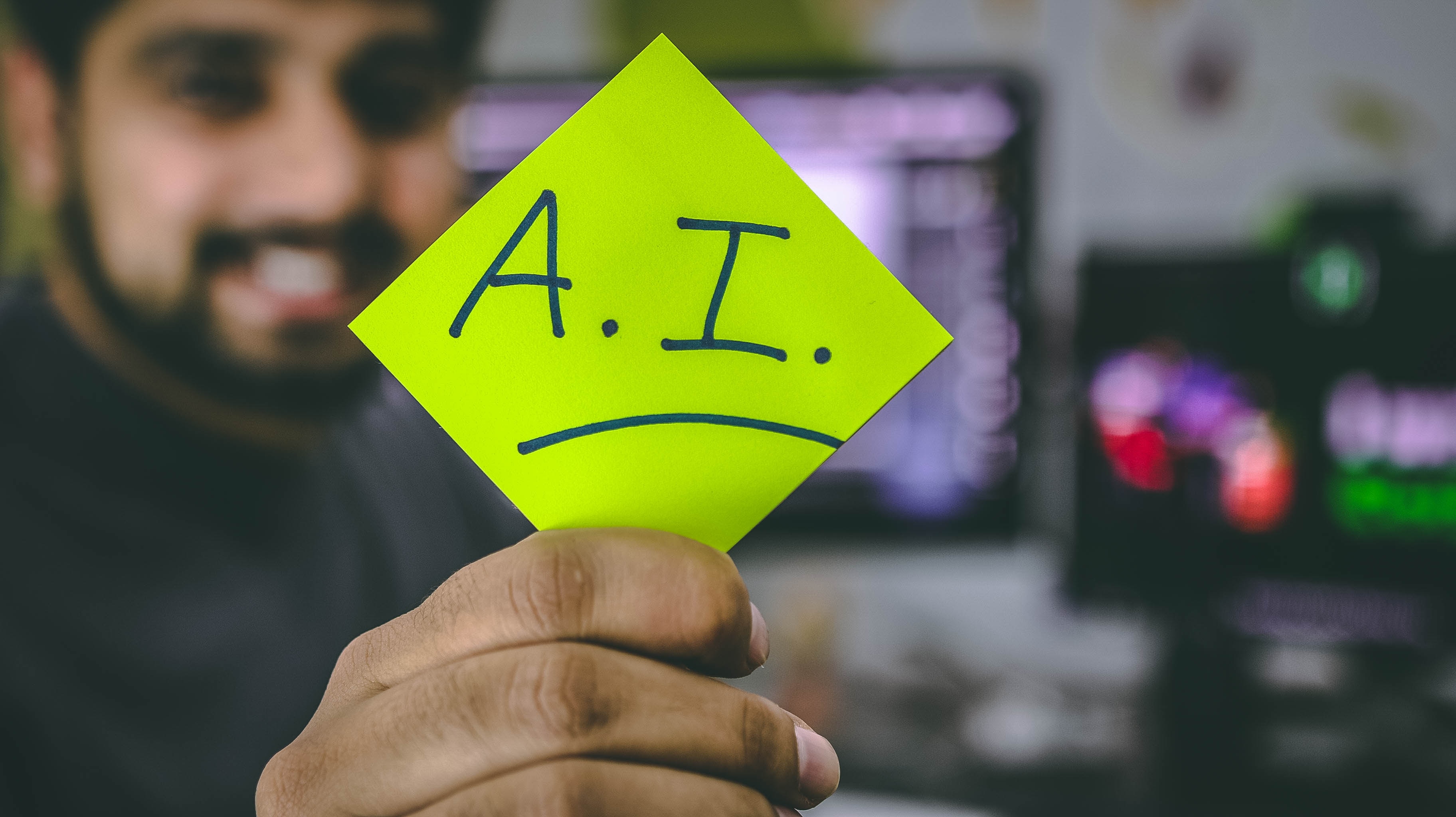
The Future and the Collaborative Intelligence- Human-Human to Human-Machine
Categories:
Agile,
Digital,
Disruption,
Project Management,
Collaboration,
Innovation,
Leadership,
Diversity,
Communications Management
Categories: Agile, Digital, Disruption, Project Management, Collaboration, Innovation, Leadership, Diversity, Communications Management


|
Digital transformation encompasses cloud adoption, rapid change, and the implementation of new technologies. To keep pace with this rate of change, enterprises, must move fast, break things into smaller chunks and embrace “fail fast “approach – Agile, DevOps enables just that. A couple of years ago, I authored an article on Agile and outsourcing , how our team embraced a software development approach under which requirements and solutions evolved through the collaborative effort of self-organizing and cross-functional teams and their customer/end users. Agile aimed at building a “potentially shippable product” which is releasable anytime. Over the time we evolved from Agile to DevOps ( Development + Operations ) is a software engineering culture and practice that aims at unifying software development and software operations takes Agile a step forward to ensure that the team can build, test, and release software faster and more reliably to production. What happens when we deploy our software to production? To ensure availability we typically own about 10 -15 monitoring tools, which means millions of alerts and events are generated for IT operations to analyze, correlate, prioritize and act on. AIOps - Artificial intelligence for IT Operations. It is about algorithms augmenting and assisting humans with IT operations, a step beyond DevOps. According to Gartner by the year 2030, upto 80% of the routine work performed by IT Operations can be eliminated because of collaboration between humans and smart machines. AIOps uses smart algorithms (powered by AI and ML) in which machines solve known IT issues and intelligently automate repetitive jobs. The output is a virtuous circle of continuous, insights, innovation and improvement. So how will the #futureofPMWork look like in the era of AIOps to drive this virtuous circle of improvement? So what are the changes that we need to make to embrace AIOps ? Correlate IT Performance with business value: IT OPs have traditionally been technical, not speaking the language the business understands. With most of the noise out of the way, ITOPs now can be more business aligned. In the #futureofPMWork, Project managers will plan and build IT KPIs which can be correlated to business objectives, which could be cost reduction or risk mitigation during the planning phase of the AIOPs implementation. AIOps extends human ITOps: IT OPs professionals suspect that AIOPs would mean massive change to their career. Intelligent, self-healing IT can reduce the IT administrators traditional TODO list, but it also ensures a more high-end activity like IT operations model and strategy, building scalable systems, rather than chasing down noisy alerts and doing redundant tasks. In the #futureofPMWork, project managers would need to coach, mentor and manage ITOPs team to drive the point that with AIOPs implemented, humans are at the strategic decision-making role rather than being caught up with day to day maintenance. Changing IT culture for better-the AIOps mindset: Traditional IT OPs are mostly in the reactive state, monitoring services NOCs are siloed, passing on issues over the wall. This is where AIOPs takes DevOps a step further. Instead of blindly passing the issues to the L2 support team, the ITOPs now knows where the problem is and who the owner is. Since AIOPs brings together the ITOPs, development team together, it is critical to plan who has the overall ownership. For #futureofPMWork this starts at the discovery and defined in the planning phase of an AIOPs strategy. Manage talent and skill upskilling: ITOps will need to develop skills like auditing, detecting security failure rather than operational failure, application technologies to measure impact on IT ecosystem. Project managers would therefore have to lay down a talent and skill management strategy to upskill the ITOps personnels. AI Ops will transform the way IT Ops operates, from keeping “the lights on” to delivering business value. How ?? Extending the human-human collaboration to human-machine collaboration: A transformation from Agile, DevOps to AIOps to ??? What are your thoughts on where the IT Operations would be moving towards in #futureofWork ? How will #futureofPMWork shape up in the future with AI and automation ? Would love to hear the view from the community, do share them in the comment box below. Photo by Hitesh Choudhary on Unsplash |
The Connected Project Manager and the Connected Future
Categories:
Agile,
Digital,
Disruption,
Project Management,
Collaboration,
Innovation,
Leadership,
Diversity,
Communications Management
Categories: Agile, Digital, Disruption, Project Management, Collaboration, Innovation, Leadership, Diversity, Communications Management
|
According to Gartner mankind will witness 20 billion internet-connected things by 2020. Whether it is
this connectedness is increasing. The future is no doubt connected and it is here. This connectedness could be in the following forms: Digital Twin – The connected product: A digital twin, according to Gartner, is a digital representation of a physical object. It includes the model of the physical object, live data from the object, a unique one-to-one correspondence to the object, and the ability to monitor the object. Digital Thread – The connected asset life cycle management: The digital thread consists of a communication framework that helps in facilitating an integrated view and connected data flow of the asset’s data throughout its lifecycle Social Internet of things – The connected ecosystem: The Social Internet of Things (SIoT) is defined where things can establish social relationships with other objects autonomously. This will lead to a network of things and humans talking to each other or exchanging data. Does this connectedness affect the #futureofPMWork ? How will the Project manager need to evolve to manage connected projects? Enter the connected Project Manager with:
The value of connected projects lies beyond the connectivity – The Business Value! The Mantra for generating this value is “Start Small - Show, don’t tell -Learn and Adapt and Grow Big!” Sounds like Agile ? To learn more on why Agile is most suited for IoT projects read on References: https://en.wikipedia.org/wiki/Digital_twin https://en.wikipedia.org/wiki/Digital_thread Photo by Clint Adair on Unsplash |

Think independently together, be Future Wise
|
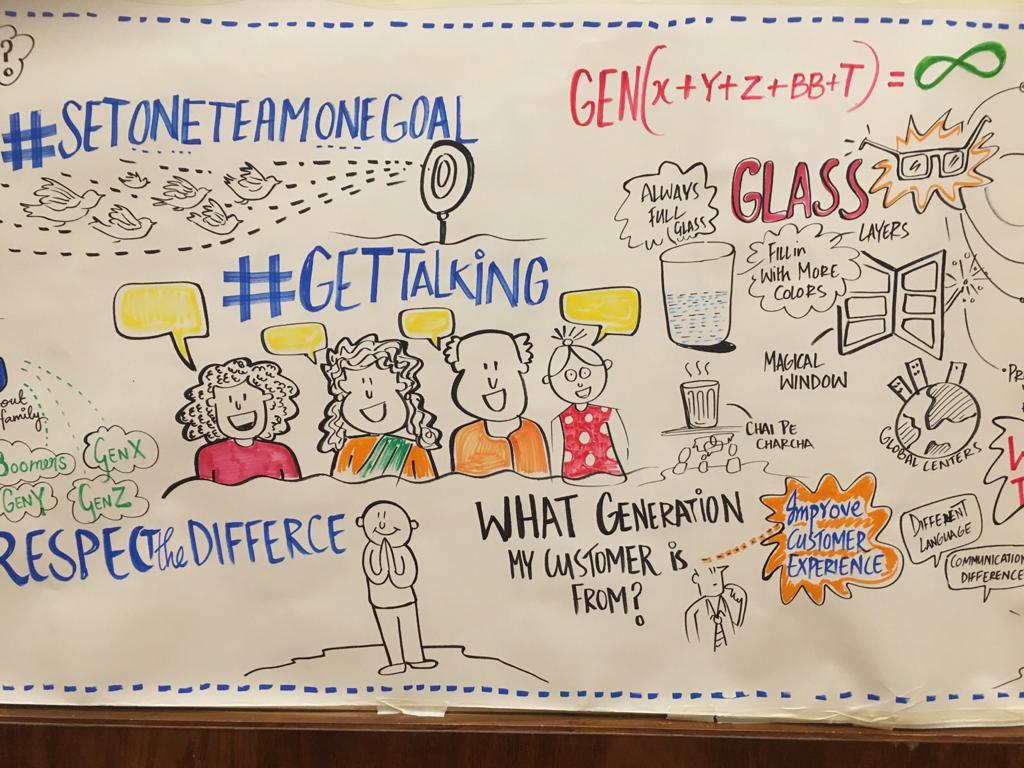
GEN (Z + X + Y+ BB + T) = ??? Can you solve this equation? This is the question that we asked our participants of Linkedinlocal Navi Mumbai meetup. The theme was “Universal Oneness”. Basically we are exploring how different generations have different outlook and how we can leverage the diversity of thoughts to build a product of the future. The product that we were building was anything that stems from the word “glass”. The product to be built by representatives from different generations, Traditional, Baby boomers, Gen X, GenY and Gen Z. The outcome “creativity” to the power of infinity. GEN(X+Y+Z +T+BB) = Creativity(∞) We need diversity of thought in the world to face the new challenges. - Tim Berners-Lee The future of work #futureofWork provides mankind with unprecedented opportunities along with complex challenges. Globalisation, talent mobility, the death of distance and demographic changes have and will continue to have a profound impact on our team demographics. Our teams will become increasingly diverse. This diversity can be in forms of gender, inclusiveness, generations, ethnicity, race, ethnicity, religious- spiritual beliefs, education and more. We would need collective intelligence, diversity of thoughts to proactively transition to the future. Why ? What are the benefits of having a diverse team?
Some strategies that I have leveraged in my projects to encourage collective intelligence and diversity are
Do you think diversity can influence the outcome of our projects? How will the #futureofPMWork will need to transform to encourage diversity of thoughts in our projects? If you want to know how I leveraged crowdsourcing to enhance diversity for agility and innovation. Read on http://www.pmnetwork-digital.com/pmnetwork/may_2018/MobilePagedReplica.action?pm=1&folio=22#pg24 Scribe: Nitasha Nambiar [email protected] References; https://www.pmi.org/learning/library/change-agility-different-cultures-10188 https://www.bmefcolleges.edu.in/uploads/v3n2sl13.pdf
|
Hello Future.. We are ready!
|
It is a rainy July morning in Mumbai, like the heavy rains that lashes the city outside, I am experiencing a heavy downpour of thought-provoking ideas inside. I am in a panel discussion on the Future of Project Management. As the discussion moves forward, the following points stood out to be restructuring not only who does the work, but also how work gets done and what value is delivered.
Later as I retired that night, I was both excited and nervous about what the future #futureofWork would be like for us – project managers. Peter Drucker once said ‘‘If you want to predict the future, create it “. Can we predict the future of PM work? How do we proactively prepare ourselves to transition to the future?
Here we are “Hello #futureOfPMWork we are ready !” What are your thoughts to manage the #futureOfPMWork? For more on what, the future has in store for project professionals –in 2033, do read my article on PM network magazine http://www.pmnetwork-digital.com/pmnetwork/march_2018/MobilePagedReplica.action?pm=1&folio=22#pg24 Image courtsey: Photo by Christopher Burns on Unsplash |