Best, Better, Not Bad: How Do We Find the Practices that Work?
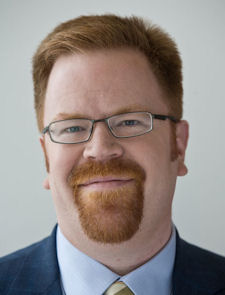
Mark Mullaly is president of Interthink Consulting Incorporated, an organizational development and change firm specializing in the creation of effective organizational project management solutions. Since 1990, it has worked with companies throughout North America to develop, enhance and implement effective project management tools, processes, structures and capabilities. Mark was most recently co-lead investigator of the Value of Project Management research project sponsored by PMI. You can read more of his writing at markmullaly.com.


One of the most overused--and misused--terms in the business lexicon is “best practice”. Just calling a practice “best” does not make it so. And yet the number of times I have heard the assertion that “We should do this--it’s a proven industry best practice!” is well beyond normal human reckoning. What’s possibly more disturbing, however, are the number of people--executives and practitioners alike--that get sucked into the rhetoric. The term “best practice” appears to represent the business practice equivalent of the “get out of jail free” card; wave it around enough, and critical thinking seems to be banished.
The “Value of Project Management” research project, sponsored by PMI and completed in the last couple of years, clearly highlighted the dangers of adopting practices without any assessment of their appropriateness or applicability. The conclusions of the study highlighted quite strongly that what organizations implement as project management (and the objectives they have for doing so) are very different. More importantly, the objectives and values that you set for yourself determine those practices and approaches that will support you realizing your goals, and those that will hinder you.
What this clearly reinforces is that there is no one fixed idea of “best”. …
Please log in or sign up below to read the rest of the article.
|
I see where one young boy has just passed 500 hours sitting in a treetop. There is a good deal of discussion as to what to do with a civilization that produces prodigies like that. Wouldn't it be a good idea to take his ladder away from him and leave him up there? - Will Rogers |


