


Categories: Business
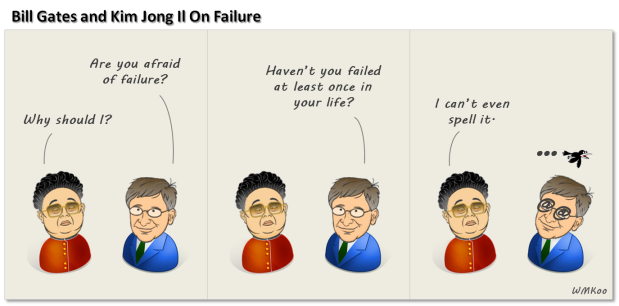
Failure?
Fret not. Most people take failure as something bad. Disappointments, blames, bad reputation etc., you know? Sometimes, the fear of failure is so immense that people have stopped trying. Try talking to a perfectionist and you will realize that he has zero tolerance even for the slightest blemish in his work. As a result, people have put in a lot of time and effort trying to prevent failure from happening. On the contrary, very little attention is given to managing failure recovery which, in my opinion, is equally important.
Since young, we have been taught that the best way to solve a problem is to prevent it from occurring. Trust me, I know that. But, this does not give us a reason to neglect the recovery part. In fact, in most situations, there is no way for us to ensure 100% error-free or guaranteed success. Think about managing projects. No one can guarantee right from the beginning that the project will be successful without any hiccups along the way. The same applies to software development. Realistically, it is almost impossible to find a piece of software without any bug.
So why are we draining ourselves in an elusive dream? Isn’t it better if we invest more time to prepare ourselves in order to bounce back faster and stronger from a failure? This is especially crucial if you are running a service delivery operation. When a service is down, customers sulk over it while the support team scramble in panic to get it fixed. Very often, it is how fast you are able to recover from a service failure that determines if your customers are going to stick around with you for a few more years.
I came across this interesting Service Recovery Paradox that states that with a highly effective service recovery, a service or product failure offers a chance to achieve higher satisfaction ratings from customers than if the failure had never happened. It got me thinking for a while and then came an epiphany. Perhaps, if we handle a negative situation positively, we may turn a service failure into an opportunity to improve customer satisfaction and build better relationships. It is not necessary that we always have to end up taking blames from the customers only. We may actually capitalize on failure. Yes, failure can be good. It gives us an opportunity to do better. It forces us out of our comfy chair to review what we have been doing so far and improve on it. We learn from each failure and become wiser and now, we may even make our customers happier. So next time when a service failure hits, remember to think about how you can swing it to your advantage.
“Yes, I may trip, but I shall not fall.” I smiled to myself.




