


Categories: Agile, Collaboration, Communications Management, Digital, Disruption, Diversity, Innovation, Leadership, Project Management
“Tell me I will forget, teach me I will remember, involve me I will learn forever!”
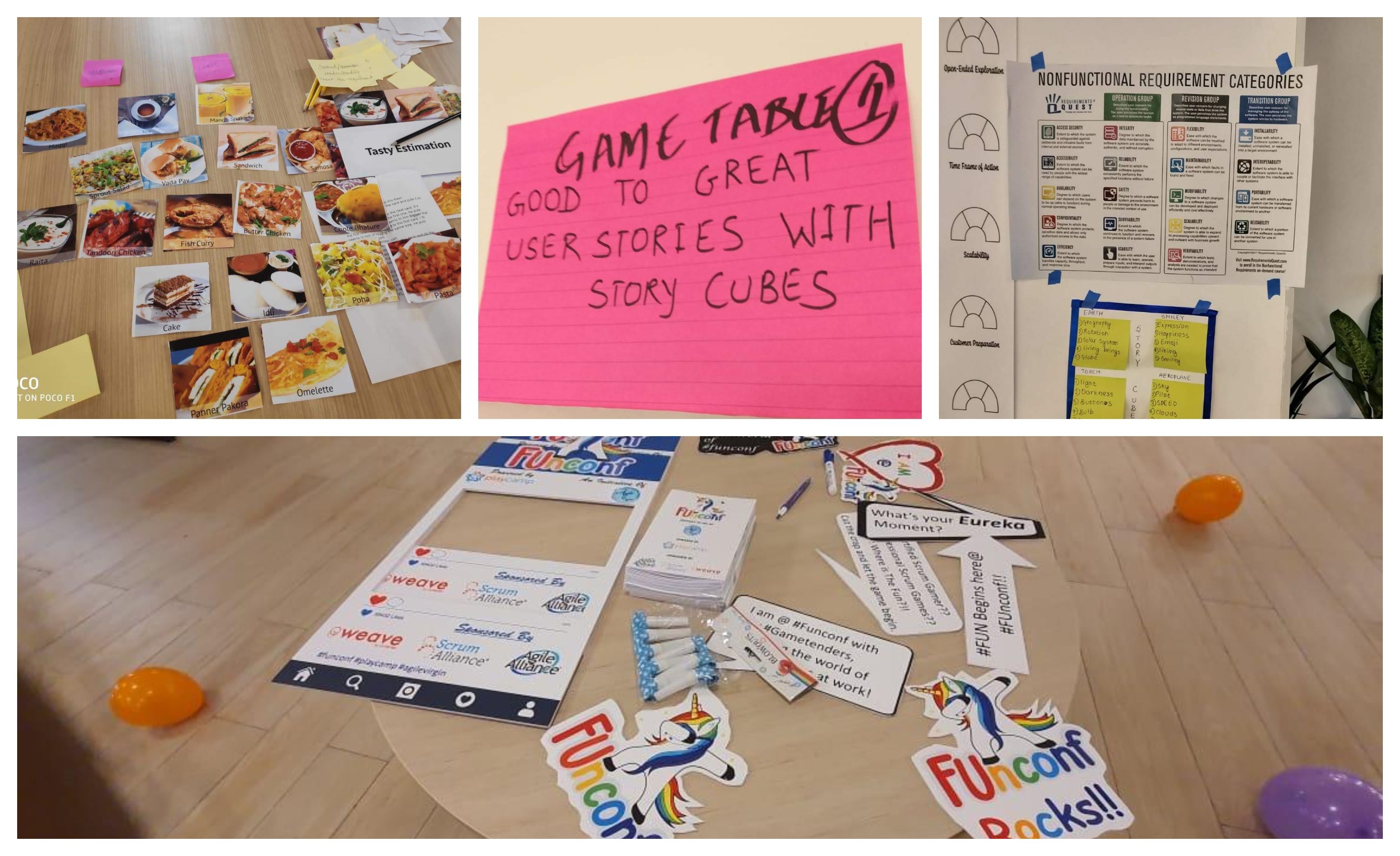
Date : 21 Sept 2019, 8:30 am Delhi DLF city: History in making, I am a Gametender at India’s first Fun uncoference. I am facilitating a game at this gamification unconference.
I am about to experience a day which is promised to be full of fun – with games designed to increase engagement / involvement of our teams, customers and partners. The energy is un-dismissible!
As we cruise through the day – playing games, having fun, I wonder why we need to introduce more fun elements at our workplace now and in the future #futureofWork ?
- The Rise of the Gigs: It is projected that ‘Gig economy’ will grow to 50% by 2020, and will see an increasing trend to as much as 80% by 2030. Due to the nature of the employment, gig workers are typically viewed as less engaged and more likely to embrace new opportunities that come their way.
- The Shorter attention span: Humanity’s collective attention span is getting shorter — a remarkable side effect likely attributable to technology according to a study in Nature Communications. With increasingly fragmented customer focus, overwhelmed by choice customers are more likely to abandon a product easily unless we have them engaged actively.
- Millennials at work : According to a study by Gallup the engagement levels of millennials are much lower than the other generations, to be precise only 29% of them are actively engaged in work. With more and more millennials entering the workforce the number is set to shoot up to 58%, making the youthful generations the most dominant in the workplace.
In the #futureofPMWork how can we engage our teams and customers?
Can #gamification be that strategy to engage the workforce of the future?
Can #gamification create that customer stickiness?
Let us see what the emotions elicited by games
- Achievement, recognition which leads to a motivated team
- Altruism, cooperation leads to improved collaboration
- Self-expression allows to build an environment which is safe to fail and trust
Neuroscientists have speculated that by engaging in this cycle of challenge and achievement, our brain releases dopamine, which is connected to the sensation of pleasure, making us want to do it repeatedly.
Here is what I have learned while leveraging gamification in team and customer engagement
- Intrinsic Vs Extrinsic motivation: Gamification strategies should be designed for intrinsic rewards e.g loyalty programs are mostly extrinsic, but however an option to choose an upgrade – sign of status could be an intrinsic motivator.
- Player Psychology: According to Bartle there are 4 types of players Achiever, the Explorer, the Socializer, and the Killer. These personas determine how a player will behave in a gaming environment. This can help to understand the outcome of the gamed system.
- Personalization: Gamification strategies can succeed only when they are deeply connected with the player. Leveraging personalization and behavioural insights can create that connection.
As I wind up my day at the Fun uncoference, I can’t help but wonder what gamification can do to our teams, workplace and the organization as a whole. It triggers real, powerful human emotions with a lot of fun!
To learn more how I leveraged #gamification to drive digital transformation, read on:
http://www.pmnetwork-digital.com/pmnetwork/April_2019/MobilePagedArticle.action?articleId=1475125




