


Categories: Business
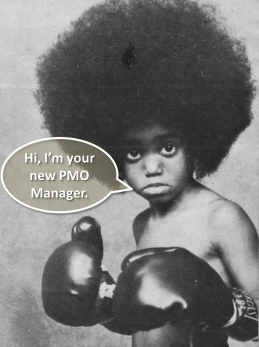 “Oh! So you’re from the Piss Me Off department”, an ex-colleague once said this me in the early days of my career.
I replied with a willy-nilly shrug. Not sure when it all started, but the once promising Project Management Office (PMO) has somehow fallen and become a bête noire to most people. Some of them would just loathe it like what my ex-colleague did. Then there are those who would shun the PMO folks entirely as if they are from the insurance companies. Patience and confidence ebb away as more and more PMOs fail to live up to their promises. J. LeRoy Ward, Executive Vice President of ESI International, sent off a clear warning message when he reported that the average life expectancy of a PMO is 4.1 years according to the “Global State of the PMO for 2012” survey recently conducted by ESI. Setting up a PMO is not easy. Running the PMO and sustaining its operations in the long run is even tougher. Do you have the mettle to take up the challenge?
After a couple of years of setting up and managing PMO, I have managed to pick up a bundle of tips along the way on how to make this journey a more fruitful one. The basic idea is to manage each PMO setup like you would for a new product. Many PMO setups failed because they were treated as a one-time endeavor. So far, people were mainly interested in the initial work of bringing a PMO into live with very little attention given to nurturing and sustaining the newly established team. By running the PMO in a product management way, it forces one to come up with better plans to manage the team’s developments and growths throughout its entire lifecycle. Below are some useful tips for your consideration.
- Support: Every product or project needs a sponsor without doubt. The first thing you should do is get a strong sponsor behind your PMO. Preferably, this person should be someone from the top management, committed and know what he is going to sign up for. Do not underestimate the role of the sponsor as you will need him to drive through several big initiatives along the way. Ideally, the sponsor should also assist to secure a good financial funding required to support the operations of the PMO in the long run. One of the more serious problems commonly reported is the lack of executive support. Lip service remains as the favorite sport in the top management. Do you usually have a ‘steering committee’ or just ‘staring committee’?
- Requirements: We know that the key purpose of having a PMO is to provide services. But what type of services? You won’t be able to answer this without first knowing the requirements and expectations of your stakeholders. Talk to your key stakeholders on what they would expect from the PMO. Understand the problems at hand that keep them awake at night and how they would like the PMO to help them. Build the PMO around services that address the immediate needs of your stakeholders. Select the type of PMO model that best fit the operations and services that it has to offer. The types of PMO may vary from reporting, supportive, controlling to directive depending on the degree of control and influence needed on the projects which, in a way, link back to the requirements and expectations of the stakeholders. In addition, while deciding on the type of PMO that works best for your organization, you will also need to take into consideration the current organization culture, maturity level and internal competency to avoid creating a big gap between what you want to achieve versus what you can achieve. You may start off with something that you are comfortable with and evolve it along the way as the team matures and competency level gets better.
- Roadmap: It is impossible to meet all the requirements in one ‘big bang’. Don’t be greedy. Break them up in sizable chunks and set targets to achieve them in different milestones. Just like the lifecycle of a product, a roadmap helps you to envisage what you want your PMO to be eventually and marks out the various milestones along the way to achieve the end goal. However, it is important to align the roadmap with the maturity of the organization and to have a timeline that matches the internal competency of the team. Without a roadmap, no one knows where the end of the road will lead to. Your team will have no focus and your stakeholders will lose confidence in the team as they do not know what to expect from them.
- Team: You will need a lot of brains and brawns to get your PMO to where you want it to be. Should you go for the subject matter experts or stick with the project management experts? Choose your team members wisely so that there is a good mix of diversified talents and skills. Select those that have the right attitude, strong passion, and share your vision for the PMO. Unfortunately, not everyone has the luxury to pick his team. If you are one of those unlucky ones, you will need to include training and development plans to bring the team up to the expected competency level while you grow the PMO. It is not easy to have any advancement when your whole team is too far behind.
- Improve: As part of the product lifecycle management, it is crucial to plan for future improved versions of product releases. In the same way, you should also set some plans on how you may improve and grow your PMO. Promote continual improvement as part of your team culture. Integrate it into your internal processes. If possible, appoint someone to oversee and drive improvement initiatives for the PMO. But where should you start from? Simply put – “You can’t improve what you don’t measure”. This old adage reminds us the importance of performance measurement. Start by defining KPIs for the PMO with respect to the targets you have set previously. Have a dashboard or wall chart to monitor the KPIs. Pin it up in a prominent location where everybody can see it. Review the KPIs with the team periodically and set corrective action plans to improve the condition.
By all means, the tips given above are never meant to be all-inclusive and they are just based on my personal experience. Nevertheless, I hope these tips will be able to help those who have or intend to embark on this adventurous journey. Remember, you are never alone.




