
.jpeg)


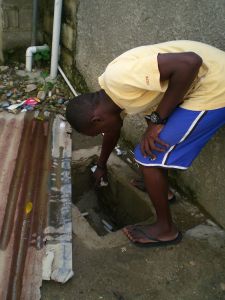 partnership with patients and their families in the community. Early in the development of the organization, it became clear that the health of the community could not be improved through medical services alone. Consistent and ready access to clean water was necessary to support critical health interventions. Through trial and error and many self-taught lessons, the leaders of HHI embarked on a water project to extend a water line into their partner community. In reflection, the project management expertise of PMWB volunteers would have helped the leaders to better plan, prepare, and manage the delivery of their water project as well as improve the impact to the community.
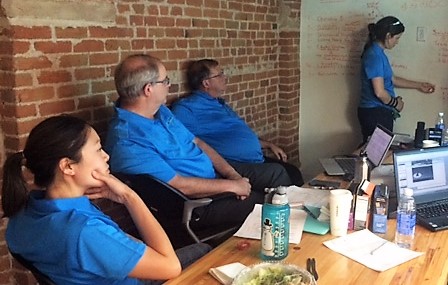 “We understood we wanted to do a water project. But what that meant, we weren’t quite sure,” reflects Schempp. Through research to answer their questions and asking stakeholders about their needs, the team narrowed the scope and goals of the WarterRico project.




Guessing is not a strategy: How to build decision velocity with AI and real-time data
June 10, 2026 | Live Webinar

How to be a more effective volunteer
Lending Your Expertise When You Have Limited Time
Millennials: Your Best Resources for Project Management in the World of NGOs
agile, Best Practices, capabilities, Career Development, Change Management, cloud, collaboration, communication, Communications Management, critical success factors, efficiency, Engagement, humanitarian aid, Managing for Stakeholders, maturity model, mentoring, Millennials, NGO, NGOs, Non-Governmental Organisations NGOs, Non-Profit project management, non-project, Nonprofit, NPOs, PMO, Professional development, project failure, Project Management, project management, Project Teams, project teams, Social Good, Stakeholder Management, Stakeholder Management, Sustainability, Sustainable Development Goals, Teams, training, virtual, virtual project teams, Volunteer, Volunteering, Volunteers, web


| In this busy and ever-changing world, volunteering requires resource management. Effectiveness doesn’t come easily, but it is something worthy of investment if you are looking to improve your reach. Before we dive in, please check out other great related PMWB articles such as: Managing Volunteers: Push for Efficiency! Giving Back That Feels Like Taking The Value of Giving Back With Project Management There is plenty of content available for free at this link. If you feel like helping and are inspired to do volunteering work, you can get involved through several different ways, so please check out our available options. The following are few simple, but helpful tips of how you can be a more effective volunteer. Before volunteering
In a volunteer work
Within a volunteer project
The next step forward An effective volunteering impact means being recognized for the resources and achievements you provided. Once you reached the project goals be proud and share the results to inspire others to do the same. If something went not as you expected, take notes, make changes, and discuss. At the end, any experience is valuable and any meaningful help is precious and appreciated. Ultimately, be happy doing it. |
|
Project Managers Without Borders (PMWB) is dedicated to educating project management professionals on practices for leveraging their skills and experiences as volunteers with non-profit and non-governmental organizations. With a focus on development projects initiated to improve the communities where they work, PMWB supports other non-profit organizations by matching project managers to their volunteer needs. In the four years of its founding, PMWB has partnered with Engineers Without Borders (EWB) and local chapters of Rotary Club International, among other organizations. The work of project managers and their team members has strengthened communications between community leaders and government policymakers through stakeholder engagement. Additionally, their work has helped communities research and implement sustainable solutions to some of their most pressing needs.
PMWB continues to seek ways project managers can support organizations in solving world problems.What PMWB has been able to accomplish in such a short amount of time is extraordinary. From 2016-17, PMWB—in cooperation with PMI Ghana Chapter--worked with communities in Ghana to tackle lingering floods in the
On the other side of the world, PMWB sought to tackle a completely different
Most recently, PMWB has partnered with Rotary Club of Centennial Colorado on the WaterRico Project. The team is working with the community in Moca, a small
A common theme of PMWB-led projects is water. But, why water?According to PMWB founder Deanna Landers, the organization was not founded with the sole intent to service water projects. However, in so many cases throughout the years, when PMWB seeks areas where they can make an impact, the topic of water often arises. Even when organizations set out to tackle other problems, such as the lack of a health system infrastructure in a community, the problem of water is uncovered as an unmet basic need. For example, Health Horizons International (HHI), a community-driven non-profit operating in the Dominican Republic, began in 2009 as a way to sustainably improve health in
Communities all over the globe are suffering from too much water, insufficient water, or poor quality water.This fact that has led the country leaders of the United Nations to designate equitable access to clean water and sanitation as Sustainable Development Goal (SDG) number 6. The experiences of HHI and PMWB reiterate the interrelatedness of the 17 global health and economic targets set by the United Nations. Through educating project managers and matching them to development projects aimed at improving global communities, PMWB is contributing—in a small part—to the achievement of the SDGs.
The work done by PMWB water projects volunteers may be a drop in the bucket, but the impact may be life changing.
|
| As project managers, our role is to get work done through other people. This means we not only need the right people on the team, but we need the humility to admit that there are many people who know much more than we do. “When I started out as a project manager, I would listen intently to the information being shared as I was introduced to a project team. There were always many terms, acronyms, best practices, deliverables, and methodologies that I did not fully comprehend or that were contrary to what I had previously encountered,” reflects Louise Chalupiak, Project Managers Without Borders volunteer and co-host of the TechGenix Xtreme podcast. She recalls how she would quietly listen and take notes, all the while thinking, “don’t worry, it will all make sense as I become more engaged.” And sometimes it did. The problem is that sometimes it didn’t. As a project manager with a similar mindset, you may have experience playing “fix and repair” with issues that could have been avoided if only you had asked the right questions. In developing the newest Project Managers Without Borders initiative, the WaterRico Project, Eric Schempp and his team had many opportunities to practice the art of asking questions. The WaterRico project was an evolutionary process in trying to understand what the Rotary Club [Centennial Colorado chapter] had in mind and what their goals were. I think there was a learning experience for all of us involved.” The team and project stakeholders used standard project management methodology to define the requirements of the project and to delineate the must-haves from the nice-to-haves in developing the ideas for the project.
Here are a few tips for asking questions:
Most importantly, also remember TO BE ABLE TO ASK A QUESTION CLEARLY IS TWO‐THIRDS OF THE WAY TO GETTING IT ANSWERED John Ruskin
The role of the project manager is based on research and communication. Project managers help scope out the vision of the project and help partners to narrow down the project so the outcomes can be realized. This all starts with asking questions, and it is never too early in the project to begin. |
“Everyone is interested in
|
| Unless you have been living in a different galaxy for the past decade, you have probably heard of Millennials and how they are conquering the workplace. However, who are these individuals with a cool sounding name, what are the traits that define them and, more important for us, how can they impact the project management space and, in particular, project management in the world of NGOs? Simply put, Millennials are all those who entered their adulthood at the same time they entered the second millennium, that is, everyone who belongs to the generation born between the 80s and the 90s. Just like your humble servant writing today’s blog post, by the way. When Millennials were growing up, so too was the now familiar @ symbol. The internet was just starting to gain adoption in its frenetic way to become a commodity and a necessity. Altavista, mIRC, the first Nokia mobile phones, oh, what an exciting time to be alive! Millennials were at the middle of it when the history of humanity suddenly become split in two periods: BG, AG – Before Google and After Google. Welcome to the future, 2018 AG. It’s no wonder then, that Millennials are known for their increased use and familiarity with communications, media, and digital technologies, to the point that they have even been called the “thumb tribe” or “thumb generation,” meaning that this group is more adept at texting using the thumbs than talking on the phone! Adding to the previous, not only are the Millennials one of the most ethnically and racially diverse generation – one of the many effects of globalization – but they are also considered to be one of the most formally educated, with a natural impact on their view of the economy, religion, and politics. From a workplace perspective, there are also significant differences between generations that should be acknowledged. While previous generations tend to value loyalty at work, a steady career path, and a nice pay check at the end of the month, Millennials resonate primarily with job satisfaction and personal realization, placing an emphasis on meaningful work rather than compensation, and in an improved work-life balance rather than a stable career. Bearing this in mind, you cannot expect to project manage a Millennial in the same way you manage someone older and achieve the same results at the end. So, if you have a Millennial in your project, here are some tips on how to build a win-win scenario for both parties:
Further to the above, it’s easy to understand why Millennials may as well be your best resource for project management in a world of NGOs! Where else can one find a better place where resources are scarce, thus requiring creative solutions and approaches while, at the same time, offering an opportunity for experimentation and for meaningful work towards a better world, enriched by purpose? Pretty much a Millennial’s dream! That’s surely why Susan Diec, herself a Millennial, has joined Project Managers Without Borders as a volunteer, a story that you can read here! Are you a Millennial? There are plenty of NGOs in need out there, come and join us. |
|
"Peace comes from within. Do not seek it without." - Buddha |