
Why Water?


|
Project Managers Without Borders (PMWB) is dedicated to educating project management professionals on practices for leveraging their skills and experiences as volunteers with non-profit and non-governmental organizations. With a focus on development projects initiated to improve the communities where they work, PMWB supports other non-profit organizations by matching project managers to their volunteer needs. In the four years of its founding, PMWB has partnered with Engineers Without Borders (EWB) and local chapters of Rotary Club International, among other organizations. The work of project managers and their team members has strengthened communications between community leaders and government policymakers through stakeholder engagement. Additionally, their work has helped communities research and implement sustainable solutions to some of their most pressing needs.
PMWB continues to seek ways project managers can support organizations in solving world problems.What PMWB has been able to accomplish in such a short amount of time is extraordinary. From 2016-17, PMWB—in cooperation with PMI Ghana Chapter--worked with communities in Ghana to tackle lingering floods in the
On the other side of the world, PMWB sought to tackle a completely different
Most recently, PMWB has partnered with Rotary Club of Centennial Colorado on the WaterRico Project. The team is working with the community in Moca, a small
A common theme of PMWB-led projects is water. But, why water?According to PMWB founder Deanna Landers, the organization was not founded with the sole intent to service water projects. However, in so many cases throughout the years, when PMWB seeks areas where they can make an impact, the topic of water often arises. Even when organizations set out to tackle other problems, such as the lack of a health system infrastructure in a community, the problem of water is uncovered as an unmet basic need. For example, Health Horizons International (HHI), a community-driven non-profit operating in the Dominican Republic, began in 2009 as a way to sustainably improve health in
Communities all over the globe are suffering from too much water, insufficient water, or poor quality water.This fact that has led the country leaders of the United Nations to designate equitable access to clean water and sanitation as Sustainable Development Goal (SDG) number 6. The experiences of HHI and PMWB reiterate the interrelatedness of the 17 global health and economic targets set by the United Nations. Through educating project managers and matching them to development projects aimed at improving global communities, PMWB is contributing—in a small part—to the achievement of the SDGs.
The work done by PMWB water projects volunteers may be a drop in the bucket, but the impact may be life changing.
|
.jpeg)


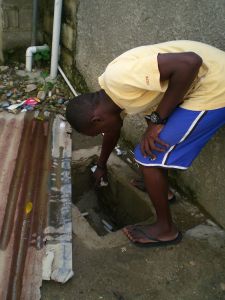 partnership with patients and their families in the community. Early in the development of the organization, it became clear that the health of the community could not be improved through medical services alone. Consistent and ready access to clean water was necessary to support critical health interventions. Through trial and error and many self-taught lessons, the leaders of HHI embarked on a water project to extend a water line into their partner community. In reflection, the project management expertise of PMWB volunteers would have helped the leaders to better plan, prepare, and manage the delivery of their water project as well as improve the impact to the community.
Finding Your First Volunteer Assignment
| Why volunteer? We live in a time of increased global demand for humanitarian action. As the demand grows, so does the complexity of the need. NGOs and other organizations may be strained to find resources with the talent and expertise to navigate the technical and logistical challenges of delivering impactful solutions. “Key to making operations work better is getting the right people on the ground with the right skills and experience, at all levels ” (Valerie Amos, May 13, 2011, The Guardian). The knowledge and skills developed as project management professionals can help transform ideas to outcomes. You have an opportunity to integrate your personal beliefs and professional experiences and drive towards a positive impact in our world. From the construction of a green-space in a high-risk community, to establishing volunteer shelters in a natural disaster, to planning a major fundraising initiative for a healthcare NGO, the capacity to execute is invaluable. So, how do you find an organization whose mission aligns with your personal values?
“So many organizations need help! Why should I make this commitment?” At this point, you may find the number of organizations where you can get involved to be overwhelming, and you may wonder why you should continue to pursue your first assignment. To put it simply: “To welcome the opportunity of contributing to the world's work ...because of the joy of service thereby bestowed and the talent of leadership multiplied” (Alpha Gamma Delta, The Purpose). Beyond making you feel good about giving back, volunteering can help you refine your leadership skills as you seek ways to overcome unique logistical and cultural challenges in your assignment. Through volunteer work, you can acquire skills not available in your current professional role. It's an impactful way to learn how to drive innovation, motivate accountability, and mobilize teams through unusual and enterprising efforts. Get invigorated by your work! Use your knowledge and passion for project management to make meaningful change to the way we approach the world’s work. |
Successful Projects: Planning the Future Ahead
| Projects are the way organizational strategy comes to life, they realize visions and can make dreams come true. Projects are not simply a piece of work to be planned, managed and delivered. They are not simply an end, but a mean to something bigger. Projects make an impact : they can transform lives. However, the dominant paradigm of project management is still execution-oriented only, with project managers being taught that their role is to get things done. My view is that we need a different mindset, one that accounts for the real impact of projects. A mindset that:
Let’s not forget that the world is facing dramatic demographic and societal time-critical issues that demand our attention: a refugee crisis, hunger and poverty, or the climate changes and its implications for the planet, just to mention a few. As project management professionals, we are well positioned to be the change we want to see in the world. We have a tremendous opportunity and an imperative responsibility to make the world a better place for the future. Once our perspective and our timescale horizons are expanded, sustainability and meaningfulness come into play. Sustainability, the ability to meet the needs of current generations without compromising the needs of future ones, is slowly gaining traction in the project management arena and you don’t need to be an expert, or go for green projects only, to be part of it - more to come on this topic soon, stay tuned! In summary, it’s a brand new different way to look at our profession and it’s the way project practitioners can be heroes and save the world. Make no mistake, much is at stake! Our projects are our legacy to the future. Let’s make it a good one. The world of tomorrow is created today, through our projects. How could you participate more? |
World Problems Require Project Management
| Project management is a unique profession that requires skills needed everywhere. Any time strategic initiatives are being implemented, anywhere there is a disaster or humanitarian relief effort, whenever there is innovation being brought to fruition, it’s through projects. We focus much of our time on our careers, the jobs we are paid to do, and we improve our craft to increase our impact and reap the rewards. Some of those rewards are recognition, respect, greater responsibility, opportunity, and the satisfaction of a job well done. Our employers, clients, colleagues, management and teams benefit from the change that we manage. But what about those in the world who need change the most? The world is teeming with communities in need, people who could benefit tremendously from our project management skills and experience. Many humanitarian organizations have domain knowledge and passion for these communities, but are lacking basic project management skills and knowledge. By introducing or improving project management for these organizations, we can make their work for humanity more efficient and effective, thereby increasing the positive impact they have. Let’s share what we know with those who need it most. Whether that means facilitating meetings for an engineering nonprofit/NGO, coordinating the schedule for a medical mission, organizing a cub scout camping trip, or clarifying the scope of a humanitarian documentary film, our skills can support meaningful change. You may even find that your employer will donate funds, software, or services to the humanitarian organization you volunteer for, increasing the potential impact of that organization even more. After your involvement, those benefiting, either directly or indirectly, are likely to understand and value project management more, and may even value it so much that they attribute their success to it. If you share your project management experience and skills with those who need it most, you will likely find it to be one of the most rewarding endeavors in your career, and life. Interested to learn more about how you can use your project management skills for a better world? Keep an eye out for updates to this blog, connect with an organization that matches professional skills with need (e.g. Social Venture Partners, PMWB, Catchafire, etc) and search for NGOs and other organizations that are aligned with your interests. Then, enjoy the satisfaction of applying your project management skills to support communities in need. Project Managers Without Borders (PMWB) is happy to sponsor this new blog to provide project management content and tools for humanitarian organizations. PMWB is a non-profit organization that engages the global project management community through collaborative and sustainable projects that make a positive difference in the world. |



