



Guessing is not a strategy: How to build decision velocity with AI and real-time data
June 10, 2026 | Live Webinar

Objectives & Key Results -- goal setting for an agile world
What is the future of project management in an increasingly agile world?
Your next agile project: your career
Good Agile Teams Are Diverse Teams: How Diverse Teams Allow You To Solve Problems Early and Often
Moving from Project to Product: What Does “Product Thinking” Actually Mean?
agile, agility, business agility, career, career guide, collaboration, digital transformation, employable, job, job hunting, jobs, Leadership, objectives and key results, okr, personal growth, professional development, sense & respond, team leadership, Teams


| Hey folks - After 40 years in the field, OKR's are finally having their day in the sun. Teams are using them to set goals that, in theory, help them become more customer focused and agile. In reality, these new goal setting attempts often end up with the 'same old' ways of approaching work and most teams barely notice a change outside of new syntax. OKR's can be done well and can be powerful transformation agents if teams take the time to understand why they're different and how they help change what a team does and how it works. To help with that I've created an online, self-paced video course (75 minutes) that teaches exactly how OKRs make all this happen in several short, concise, beautiful lessons. Take a look here and let me know if you have any questions. [Jeff] |
| Hey folks - Recently I've been thinking about the future of project management in a software-driven, increasingly Agile and agile world. I wrote those thoughts down and shared them with Harvard Business Review last month. Take a read here: https://hbr.org/2021/05/how-project-managers-can-stay-relevant-in-agile-organizations What's been your experience? If the world is iterating forward, what does that look like for project managers? [Jeff] |
| For years I’ve worked with teams helping them increase the agility of their product development efforts, leadership and culture. The thinking went that with a culture based on evidence-based decision making, continuous learning and customer centricity the organization could overcome any obstacle thrown its way without a company-wide panic. Since we have a learning loop built into everything that we do and we respect the evidence and insight it generates we create the environment where course correction is not only welcomed, it’s celebrated. (My new book, Forever Employable: How to Stop Looking for Work and Let Your Next Job Find You, has more tactical exercises like this.) |
| Have you ever been asked to put lipstick on a pig? If you’ve ever worked as a designer, then you know it works something like this… Your client will come to you with with a product that’s very close to being done, almost ready to ship, and ask you to “fix the design.” They can’t exactly tell you what they want, but they know that something is wrong. Very wrong. Maybe the product is ugly. It probably is, but that’s probably not the real problem. The real problem is probably deeper. The product is confusing. The product doesn’t do what customers want. Or maybe it’s just… missing something. They’ve come to you, hoping that design will fix it. But we all know how this story ends. The designer shows up, sees the pig, and complains (usually under his or her breath), they just want me to put lipstick on this pig. 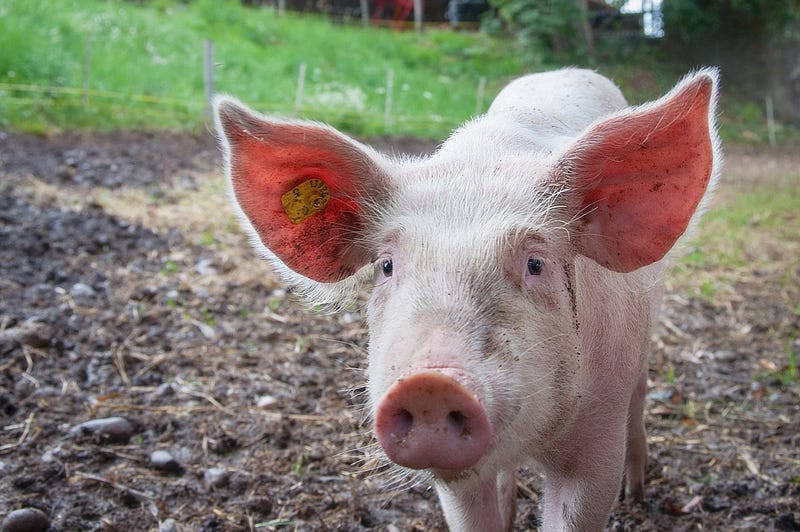
Before you go complaining that some pigs are beautiful, let’s just agree right now that no amount of lipstick is going to this little guy into a movie star. Photo by mali maeder from Pexels Why does this happen? In the design world, we understand that this is a problem caused by bringing designers into the process too late. Early in the process, designers can help identify what customers and users want, and can help define the way the product works, the problems it solves - not just how it looks. In other words, the issues that show up late in the process can often be avoided if the right people are involved early in the process. Now this may sound like a commercial for design, but it's not. It happens to engineers too. Even though Engineering is often involved in projects close to the beginning, every engineer can tell you a story about the time he or she was handed a set of orders from "the business", and being told to "just build it." (This isn't exactly lipstick- on-the-pig. It's more like Frankenstein's monster.) So, this this is actually a public service announcement: every discipline needs to be at the table early in the process so they can work on the project together - for the duration of the project. Good Agile Teams are Diverse TeamsGood agile teams tend to be diverse teams. They are diverse across a range of dimensions. From culture to race to gender to skill to roles. They possess a mix of perspectives that allow them to identify critical issues early. They possess the decision-making capability to decide how to address the problems and opportunities that they find. They possess a mix of skills that allow them to fix these issues before they become unfixable. Business, design, engineering, etc, all working in collaboration. Sounds great, right? Well, it doesn’t always feel great. That’s because the very thing that makes teams like this effective — their diversity — can also make for a lot of conflict. Studies show that diverse teams outperform non-diverse teams, but they also experience more conflict. Build Collaborative Teams IntentionallyTo handle this conflict, you want to get ahead of it.
Sound intriguing? Want to learn more? Check out our new online course, coming soon on PMI.org. |
| Product management has become one of the hottest job titles in most organizations. Is it really that different than project management? In short, it is. And the difference is fundamental because the nature of projects and products couldn’t be more different. The more an organization can embrace a product mindset, the more agility that organization exhibits, the better they can sense and respond. Let’s take a deeper look. Project vs Product -- 3 ways to reframe your mindset
In traditional project management we usually work towards a fixed scope. There’s a clear deliverable at the end of the project and once it is handed over to the client or customer, the project is over. The team celebrates and moves on to the next initiative. Their responsibilities are effectively over for this project. The measure of success in this instance is the successful delivery of the project in a way that works as it was designed. Is that the optimal solution? Does it provide real value to the users of that solution? Does it achieve the goals of the business that sponsored it? Generally speaking, this is not the responsibility of the team that built that project nor the project manager who drove it to its successful launch. In contrast, products are continuous systems. Defined explicitly: products are the way an organization delivers and captures value. They don’t have an end. Products are never done. For example, when is Amazon done? When is a bank done? When is your hair stylist done delivering their service? When we view our work as a product we realize that delivering the components of that product are not the measures of its success. They are the continuous evolution (and hopefully improvement) of that product. Our goal when we approach our work with a product mindset is not to celebrate the incremental and iterative deliveries of features, functionalities and improvements but rather their outcomes -- the measurable changes in the behavior of the people who consume those products. Delivering an output is designed to be an ongoing, uneventful part of building continuous products. Instead of celebrating each output, we focus on the outcomes we seek to generate to tell us whether this product is worth any more investment or effort. Projects are linear. Products are circular. Because projects end, they have a linear planning process. We work from one phase to the next, handing off our work to the next discipline in the production chain. We ask each discipline to estimate their levels of effort and we put together a linear project plan or roadmap. Our goal is predictability and consistency. We often don’t account for variability or new discoveries because we want to provide a confident answer to the question, “When will it be done?” Products continuously evolve and, as mentioned above, don’t have a specific “end” when they’re conceived. They’re designed to deliver value on an ongoing basis. As new feedback comes in from the use of the product, the team must respond to that feedback and adjust their plans based on this new information. The entire basis for Agile as the new way of working is based on this idea. As an organization learns new things (senses) about its product it adjusts how it responds to those things. The plan changes. The organization and therefore the product exhibit agility. This is critical to success in today’s rapid change environment. Product thinking ensures that our plans stay as agile as our products. Projects are components. Products are systems. The continuous delivery of new ideas to market is where projects shine. But these deliveries are simply components of the overall system, the product. Each component may or may not deliver real value to the consumer and the business. Product teams optimize their ways of working to sense as quickly as possible whether this value is being delivered and realized and, if not, to adjust the planning and the system accordingly. Why is this important? Because the consumers of our products are inevitably going to be other people. And these other people, we’re sorry to say, are almost always unpredictable. They don’t use the products as we imagined. They struggle to complete tasks we thought were simple. They abandon our products for seemingly more difficult or “older” tools because of familiarity. Our responsibility as product thinkers is to connect with our customers, understand these pain points and challenges and adjust our product planning to reflect the insights we gain from these conversations. This insight is what allows us to plan the next set of components (mini projects) we want to introduce into the system (the product) remembering that our goal isn’t the deployment of these new components but rather the successful alleviation of the challenges the humans who use our products told us they were having with it. Project managers looking to increase the agility of their teams and to build more of a product mindset in the way they work need to consider these 3 elements of product thinking. In addition, they need to carefully adjust the tools they’ve been using to match this new reality. The tools and methods we use for planning need to embrace agility and reflect that in the work project managers produce. Agile roadmaps provide guidance and direction but can’t commit to fixed time and scope, since it is unknown in a continuous system. The needs of the people we serve are continuously changing which requires today’s project managers to learn how to assess these evolving needs on a regular basis through regular customer interviews. Finally, the needs of the product teams will evolve as well. The tools, data, insight and feedback they require will morph as the product system evolves. As a project manager, it’s your responsibility to empathize with the evolving needs of your team so they can do their best work as well. We have many more articles coming up on how to do these new activities and they are all part of the online course we’re building and launching soon right here with PMI. Learn more and sign up here. |
|
"I went into a McDonald's yesterday and said, 'I'd like some fries.' The girl at the counter said, 'Would you like some fries with that?' " - Jay Leno |