


Fellow Ganttheads - Connect!
Categories:
Advice
Categories: Advice


| Situation: You want answers, solutions, or fame.
When you post a question in a gantthead discussion, it will probably be answered by someone who just runs across it - a browsing gantthead who just happens to find your posting interesting. Having more connections simply means that your voice is heard by everyone you are connected to on gantthead each time you post something to the site. More connections = more responses. When you post something on the site everyone connected to you gets a notification in their left-hand toolbar (in "network news") that you have created a posting. If you are connected to 20 people, 20 are notified, if you are connected to 150 people, 150 people are notified. Conversely, if you are connected to no people, no one is notified.
Deeper relationships with people like you... So connect to as many people as you can that you think might be "like you" in some way. Unlike linkedin or facebook, ganttface is NOT about replicating real world relationships online. It's all about meeting new people who share your issues, challenges, and type of work. The goal is to get connected with as many people as you can who can REALLY HELP you. Gantthead gives you access to the largest pool of your peers you can find anywhere. I can't imagine a more productive way to network. Connections you create are more likely to generate productive conversations with you because you picked them based on your own set of criteria.
Your reputation on the Internet - enhanced... Connections also help you create and enhance "The brand called you", which is today's world is critical to your success. When you post something to gantthead, you are publicly sharing knowledge. It's not quite like writing a book or winning an award, but it certainly creates a lasting impression. Connections get your contributions noticed. Each connection is not only a potential response, rather it represents an opportunity to make a positive impression - putting you out there as an "expert". So with more connections, every posting you make works that much harder for you.
So, take 5 minutes right now and find a bunch of people to connect with. Later, you'll be glad you did. |
 Lots and lots of people have begun using ganttface, our social networking platform on gantthead
If Only You Could Control Your Team This Way
Categories:
Time Killers
Categories: Time Killers
Situation: You have 3 minutes to look at some interesting new technology.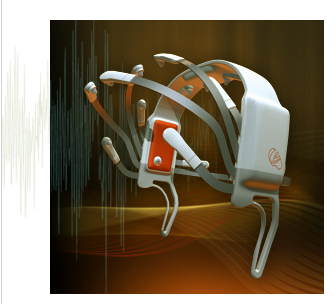 Sometimes I run across things that have little to do with PM, but I think many of you, as technologists, would be interested in. The folks at Emotiv have developed a headset that facilitates non-conscious communication -- expression, intuition, perception between you and your computer. The idea is that you can control actions on your PC, while playing a game or whatever... by thinking about what you want to do. Take a moment and check out the video. Sometimes I run across things that have little to do with PM, but I think many of you, as technologists, would be interested in. The folks at Emotiv have developed a headset that facilitates non-conscious communication -- expression, intuition, perception between you and your computer. The idea is that you can control actions on your PC, while playing a game or whatever... by thinking about what you want to do. Take a moment and check out the video. |
Live From Sydney
Situation: You're a sucker for PMI (or Australian) news.  Anyone interested in what is happening at the PMI Global Congress in Sydney should tune in to Dave Prior's blog and check it out. He's not only been attending the show, but talking to PMI's leadership team - Greg B, etc. See what he has to say... Anyone interested in what is happening at the PMI Global Congress in Sydney should tune in to Dave Prior's blog and check it out. He's not only been attending the show, but talking to PMI's leadership team - Greg B, etc. See what he has to say... Shawn Belling is doing the same thing. So there you go - one conference, two perspectives. |
PMI Certifications - The Latest and Greatest
Categories:
Interviews
Categories: Interviews
Situation: You're looking for ways to enhance your career.  A couple of weeks ago, Ron Hanchar was named Director of Certification at PMI®. Since PMI certification is so near and dear to many of our members' hearts, I though it would be a good idea to get Ron's take on where things are going. A couple of weeks ago, Ron Hanchar was named Director of Certification at PMI®. Since PMI certification is so near and dear to many of our members' hearts, I though it would be a good idea to get Ron's take on where things are going.Q. What's new in PMI certification? Is the push more horizontal, into areas related to Project Management or are the new programs more about roles at different organizational levels? PMI recently introduced the PgMP® credential for individuals who achieve organizational objectives by overseeing a program that consists of multiple projects. The PgMP credential holder maintains alignment of program scope with strategic business objectives. They define projects and assign project managers to manage their cost, schedule and performance. To earn the credential, the PgMP candidate is required to successfully complete three assessments--panel review and application, multiple choice examination and Multi-rater Assessment (MRA). The MRA requires performance evaluations by work colleagues. We are looking at what the project management community needs and are building new credentials based on market research that measures and tracks new developments in the profession. The PgMP credential acknowledges the more strategic organizational role of project management. We also have determined that there are needs in scheduling and other specialty areas. We will continue our market research in 2008 to help us to determine if there are additional roles and functions in which the project management community has needs. Q. PMI has really focused on becoming more global in recent years. How is that reflected in the certification program? Are some certifications localized? PMI's certification program was first discussed by the PMI board in 1977, and the Project Management Professional (PMP®) certification was launched in 1984. In 1995, there were 500 PMPs; today there are more than 260,000. Since then, the Certified Associate in Project Management (CAPM®) and the Program Management Professional (PgMP) have been added to the PMI family of credentials. From the beginning, the focus has been on developing, with input from around the world, credentials that verify a project manager's understanding of the profession and the Project Management Body of Knowledge (PMBOK®) Guide -- the recognized authoritative reference on project management. More than two million copies of the PMBOK Guide are in circulation, and it has been published in 10 languages. Candidates for PMI credentials must do more than study the PMBOK® Guide and successfully pass a test. They also must have practical experience as a project or program manager and must be favorably evaluated by others in the profession. PMI credentials are developed to benefit not only the project manager's career but also the needs of organizations for which they work. Over the past few years, PMI's certification program has more than quadrupled in the number of credentialed individuals to 270,000 plus worldwide. Globally, this has been reflected in recent years in a noticeable shift in the percent of credentialed individuals by region from being North America centric to being truly international. As the number of credentialed individuals continues to rise, the proportion of credentialed individuals in Asia Pacific and Europe - Middle East - Asia has increased significantly. Looking at PMP credentials, there were almost 48,000 PMPs in the United States in 2003; today, there are more than 150,000. In Europe, there were about 7,000 PMPs in 2003 and today almost 23,000 PMPs. In China, there are roughly 22,000 PMPs today - a dramatic growth of more than six times its 3,500 PMPs in 2003. Similarly, PMPs have increased tenfold in India where there were 1,420 PMPs in 2003. Today, there are approximately 14,000 PMPs in India. China and India are utilizing project management to build their nations as they develop and compete in today's globalized economy. PMI credentials are developed through a rigorous process that involved PMI members from each of the four regions served by PMI -- North America, Latin America, Asia-Pacific and Europe, Middle East and Africa. PMI certifications are the same worldwide; PMI does not offer localized credentials. Q. Do you feel that the PMP certification will ever be a licensing requirement for project management? (like a CPA and others) There are organizations today that require the PMP certification. Ultimately, we want more organizations to require professional project management credentials so they will attract quality project managers who can deliver projects on time and within budget. The goal of project management is to make organizations successful, and we think hiring qualified project managers is directly attributable to that success. |
Large-Scale, Lightweight Reporting
Situation: You need a robust reporting solution, but don't want a full-blown data warehouse. The whole business intelligence thing can be fairly daunting. Implementations can be costly and complicated when sometimes you just need "more reports, faster". JReport is one of the software tools that can help get you there. We recently spoke with Whit Mathis, VP of Sales at Jinfonet, who gave us some insight into when this sort of tool might be right for you. The whole business intelligence thing can be fairly daunting. Implementations can be costly and complicated when sometimes you just need "more reports, faster". JReport is one of the software tools that can help get you there. We recently spoke with Whit Mathis, VP of Sales at Jinfonet, who gave us some insight into when this sort of tool might be right for you.Q. What are three things that people often forget when creating reports? -The type of architecture required and flexibility of the reporting application. It is very easy for reporting requirements to become complex and JReport reduces that complexity with simple, straight forward architecture (less hardware), yet is flexible enough to meet demanding reporting requirements. Large BI vendors can require complex configurations for installation and on the other side Open Source vendors often do not have the flexibility to meet enterprise BI requirements. - Considering future reporting needs and how they will change/adapt to those new requirements. JReport is very extensible and can meet embedded BI requirements now and those to come. - Some users will want to create their own reports easily or chose their own data to view. JReport offers Adhoc capabilities which empowers the end-user to view the data they determine relevant. Q. What makes JReport different from its competition? - Completely Java based with robust functionality. A major credit card processing company wanted to integrate their existing Java architecture that is used for their mission critical applications with a robust reporting platform. JReport offered a fully compliant java solution along with all the features they needed to support 1000's of users. Our ISV customers, which represent many top tier technical companies, use JReport since they can have a very small resource footprint in their applications, yet offer value add features to their end users. With the ability to white label our application, this creates a competitive advantage for the solutions which embed JReport. Q. What skills and knowledge enable a user to effectively use your report designer? -JReport provides IDE that makes using the report designer very straightforward. Customers that understand data relationships and how reports should look will easily be able to create highly usable business data. JReport also provides professional services to those who need assistance with this or would like jump start. Q. Which types of reporting are perfect for your software? Which are not? - We’re good for extremely lightweight, powerful reporting - We’re good for departments who need a solution that can adapt to specific reporting need or an enterprise that does not need to be integrated with a Data warehouse. - We’re good for challenging performance and scalability requirements. - We’re good for business users that need real time access to data but do not want to learn complex reporting platforms -We’re not perfect for big, overarching BI + data warehouse architectures or small, one-off reporting fixes -We are not good for very simple reporting with small user base - We are not good for anyone stuck on excel spreadsheets for reporting because they won’t utilize the capabilities that a robust reporting solution like JReport delivers. |


