


The World is a Little Smaller


|
Including the notebooks my wife and I use for work, we now have three in our home. My first personal computer was a Mac Classic. And, I'm sure there will be a lot of these types of stories over the coming weeks. With that said, I have to admit that I have been a fan from the very start. By comparison, my MacBook Pro is an exponential improvement over the old Classic, but my Mac (in one form or another) has been a pretty familiar friend for many, many years. I could say the same thing about my first iPod, my first iPhone and every other Apple-influenced device we all use and I take for granted. Steve Jobs was a visionary and his influence on consumer electronics and personal computing will be missed. I didn't know Steve Jobs. We'd never met—but I have felt his influence in how I get my work done, how I enjoy the music I love, and how I communicate with my family and friends (from wherever I am in the world) for a long time. He made the world a little smaller and information a little more accessible for me. Rest in peace Mr. Jobs. |
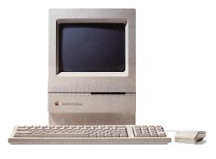 I've mentioned before that I had been in the workforce for a number of years before I ever used a PC. That's not to say I didn't have a monitor and keyboard on my desk—they were simply connected to the mini-computer housed in a room about he size of a couple of large cubicles. I even remember some computer executives who back then were bold enough to suggest that the PC was a fad and there was no reason to own one.
End of the Season—End of the Quarter—End of the Project
|
Early Saturday morning, I thought I'd shoot up Big Cottonwood Canyon to see the aspens turn before all the leaf-peepers drove up in their cars. It was a pleasant ride with a bit of Fall in the air as the sun was shining through the golden leaves. Riding home, I couldn't help but think about how the beautiful colors are a fitting end to the summer. We had a wet spring and cooler than usual summer this year in Utah, which makes for beautiful fall colors. Although I'm not real excited for the snow, I know all my friends that ski are chomping at the bit. Our team also just ended a very successful quarter. Most of the major projects we work on are based upon the physical quarter—this quarter, we finished up a number of projects that we've been working on for quite some time. There's a real sense of accomplishment and satisfaction among the team. Later this week, we'll be holding a public demo of last quarter's work. I like the idea of the public demo. Although we aren't sprinting, I think it's an important part of finishing up a project. It's important to acknowledge accomplishment before you jump right back into the thick of it again. Sometimes, project teams go from project to project without taking any time to look back. Although I think a retrospective is critical, I think it's just as important to take a few minutes to celebrate victories and successes—much like how I consider fall a celebration of the end of a fun summer. Although there are probably a lot of people who don't take the time to visit the canyons to enjoy the changing of the seasons, I really enjoy the opportunity to slow down and just enjoy the colors, maybe take a couple of photographs and think about how much fun I've had over the course of the last six months. What do you do to celebrate your successes at the end of a project? |
 Within 10-15 minutes of my home there are three beautiful canyons. Two of them share four different ski resorts: Alta and Snowbird are in Little Cottonwood Canyon, Brighton and Solitude are in Big Cottonwood Canyon, and although there isn't a resort up Millcreek Canyon it is a beautiful place with some of the best hiking and mountain biking around.
Play at Your Own Risk
|
I have to agree, projects aren't business as usual. If they were, we wouldn't treat them like projects. Their very natures include risk—which most people are very uncomfortable with. Of course, that doesn't meant that we don't do our best to address and mitigate the risk, but I don't think we can eliminate it. In fact, when I think about what Donna describes as "toxic-ly risk averse" it reminds me of a conversation I had with my wife last night. As most of you know, I ride a motorcycle. My wife asked me if I thought my dad would have enjoyed riding a bike. I remember him telling me about his experience riding an old Harley (when he was younger) with a suicide clutch/shifter. Early model Harleys and Indians had a hand shifter sometimes called suicide a shifter or a jockey shifter. I've never ridden a bike like that, but I've seen them—and apparently my dad did as a young man—and riding the bike scared him. He never rode after that and wasn't a fan of motorcycles because of the experience. We were talking about how important it is to be aware, but relaxed on the bike. Although I have a healthy respect for the relative risk I experience riding in traffic (I always wear a helmet, riding boots and jacket to protect myself), I am not paralyzed by fear every time I ride. In my opinion, fear on the bike puts the rider and others in danger, and almost guarantees an accident at some point. I think projects are the same. John F. Kennedy once said, "Those who dare to fail miserably can achieve greatly." I think it's important that we dare to fail—otherwise we will be relegated to create tired, stale and boring products that nobody will want. I wonder if shunning risk because we are "toxic-ly risk averse" is the same as embracing mediocrity and irrelevance? What is the risk tolerance in your organization? Are you "toxic-ly risk averse"? |

Pushing a Democratic Workplace to the Extreme
|
WorldBlu is an organization that is trying to "...unleash human potential and inspire freedom by championing the growth of democratic organizations worldwide." They would ultimately like to see a billion people working in free and democratic workplaces. What does that mean? Tony Hsieh, CEO of online retailer Zappos says, "At Zappos, one of our Core Values is to create a positive team and family spirit. WorldBlu is a leader in the efforts to create happy, engaged workplaces and communities..." In an article published earlier this month in the Financial Times, Traci Fenton describes why she founded WorldBlu as a college project in 1997. "I walked into work the first day excited, ready to engage and make a contribution. I walked out feeling dehumanized from a toxic environment using one percent of my capabilities. That's how people are being treated all the time." The concept of a democratized work environment turns conventional management wisdom on its ear. However, I like the idea. In fact, I think it's a great model for project teams. I see the role of project leader in a more democratic project team as one of facilitator—which is a role that really makes sense for me. I'm not a big fan of autocratic leadership styles. I'm a firm believer that if you give people a voice in the tasks and projects they're assigned to do and autonomy over how they do it, they typically excel. Although WorldBlue might not have reached their billion people goal yet, you might be interested in the results they tout on their website so far:
Winston Churchill once suggested that "...democracy is the worst form of government except for all those other forms that have been tried." I wonder if it's time for project leaders to start looking at a more democratic way of leading teams. Anthony Goodman, a writer for the Financial Times interviewed a couple of WorldBlu "certified" company leaders who have really embraced the concept of a democratic workplace. One of them was HCL Technologies, a large public company in India. Goodman quotes Anand Pillai, senior vice president of HCL: "People can be voted out of management if they receive negative feedback for two to three years in a row. They will become individual contributors instead." If that makes you a little nervous, Pillai also says, "People have accepted leaders for who they are, not for who they are supposed to be." I'd love to hear about your experiences with implementing more democratic practices among the project team. |

Do Happy People Work Better?
|
I'm pretty convinced that we need to change the way we look at productivity and worker engagement if we really want to help project teams (and the larger organizations they are a part of) be successful. Gittins argues that although monetary incentives might, at first glance, make a lot of sense, it doesn't get much traction in the real world. "Workers do care about pay, but they care less about the absolute level of their pay than about its relative level—that is, what they're getting compared to what others are getting, particularly those they consider their equals. In other words, play favourites with pay and you're just as likely to create dissatisfaction as satisfaction." If that's the case, what do the industrial psychologists say is important? According to Gittin (an I tend to agree), "...most workers want to work in an environment in which they can trust their bosses and be trusted by them, where they can give and receive loyalty." Some interesting Canadian research from the University of British Columbia seems to validate this. "...life satisfaction—happiness—is significantly higher among workers who work where they rank management trustworthiness highly," say researchers John Helliwell and Haifang Huang. "For example, the roughly one quarter of surveyed workers who rated trust in management nine or 10 on a 10-point scale also rated their satisfaction with life at 8.3 on a 10-point scale," writes Gittins, "compared with the average of 7.5 for the quarter or more who rated trust in management at five or below." So what. Does it really matter if people are happy on the team? They were hired to do a job—not have fun—right? Although I think we can all agree that businesses exist to make profits, "...longitudnal research finds that happier people tend to be more successful in all dimensions of their lives—their incomes, their careers, their health and their relationships," writes Gittins. I don't think it's too hard to connect the dots and recognize that successful individuals make successful teams—and organizations. To create a satisfaction-inducing workplace, British psychologist Peter Warr has identified five important factors that Gittins has kindly outlined for us:
"It's not hard to believe that successful people are happier, but this is saying the reverse: being of a happier disposition tends to make people more successful," writes Gittin. "More specifically, happy workers make more money, receive more promotions and better supervisor ratings, and are better citizens at work." I've noticed over the last year or so that outside of the US, worker happiness is a big deal that is talked about on a regular basis. I think it's something we should be talking more about here. Happy workers are more productive workers. Unhappy workers are always looking for their "next" job. What are you doing to create an environment where project team members can be happy? |



