


How Will We Conquer COVID-19? Innovation—Delivered Through Projects


|
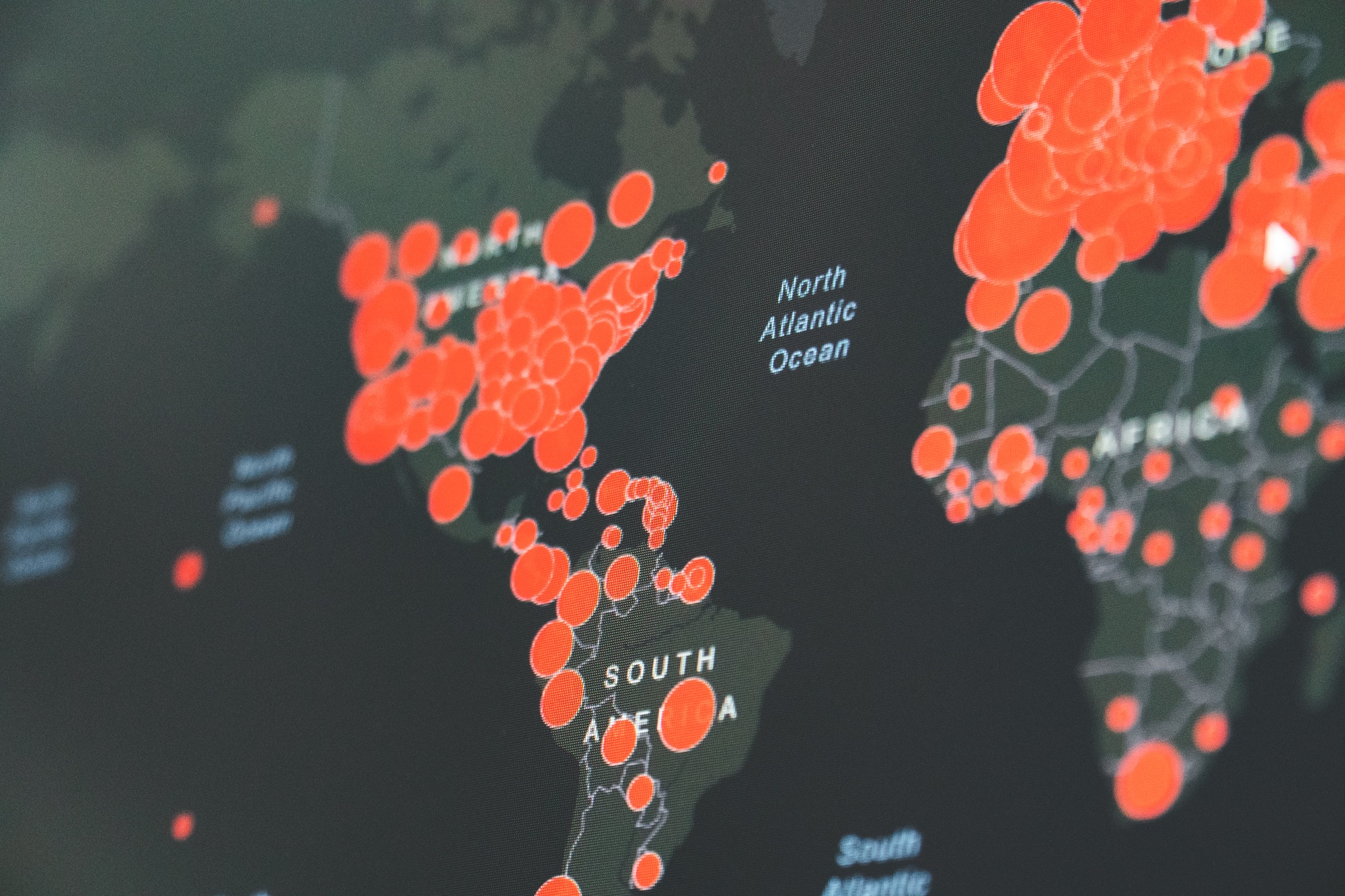
You don’t need me to tell you these are dark times. You’re probably stuck at home seeing the same dire headlines I am: The number of COVID-19 cases around the world has surpassed 1 million, with more than 64,000 deaths. And the end is nowhere in sight. It’s overwhelming. Yet we human beings have a wonderful knack for pushing through. We’re seeing it every day as the global community delivers innovation—and hope—through an array of projects reimagining everything from supply chains to product design. Just 72 hours after the French government issued a call for much-needed medical supplies, the CEO of French luxury group LVMH approved a project via text, according to The Financial Times, agreeing to transform three of its perfume and cosmetics factories to produce hand sanitizer free of charge for health authorities. Dyson—best known for vacuums and hair dryers—designed and built a ventilator in just 10 days, and the U.K. company is donating 15,000 to combat the global ventilator shortage. Conquering COVID-19 can only happen with cross-disciplinary teamwork—reaching across organizational, political and geographic borders. Case in point: Chinese auto supplier BYD formed a task force of leaders from different business divisions and pulled in more than 3,000 engineers on R&D, design and processing. The result? A plant capable of generating 5 million masks and 300,000 bottles of disinfectant per day. Virgin Orbit is collaborating with teams at the University of California Irvine and the University of Texas at Austin to build simple “bridge” ventilators that meet the needs of people who don’t necessarily need intensive care—and that can be quickly mass-produced. “I have never seen our team working harder. Never seen ideas moving quicker from design to prototype,” said Virgin Orbit CEO Dan Hart in a statement. For all teams, agility has taken on an entirely new meaning. Industrial engineer Mat Bowtell founded Free 3D Hands to ensure access to prosthetic devices through 3-D printing. Now he’s pivoting the Australian org’s mission and using that same technology to produce free face shields. Design firm Carlo Ratti Associati and MIT’s Senseable City Lab are designing ICUs inside shipping containers, creating “plug-in biocontainment pods that can be quickly deployed in cities around the world.” We’ve faced deadly epidemics and healthcare emergencies before, of course. And project leaders are putting those hard-won lessons to work. In Chicago, Illinois, USA, Rush University Medical Center is preparing to activate the emergency preparedness capabilities it baked into its design from the start. Built in the wake of the 2001 terror attacks on New York’s World Trade Center, the hospital has the ability to surge capacity by 130 percent. To get ahead of the looming influx of COVID-19 patients, Rush has converted two units to negative pressure to prevent cross-contamination, and staff have already doubled the number of beds on two floors. Meanwhile, Dr. Ranu Dhillon was on the front lines of the battle to contain Ebola in West Africa in 2014 and witnessed firsthand the unrelenting toll. “In an epidemic, transmission is happening and it’s not caring about weekends, it’s not caring about holidays, it’s not caring about any other parts of life where we have momentary pauses,” Dr. Dhillon says on a recent episode of Projectified™. “And it’s just going to keep going unless you build the system to counter it.” Just as viruses vary, so do the responses. While in Guinea, Dr. Dhillon had full government support to acquire the necessary resources and push his containment project forward. That’s not always the case these days as leaders scramble to come together on a clear path. “There may be certain things that are clear that you want to act on, but the pieces that have to be put into place, the players that have to be engaged in order to act in that manner, it’s really tough to sometimes align that with federal level, the state level and the local level,” he says. But project leaders aren’t about to let a little bureaucracy get in the way of battling the coronavirus pandemic. After his own COVID-19 test came back negative, Dr. Dhillon rejoined the fight. And he’s not alone. Around the world, organizations big and small are flipping their scripts and launching whatever projects are needed in the new COVID-19 reality. What projects do you see making a difference? |

Introducing the Crisis PMO
|
Although we expect most organizations to have a crisis response plan in place, very few actually do. As the COVID-19 crisis continues to develop, organizations are trying to keep their heads above water as distractions and urgencies create barriers to effective decision-making. But this is not the world’s first crisis—and it won’t be the last. Is it too Late for a Crisis Response Plan? First things first: Every project professional needs a plan. As organizations realize they’re wasting time and resources with hasty solutions, project teams are realizing that they have to go back to the drawing board and set up a plan. A consistent and structured approach is needed to successfully deal with a crisis. What does your PMO have to do with all of this? A PMO is uniquely positioned to solve problems that the project managers cannot solve themselves. On top of that, some PMOs are responsible for portfolio management, and they also support decision-making and the strategic planning processes within an organization. In fact, because of the COVID-19 crisis, organizations kicked off a number of urgent projects all at the same time. These projects were created to enable remote work, fix supply chain disruptions and more. At the same time, many other projects were terminated or paused without careful analysis. Whatever phase your project is in due to the coronavirus pandemic, it is not too late for a crisis response plan. Now what? If you are a PMO manager and you don’t have a crisis response plan, you must create one now. It does not have to be perfect or extremely detailed. Follow the seven steps below: 7 Elements of a Crisis Response Plan
When you and your team are playing out the potential scenarios and alternative responses, re-think the organizational strategy for the long, mid and short terms. As you pay attention to strategic shifts and changes related to the organization’s objectives, try to uncover how this information impacts the current portfolios and projects. In order to truly be helpful during this crisis and stay relevant, your PMO needs a very clear chain of command, a war room (even if it is a virtual) and clear communication channels. Shorten the planning cycles and adopt a streamlined feedback process. Keep in mind that during a crisis, a different type of PMO is needed: a Crisis PMO. In a time of great uncertainty, you should drop all those heavy processes used during stable times and put in place a nimble and flexible crisis response plan. Let me know how your PMO and projects are doing during the COVID-19 crisis in the comments below.
|

3 Leadership Lessons From A Global Pandemic
Categories:
Disruption
Categories: Disruption
|
By Dave Wakeman My editors always say I bring an interesting perspective to project management and leadership. I like to think it’s because I come to project management from fields that are not often associated with project management, such as marketing, politics and sports. Even though project management touches every field. As I’m writing this, I’ve been at home acting as chief teaching officer to my 9-year-old son, chief sounding board for my partner, chief shoulder to a lot of mentees and chief play toy to my bulldog, due to the spread of the coronavirus and the actions of governments around the world to protect their citizens and mitigate the damage of this new virus. While many of us are physically distanced from each other, I’ve had a lot of time to watch the responses and observe them as an exercise in project management. And, to be quite honest, if many of the leaders around the world were working as project managers for the organizations I work with, a lot of them would be fired. But … I think all of us can also learn a lot from this moment, and I hope we do. Here are three things I’m learning about project management from the coronavirus crisis: 1. Leadership matters: I was in Australia in November, and I remember standing in the airport in Melbourne with my colleague the first time I was made aware of the coronavirus. Since then, we’ve seen many leaders around the world downplay COVID-19, lie about their knowledge of the disease or try to pass the buck for their poor response as the people impacted by the coronavirus continued to grow. Across the globe, this lack of vision, urgency and direction has marked the response to the coronavirus. That’s a lack of leadership. In normal situations, we know that leadership matters and that having vision, providing guidance and supporting your team is important. In a crisis, the importance of leadership multiplies exponentially. This is why we have to recognize that our role as managers is to lead—to bear the brunt of knowledge, direction and action. That’s been missing in so many places throughout the pandemic. 2. Communication is king: In general, 90 percent of a project manager’s job is communication, up and down the stakeholder map. That doesn’t change no matter what kind of project you are leading. As we work through the impacts of the viral pandemic, we must consider what makes communication effective, and that includes things like timeliness, consistency and truthfulness. We’ve seen the timeliness of communication from leaders be pretty good, at least over the last few weeks. Though, if I were the leader of these projects, I’d default to communicating and explaining things earlier. As far as consistency, we’ve seen a number of leaders around the world change their messages and directions to citizens almost daily, which isn’t a very effective way to generate the best results. Finally, truthfulness. I know from experience that you can’t tell your teams and stakeholders everything all the time, due to legal exposure, security or other issues. But the malleability of the truth in the face of a once-in-a-lifetime event has been quite alarming. All three of these inputs are extremely important to the success of your communications with your team and stakeholders. 3. Teamwork is essential: As project managers, we lead teams of people with diverse skills, agendas and needs. Our ability to get these folks moving in the same direction, if only long enough to complete their part in our project, defines our success or failure. In the global reaction to the coronavirus, we have seen a disjointed response with each country and continent going their own way. Lack of teamwork is harmful in this case, obviously. We haven’t taken coordinated efforts to reduce travel, slow infections and increase production of necessary medical equipment. But the larger point is that if you are leading a team and no one is working together, your ability to achieve your goals and positive results seems to deteriorate rapidly. That’s on display today. Overall, I’ve been disappointed with the way leaders around the world have responded to the coronavirus outbreak. We mustn’t discount the lessons learned as we witness governing bodies across the globe either rise to the occasion or falter in response to the coronavirus pandemic. What do you think? Let me know in the comments.
|
Can Agile Help You Make the Most of Millennial Team Members?
Categories:
agile
Categories: agile
|
By Soma Bhattacharya 56 million. That’s the estimated number of millennials currently working or seeking work—making individuals born between 1980 and 2000 the largest generation in the U.S. labor force, according to the Pew Research Center. And that’s just the tip of the iceberg. By 2025, millennials will comprise 75 percent of the global workforce. Companies like Accenture have already reported that millennials represent over two-thirds of the company’s entire employee base. As of late, agile has been sparking more and more conversations—about how it has worked wonderfully well for some organizations and failed for others. If you look at the profiles of the organizations or teams reporting their project progress, their successes and failures often point to the workforce and, of course, company culture. For many startups and young organizations, where the workforce is mostly millennial, agile seems to be accepted more easily. I know this personally because I have seen companies—small companies that are very open and motivated to make it work—with huge support from management make it successful. I believe that agile works better for teams of millennials simply because the approach focuses on many of the same qualities that are among the core values of millennials. Let’s look at some of them: Empowerment: Agile is all about empowering individuals. From holding team ceremonies to the team structure, it’s all about interacting as a group, coming together every day and making decisions as a unit. Nearly 50 percent of millennials believe leadership signifies the empowerment of others, according to a Workplacetrends.com survey. They also seem to value traits of humility, openness and continual learning, promoting the importance of recognizing both strengths and weaknesses. Transparency: Transparency, another pillar of agile, is easier said than done. Millennials believe in looking at the bigger picture of their organizations and teams. They want to participate in that shared vision. There are companies that have transparent salaries, are candid about their roadmaps and quickly own their mistakes. This leads to teams that are transparent among themselves about what’s going to work and what’s not going to work. Visibility: Visibility is also critical, because it impacts how teams distribute work. It fosters quicker decision-making and more effective resource management. Unless the value is explained and showcased in clear terms, it’s natural that certain tasks will seem like a boring chore. This means the role of mentors and leaders is of high importance in how the team is trained and how team members communicate. Trust: Trust in the team, leadership, and, yes, estimation. If you look at the root cause analysis of why it doesn’t click with some teams, there’s a larger story to tell. It could be people who prefer to work in silos or a lack of trust. By pivoting, you can probably get the team to rethink their estimation based on asking the right questions or pairing up team members so the experienced ones can help their juniors. You can mentor the team to get things done quicker. It’s all about how you communicate without damaging team morale. Acknowledgement: Communication is an art, and millennials use all forms of communication to get things done. Smaller teams, as used in scrum, also mean better communication, faster decisions and acknowledgement. Millennials thrive on acknowledgement more than anything. They need to know their work matters. Perspective: Learning and having a growth mindset is essential to adopting any new process. That’s why the way you approach the team about change or how you handle and mentor the team is so important. Don’t introduce every change on day one, and don’t blame those changes on agile. Give everyone the time to doubt, adapt and see it for themselves. Meanwhile, be with them, give them the right information and take the journey with them. There’s nothing more apt than using the Goldilocks rule in this scenario. Motivation: Give them a challenge with a difficulty level that slowly scales up and allows them to feel accomplished. Telling them to run a marathon when they have never walked a mile before is not only foolish, but a huge demotivator. Gratification: Millennials also look for immediate gratification. There’s a talk by the author Simon Sinek in which he mentions that millennials are used to having everything immediately: You want a phone? You can order it online and get it delivered in a day or two. You want a shoe? You have so many shops and online stores to choose from. Unsurprisingly, millennials in the workforce also crave immediate feedback and want to feel confident at work without waiting until they hit the six-month mark. They want to be happy, get things done faster and work for something they truly believe in. True agility is also a test of how the organization forms itself. If you really want the team to have the right dynamics and bonding, appraisals should put more weight in team performance than individual performance. For extrinsic motivators, this will have a great impact. As it also turns out, at companies where managers show sincere interest in millennials as people, the organization sees an 8x improvement in agility and a 7x increase in innovation, according to a Great Place to Work survey. Now that’s something to think about. What has been your experience with agile and millennial team members? Share in the comments below. |

Enterprise Risk Management in the Age of the Coronavirus
|
By Conrado Morlan In a previous post, “The Impact of Unforeseen Risks,” I described how two major events have impacted projects I’ve lead in the past: the eruptions of Eyjafjallajökull in Iceland in 2010 and Fidel Castro’s death in 2016. Many project professionals don’t include unforeseeable circumstances in their risk log, unless their projects are being executed in an area where natural and unavoidable catastrophes are known to occur. Due to the dynamics of geopolitical events, they may not be included during the initial risk identification process. As the project progresses, however, the risk log should be updated to identify the impact of these risks on project progress and the enterprise as a whole. Risk management strategies help project management practitioners forecast and evaluate risk, while also identifying ways to avoid or minimize their impact on desired project outcomes. Conducting SWOT on COVID-19 Late last year, news of a novel illness affecting a city in China failed to capture the attention of most people and businesses around the world; many thought the impact would be similar to SARS or swine flu—a blip on the breaking news radar and no real threat to the global economy. They were wrong. Many organizations failed to consider the COVID-19 outbreak an enterprise risk and continued their business-as-usual operations. Around mid-February, I met with colleagues and friends who work in the telecommunications industry, and they expressed their concerns about how their projects would be impacted if the factories in China that produce the electronics needed for their work shut down. They wondered if that would break an important link in their supply chain and if it would jeopardize the final delivery of their projects. Those in the telecommunications industry were not alone. Supply chains in multiple industries have strong ties to China. By the time they were primed to react, the risk was already an issue and without the procedures to avoid or minimize the impact, industries and countries were facing a pandemic with no plan in place. Sharing enterprise risks identified during the planning and strategic phases of a project isn’t always a common practice within organizations. But not being aware of such risks has a direct impact on project success, and important assumptions may not be considered for the projects and programs that lie ahead. People in charge of developing the multi-year strategy at an enterprise can use SWOT (Strengths, Weaknesses, Opportunities and Threats) Analysis to identify potential risks. This analysis uses a matrix, in which the strengths, weaknesses, opportunities and threats are listed and prioritized. The SWOT matrix can be evaluated and updated as the enterprise strategy is reviewed or on an ad hoc basis. Moreover, threats identified during the SWOT analysis may have an associated opportunity. For example, in the event that the plant producing vital electronics in China shuts down, it will impact the supply chain. An opportunity to avoid that threat would be identifying another country where the vital electronics could be produced in order to reduce supply chain disruptions. As we’ve learned, the importance of communicating the risk identified by the enterprise risk management process needs to be shared with business units to achieve strategic alignment and empower teams to achieve strategic objectives. As a project professional, how do you interact with the strategic team within your organization to learn about enterprise risk?
|



