


The Path of Paperless Projects: Finding What You Need
Categories:
Technology
Categories: Technology


|
by Lynda Bourne The world of business is moving toward storing and exchanging documentation in electronic formats—and the transition is swift. While this process has its advantages, my team and I have been working on a major report based on a data set of more than 250,000 records, and the project has highlighted some problems. Namely, as it becomes easier to preserve every iteration of a document, finding useful information becomes harder. There are two basic types of document storage and retrieval systems with a couple of nuances:
If your organization isn’t using one or more of these systems, it soon will be! You’ll probably find that they solve many problems typically found in paper-based systems, but they also introduce a new suite of issues. Here are some of ways in which these systems fall short—and ways to overcome these challenges: Establishing one source of the truth. As people become more used to the system, they begin to rely on it. And if something isn’t uploaded, stored or created in the tool, it ceases to exist. You cannot rely on people remembering to do the right thing, and if someone is doing something unethical, they will try to evade the system. The solution lies in system design and automation. Discipline and processes are needed to make sure a document retrieval system contains all of the documents. Creating one document, one record. Send an email to 10 other people in the organization and you immediately have 11 versions of the one document scattered across various email accounts. (And this is before “reply all” and email trails start to build.) Your document management system needs to be smart enough to recognize identical versions of the same document and archive the 10 copies. However, when someone changes the email (maybe by forwarding it), you have a new document, and the process gets more complex if there are attachments. Here, the solution is a system that can manage families of documents. Finding what you need—easily. This is the biggest challenge with massive archives of documents (and was central to our work over the last few months). How do you find information? A search based on document contents may seem like the best option, but if you Google “PMI PMP exam change,” you get 891,000 results. And it’s Google’s systems that decide which of the pages it will show you and the sort order. That means if you’re looking for something specific, you may have to dig through a sea of hyperlinks and page titles. This gets even more difficult if you want to check if something did not get documented. A null-result may mean the alleged document does not exist—or it may mean your search terms are slightly ambiguous. Developing systems that balance providing information that you need against burying you under masses of content requires the wisdom of Solomon. Artificial intelligence can help if the search is routine, but for an important ad hoc search you are probably on your own. One way to help focus searches is by structuring the information, using folders or codes. The problems are minimizing misplaced information and persuading everyone to use the system. Again, system design is central to developing processes that work. The concept of a paperless project has been around for a while now and electronic document management systems are becoming increasingly common. The challenge that remains is scaling this concept up to the enterprise level and developing tools that can quickly provide you with the information you need from a pool of several million documents. What do you do to store documents and facilitate the ease of information access? |

2020 PMO of the Year: Innovation Meets Efficiency
|
by Cyndee Miller When I think bleeding-edge tech, water and sewage systems aren’t the first things that come to mind. But DC Water—the 2020 PMO of the Year Winner—snapped me out my narrow views. The utility is responsible for delivering clean water to residents and businesses in Washington, D.C., USA. And it saw an opportunity for technology to help it do that job more efficiently. Led by its IT PMO, DC Water leaned into what is now a US$11.3 million project portfolio full of industry 4.0 tech—always intent on making sure the utility’s innovations deliver on its business purpose. “We work at the luxury of the business itself. We’re not here to simply deliver technology. We’re here to deliver technology that solves a business problem,” says Tom Kuczynski, vice president of IT, DC Water. So what does that look like in real life? Behold the first-of-its-kind tool called Pipe Sleuth, which analyzes video captured by autonomous robots to identify and classify anomalies, be they structural cracks or grease build-ups. The technology, which DC Water now sells to other utilities, eliminates the risk of human error—reducing the cost of scanning and coding flaws by roughly 75 percent. The PMO has also changed the utility’s approach to cutting costs. In 2015, DC Water’s operational costs were increasing by 6 percent annually. When senior leaders asked how IT could help bring that number down, the PMO accelerated the utility’s digital transformation and moved its operations to the cloud, cutting operational costs by 6 percent, which translated to a savings of US$2 million per year. It’s not all about slashing overhead. The PMO’s innovations also ensure a clean, safe water supply. For example, using internet of things tech, DC Water and industrial automation company GrayMatter developed a device that monitors the water quality in public drinking fountains—turning them off when readings hit a certain level. The utility deployed it in its hometown school system, but sells this tech to other utilities, too. With a grant from the Elon Musk Foundation, DC Water is working with its partners to install 115 fountains in Flint, Michigan, USA. Positive social impact—with a positive bounce on the bottom line, giving DC Water another revenue stream. That kind of innovation shows how PMOs fuel true business value. And while DC Water took the top spot among this year’s PMO of the Year finalists, it found itself in good company:
Dive into a more detailed recap of the three projects in the PM Network digital exclusive. Then head over to PMI’s YouTube channel to learn more about each finalist on the PMO playlist and explore full case studies in the January/February issue of PM Network. |
The First Rule of Engagement? Set the Ground Rules
Categories:
Leadership
Categories: Leadership
|
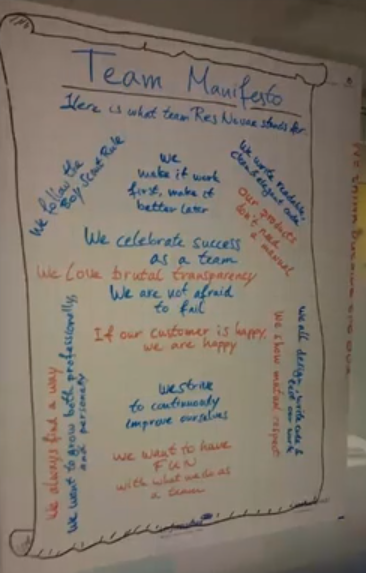
by Emily Luijbregts One of the greatest things you can bring to a project is your ability to manage and deal with the expectations of your team and stakeholders. How many times have you struggled with people making assumptions about how something should be done or when they should receive the final deliverable? All of this can be managed with effective expectation management. When I’m coaching junior project managers, I encourage them to look at expectation management as setting the ground rules for a successful project and engagement. Having clear expectations ensures everyone is aware of what’s going to happen, what’s expected of them in the project and, more importantly, what they can expect from you as a leader. In the project kickoff meeting, spend time working through this topic as a team so each person can spell out preferred working styles and communication methods as well as establish the factors for achieving success as a team.
As a project manager, you need to make sure that your role as leader is clear and everyone knows what they can expect from you. This doesn’t just include how you will manage them individually, but also what you can give them within the project. For me, I state they can expect that:
I consider my role in projects as a servant leader. I’m there to support my team of experts and give them the environment they need to be able to excel—and deliver. Having clear guidance, expectations and rules helps and supports this endeavor. I would strongly recommend you avoid forcing, accusing or belittling any of the team whilst making these rules clear—it will only lead to resentment and conflict. Bring each of these rules to the team constructively and openly and explain why it’s important for you. For example, if one of the ground rules is no trash talking, you should provide a rationale, such as: Negativity and conflict can happen so easily in projects, but speaking poorly of your colleagues won’t help. If you have an issue, bring it to your project manager or discuss with the person themselves. By raising these issues early, you’re being proactive in identifying the issue at hand and working toward a solution. I have yet to see an organization that does not react positively when presented with these questions in an open and constructive way. What are some of the ways you effectively manage expectations? |

Need a Little Motivation? Start with the Why
|
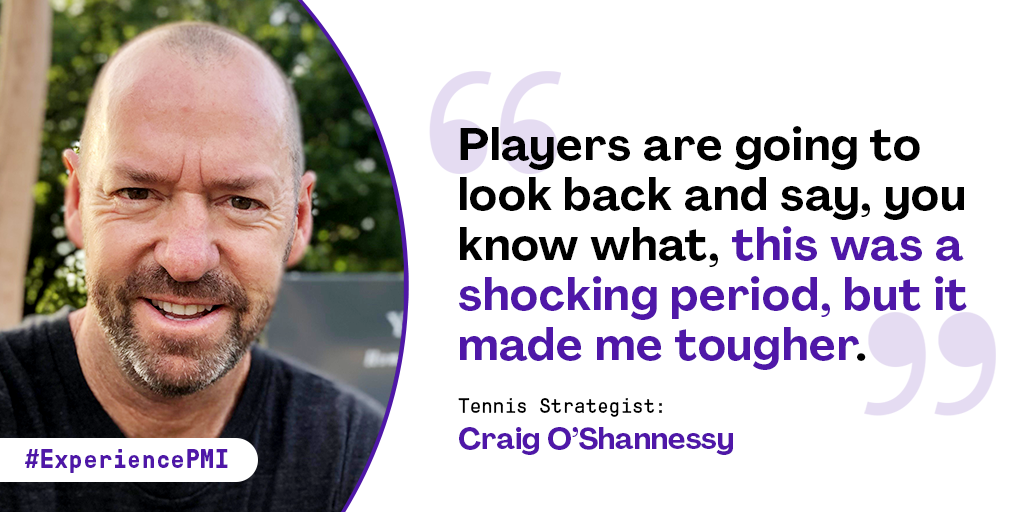
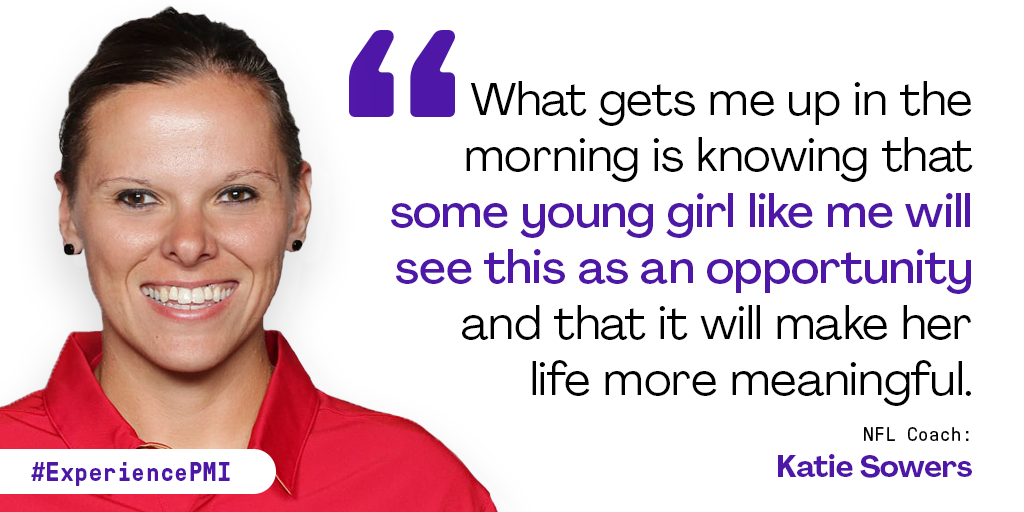
by Cyndee Miller I know it’s only November, but I’m done with 2020. Alas, I have not yet mastered time travel. So I headed to the latest PMI Virtual Experience Series: “A Deep Dive in Business Analysis: Drawing a Map to the Future.” Yup, sign me up. I am so ready to draw that map for me and my team. Now, admittedly I am not particularly sports-obsessed, but American football coach Katie Sowers and tennis analyst Craig O’Shannessy offered up some great stuff on resilience. Hint: It starts with purpose. “No matter what it is that we do, if we don’t have a why, we’re not going to be the best version of ourselves,” said Sowers, the first woman and the first openly LGBT coach in the National Football League.
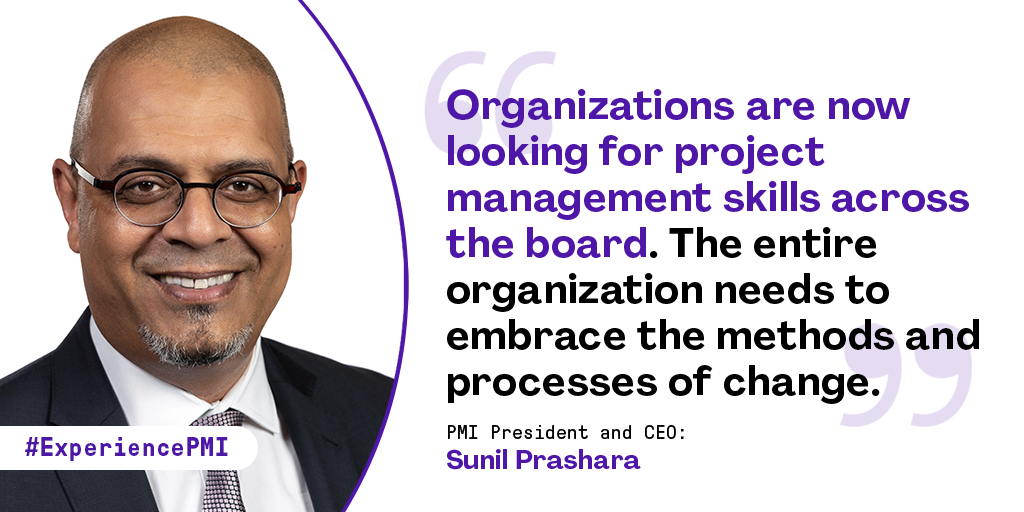
The trailblazing leader also recognized that although COVID has spurred insecurity, it’s also provided an unexpected push that may guide us along the right path. “As hard as these times have been, it’s led to more communication, better preparation, and an environment where we have to find that internal motivation, which is really more permanent than external motivation,” Sowers said. For O’Shannessy, it’s about understanding yourself—and your opponents: “You’ve gotta conquer yourself. You’ve gotta conquer your demons and really bring it together.” And O’Shannessy knows of what he speaks, having coached some of the best tennis players in the world, including Novak Djokovic and rising star Matteo Berrettini. Project leaders looking to keeping their own teams motivated should focus on positive reinforcement—backed by data. “I go to the analytics and look for red flags and green flags,” he said. “I always make short highlight videos of the player excelling in a specific area. I’m constantly delivering these videos showing them excelling. When they see themselves out there doing well, it really works.” Pre-pandemic, resilience was all about looking at risk versus preparedness, but now it’s data driving the action, said FTI Consulting’s Caroline Das-Monfrais. “You cannot have a resilient organization without data.” Yet processes and data can only take you so far, she said. “At the end of the day you need people. People are the critical enabler of resilience.” And those people need to be more fearless about getting their POV across, said PMI’s Sunil Prashara. “Get it on the table and talk openly and equally.” Today’s ultra-VUCA world demands true changemakers, and it’s no longer enough for organizations and their project leaders to be agile—they have to be gymnastic.
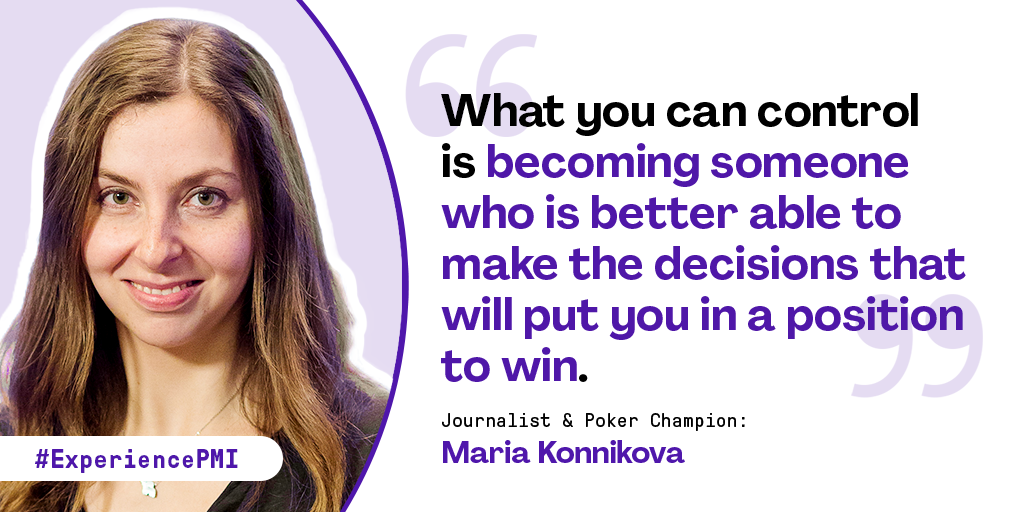
Building resilience means people growing comfortable with uncertainty and focusing on “the little things they actually can control,” said journalist-turned-poker champ Maria Konnikova. Naturally, this is terrifying for most of us. Who wants to lose control? But when you trust the process, you can push forward and accomplish more. “You need to act, you need to actually take the plunge, knowing that you will never have perfect information,” she said.
Project leaders should “be curious about what you’re doing,” she said. You can’t manage a project well if it bores you or you’re checked out. “Find something in it that will actually engage you.” Want more? Get ready for the next Experience PMI event, “Going the Distance: Forging Our Path Forward,” slated for 9 December: http://ow.ly/VCES50ChQg5.
How are you keeping your team motivated? |
Why We Need EPMOs and EDMOs—Now More Than Ever
Categories:
Technology
Categories: Technology
|
by Kevin Korterud It used to be that projects that were typically small in size, localized to a single team, and compartmentalized to the point where they didn’t collide when it came to schedules and resources. Over time, projects began to be packaged into programs that involved larger teams as well as a greatly expanded technology footprint. To manage these complexities of modern-day project delivery, organizations are increasingly turning to enterprise program management offices (EPMOs) or enterprise delivery management offices (EDMOs) that span waterfall and agile initiatives. The need—and demand—for enterprise PMOs and DMOs is only growing with the pandemic. Here’s why:
The business process landscape has become more imbued with technology— to the point where there’s no such thing as a business or technology project anymore … just delivery. And while the meteoric growth of tech has fueled success, it also creates challenges. It’s now common to have multiple delivery initiatives underway across a technically integrated landscape that can include everything from centralized enterprise resource planning systems down to personal mobility apps. In addition, project/program delivery and agile product delivery are taking place at multiple speeds and frequencies. Design, deliverables and testing all become much more demanding. All of this leads to the strong probability for delay on one initiative to cause schedule and resource conflicts. EPMOs and EDMOs can provide technology enablement and assurance functions needed to keep delivery on track. For example, enterprise-enabled testing and scheduling tools whereby delivery teams can form, execute and implement requirements and user stories—without having to spend effort to acquire tools and train team members—saves precious time.
Early in my career, a senior project manager told me the best way to reduce costs on projects is to finish them on time. That advice remains relevant. As companies rely on technology as well as project, programs and transformations to create a competitive market edge, any sort of schedule delay reduces value. Delaying a market launch of a new mobile product entails parking resources, additional communication efforts, etc. Plus, given today’s landscape, a delay in one initiative can cause a chain reaction that affects other dependent initiatives, thus exacerbating the overall negative impact to business value. Through integrated schedule, resource and dependency planning across delivery initiatives, EPMOs and EDMOs trigger early warning mechanisms and help marshal senior leadership decision-making to help mitigate delays.
Today’s delivery landscape is dramatically different from the past. Along with the size, scale and varying modes of project, program, transformation and product delivery, multiple third-party labor and hardware/software suppliers are more deeply involved. It’s also more common for delivery initiatives to have a global footprint, adding another layer of complexity. And COVID-19 further exacerbates these challenges by inhibiting communication, collaboration and impacting hardware/software supply chains. Let’s use the analogy of a busy airport, where there’s a need for a centralized function to help harmonize the way different people, processes and technology components work together. In that case, distinct sector, tower and ground controllers organize the flow of traffic, minimize delays and in some cases avert potential disastrous conflicts. The same rationale holds true for EPMOs and EDMOs, which are uniquely positioned to provide essential services such as: common delivery methods, third-party supplier and supply chain management, enterprise-level risk management, integrated scheduling management, resource management and dependency management.
I sometimes long for the simplicity of small, compartmentalized projects that could move at their own pace to completion. However, we all have to face today’s delivery reality. Some ways of working we were all used to may come back with the pandemic under control, but in the meantime we still have delivery responsibilities—and EPMOs and EDMOs can be a big help in making sure we meet those responsibilities.
To what degree are you seeing the need for enterprise EPMOs and EDMOs? |



