3 Ways COVID Changed My Leadership Style


|
by Yasmina Khelifi, PMI-ACP, PMI-PBA, PMP The unforeseen chaos of COVID-19 has changed the way we work, the way we live—and the way we lead. Here are three ways I’ve reinvented my leadership style in such uncertainty: 1. Increased empathy I’ve worked in a virtual global environment for the past 20 years. Still, this crisis helped me sharpen my skills and I’ve also become a more empathetic leader. I’m more understanding as project delays arise. I’m more accepting of small mistakes made by my team in haste. And I’m conditioned to push through work challenges that are outside of my control, like the internet connectivity issues of teammates abroad. I’ve also noticed I’m more sensitive to my tone of voice when I communicate information to remote team members. 2. More thoughtful self-discovery The external crisis forced me to focus on some questions that may sound philosophical, but chart a path forward:
It takes time and courage to begin the journey of self-introspection but it’s rewarding. Have you made your leadership self-diagnosis? Try repurposing an agile retrospective tool:
It’s time to take stock. Unlearning habits isn’t so easy, but taking actions now will impact tomorrow. 3. An expanded professional network The instability of the existing job market reinforces the need to expand your network. For instance, I enrolled in an international professional community to develop marketing skills. I have the opportunity to meet coaches, HR managers, speakers and writers I’m not usually exposed to. I’m optimistic that it will open my eyes to a new learning world. In what ways have you changed as a leader this year? |


Don’t Neglect the Baseline Basics
Categories:
Schedule Management
Categories: Schedule Management
|
by Ramiro Rodrigues The baseline is a fundamental concept that still seems confusing for many project professionals. In essence, the baseline comprises initial reference data captured prior to the start of a project. This information allows the team to compare the status before and after a project to determine its impact. Imagine you’re at a software development company and your senior leader has put you on a project to develop a system with 10 different but integrated features. You begin by trying to detail the scope, deadline, costs, risks and all other details you believe to be relevant. Once you’ve collected that information, you’ve reached the end of the planning stage That’s the moment when the baseline is saved. With this snapshot of information, you know exactly where the project should be at any given moment in its execution. Right after that—when the project execution begins—you start to draw an actual line, which collects and displays data of what’s happening in real time. In our example, imagine you were asked to change the planned programming language to something unfamiliar to the team, therefore changing many of the product’s features. In this scenario, our scope’s “actual line,” resources and risks will be quite different from the “baseline” that had not foreseen this change. So, what should the project manager do? It wouldn’t be very smart to resist all changes that come up during execution—these types of shifts can be quite normal in projects. In these cases, the best thing to do is to start the planning process over and move forward. Still, the baseline will continue to serve a purpose in helping leaders identify gaps and finding the amount of effort necessary to reach project completion. By project conclusion, another great benefit of this resource emerges: You can compare, with consistent data, the planned results versus actual results. Moreover, a comparative review of the baseline could expose weaknesses in leadership or organization. Indeed, baselines help teams capture valuable information for lessons learned and improvements that can be applied on future projects. How do you use baselines on your projects? |

The Path of Paperless Projects: Finding What You Need
Categories:
Technology
Categories: Technology
|
by Lynda Bourne The world of business is moving toward storing and exchanging documentation in electronic formats—and the transition is swift. While this process has its advantages, my team and I have been working on a major report based on a data set of more than 250,000 records, and the project has highlighted some problems. Namely, as it becomes easier to preserve every iteration of a document, finding useful information becomes harder. There are two basic types of document storage and retrieval systems with a couple of nuances:
If your organization isn’t using one or more of these systems, it soon will be! You’ll probably find that they solve many problems typically found in paper-based systems, but they also introduce a new suite of issues. Here are some of ways in which these systems fall short—and ways to overcome these challenges: Establishing one source of the truth. As people become more used to the system, they begin to rely on it. And if something isn’t uploaded, stored or created in the tool, it ceases to exist. You cannot rely on people remembering to do the right thing, and if someone is doing something unethical, they will try to evade the system. The solution lies in system design and automation. Discipline and processes are needed to make sure a document retrieval system contains all of the documents. Creating one document, one record. Send an email to 10 other people in the organization and you immediately have 11 versions of the one document scattered across various email accounts. (And this is before “reply all” and email trails start to build.) Your document management system needs to be smart enough to recognize identical versions of the same document and archive the 10 copies. However, when someone changes the email (maybe by forwarding it), you have a new document, and the process gets more complex if there are attachments. Here, the solution is a system that can manage families of documents. Finding what you need—easily. This is the biggest challenge with massive archives of documents (and was central to our work over the last few months). How do you find information? A search based on document contents may seem like the best option, but if you Google “PMI PMP exam change,” you get 891,000 results. And it’s Google’s systems that decide which of the pages it will show you and the sort order. That means if you’re looking for something specific, you may have to dig through a sea of hyperlinks and page titles. This gets even more difficult if you want to check if something did not get documented. A null-result may mean the alleged document does not exist—or it may mean your search terms are slightly ambiguous. Developing systems that balance providing information that you need against burying you under masses of content requires the wisdom of Solomon. Artificial intelligence can help if the search is routine, but for an important ad hoc search you are probably on your own. One way to help focus searches is by structuring the information, using folders or codes. The problems are minimizing misplaced information and persuading everyone to use the system. Again, system design is central to developing processes that work. The concept of a paperless project has been around for a while now and electronic document management systems are becoming increasingly common. The challenge that remains is scaling this concept up to the enterprise level and developing tools that can quickly provide you with the information you need from a pool of several million documents. What do you do to store documents and facilitate the ease of information access? |

2020 PMO of the Year: Innovation Meets Efficiency
|
by Cyndee Miller When I think bleeding-edge tech, water and sewage systems aren’t the first things that come to mind. But DC Water—the 2020 PMO of the Year Winner—snapped me out my narrow views. The utility is responsible for delivering clean water to residents and businesses in Washington, D.C., USA. And it saw an opportunity for technology to help it do that job more efficiently. Led by its IT PMO, DC Water leaned into what is now a US$11.3 million project portfolio full of industry 4.0 tech—always intent on making sure the utility’s innovations deliver on its business purpose. “We work at the luxury of the business itself. We’re not here to simply deliver technology. We’re here to deliver technology that solves a business problem,” says Tom Kuczynski, vice president of IT, DC Water. So what does that look like in real life? Behold the first-of-its-kind tool called Pipe Sleuth, which analyzes video captured by autonomous robots to identify and classify anomalies, be they structural cracks or grease build-ups. The technology, which DC Water now sells to other utilities, eliminates the risk of human error—reducing the cost of scanning and coding flaws by roughly 75 percent. The PMO has also changed the utility’s approach to cutting costs. In 2015, DC Water’s operational costs were increasing by 6 percent annually. When senior leaders asked how IT could help bring that number down, the PMO accelerated the utility’s digital transformation and moved its operations to the cloud, cutting operational costs by 6 percent, which translated to a savings of US$2 million per year. It’s not all about slashing overhead. The PMO’s innovations also ensure a clean, safe water supply. For example, using internet of things tech, DC Water and industrial automation company GrayMatter developed a device that monitors the water quality in public drinking fountains—turning them off when readings hit a certain level. The utility deployed it in its hometown school system, but sells this tech to other utilities, too. With a grant from the Elon Musk Foundation, DC Water is working with its partners to install 115 fountains in Flint, Michigan, USA. Positive social impact—with a positive bounce on the bottom line, giving DC Water another revenue stream. That kind of innovation shows how PMOs fuel true business value. And while DC Water took the top spot among this year’s PMO of the Year finalists, it found itself in good company:
Dive into a more detailed recap of the three projects in the PM Network digital exclusive. Then head over to PMI’s YouTube channel to learn more about each finalist on the PMO playlist and explore full case studies in the January/February issue of PM Network. |
The First Rule of Engagement? Set the Ground Rules
Categories:
Leadership
Categories: Leadership
|
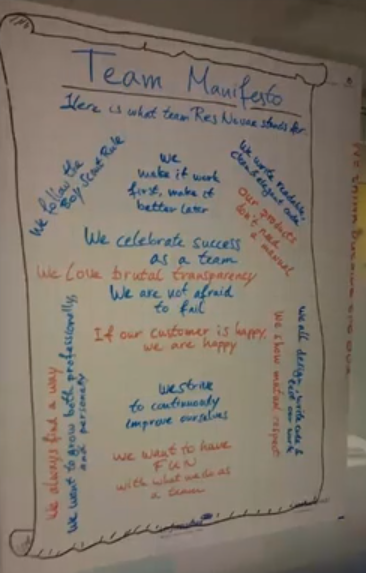
by Emily Luijbregts One of the greatest things you can bring to a project is your ability to manage and deal with the expectations of your team and stakeholders. How many times have you struggled with people making assumptions about how something should be done or when they should receive the final deliverable? All of this can be managed with effective expectation management. When I’m coaching junior project managers, I encourage them to look at expectation management as setting the ground rules for a successful project and engagement. Having clear expectations ensures everyone is aware of what’s going to happen, what’s expected of them in the project and, more importantly, what they can expect from you as a leader. In the project kickoff meeting, spend time working through this topic as a team so each person can spell out preferred working styles and communication methods as well as establish the factors for achieving success as a team.
As a project manager, you need to make sure that your role as leader is clear and everyone knows what they can expect from you. This doesn’t just include how you will manage them individually, but also what you can give them within the project. For me, I state they can expect that:
I consider my role in projects as a servant leader. I’m there to support my team of experts and give them the environment they need to be able to excel—and deliver. Having clear guidance, expectations and rules helps and supports this endeavor. I would strongly recommend you avoid forcing, accusing or belittling any of the team whilst making these rules clear—it will only lead to resentment and conflict. Bring each of these rules to the team constructively and openly and explain why it’s important for you. For example, if one of the ground rules is no trash talking, you should provide a rationale, such as: Negativity and conflict can happen so easily in projects, but speaking poorly of your colleagues won’t help. If you have an issue, bring it to your project manager or discuss with the person themselves. By raising these issues early, you’re being proactive in identifying the issue at hand and working toward a solution. I have yet to see an organization that does not react positively when presented with these questions in an open and constructive way. What are some of the ways you effectively manage expectations? |