


What Can We Learn From the Movies?


|
By Ramiro Rodrigues
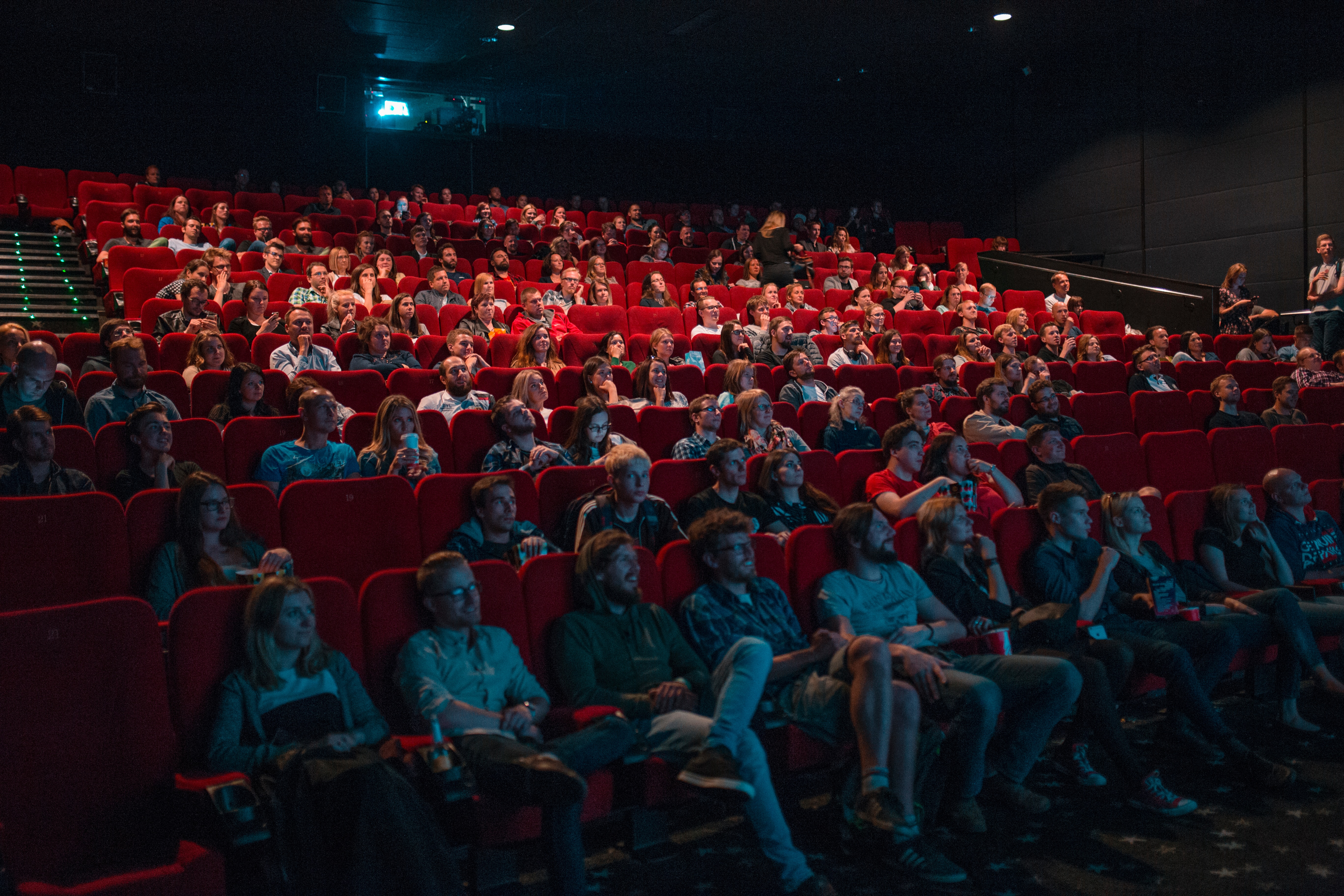
I'm 50 years old, which means I was born the same year PMI was founded. The last half century has seen a lot of interesting projects across industries, but today I’m going to focus on one area in particular: cinema. I’ll start with a question: What swept the Oscars in 1969? You may know it was Oliver!—a British musical based on the work of Charles Dickens. In addition to best picture, the movie also won the awards for best director, musical score, art direction and sound. The magic of cinema progressed in parallel to the 20th century at large, and I’ve long admired its ability to create fantasies and magnetize audiences. These same capacities evolved as technology and investments provided more technical resources for the enchantment of the audience. The delivery of a movie has always impressed me, as it has all the ingredients of a project. There is conception, planning, execution, control and conclusion—all with the added complexity of dealing with human emotions even more so than in other business segments. Today's major productions involve hundreds of professionals, suppliers and deliveries, so they require a well-structured project management model. And if the delivery of a movie provides all these difficulties, imagine what it takes to deliver a saga of 23 films? Well, this was the case for the so-called Marvel Cinematic Universe. Why should we consider this a grand project? Starting with the first movie, Iron Man, in 2008, you can find several “Easter eggs” referencing the other Avengers. And in the post-credits scene (a practice that started there), Nick Fury appears to talk about the Avengers initiative. Thus begins an intricate sequence of characters and films over 12 years, which translated into the largest franchise and box office phenomena of all time. If it was not enough complexity to produce a single film of this nature, imagine the magnitude of a long-term project that would involve scores of producers, suppliers and actors. And this was accomplished while delivering a structured and coherent plot that lived up to the expectations of a global audience. This gives us clues into why more and more cultural producers are looking to specialize in the best practices of project management. These principles have much to contribute to ensure organization and control, without interfering with the magic and emotions that art provides. After all, the show must go on! I’d love to hear from you. Do you see movies as projects? Share why or why not below. |
Lessons Learned From 3 Decades in Project Management
|
By Wanda Curlee PMI is celebrating its 50th anniversary this year, an occasion that has led me to reflect on projects from my past. While I don’t have 50 years of experience, I do have 30. Over those years, I have been a project manager or project team member across many industries. But by far, I’ve learned the most on Department of Defense (DoD) projects. In fact, my very first project was a DoD project. I’ve found that in this industry, the project manager is responsible for all aspects of a project. And when I say all, I mean all. The project manager needs to understand the contract from beginning to end. From my first federal project to the most recent one, the contract was well worn, as I would look at it many times a day. On a federal project, there are various sections of the contract. For example, Section B describes how the supplies or products are to be formatted and supplied. Section C is always the statement of work (SOW). Other sections provide the names of administrative and technical contacts, how invoices should be formatted, when the invoices need to be submitted and what supporting information is needed. There is a section that lists all the rules, regulations and laws that the contractor must follow and obey. This list usually runs more than five pages, printed on both sides and single-spaced. The statement of work is also always very detailed. Think about a contract for a nuclear submarine, an aircraft or some other vessel—the SOW would be tens of thousands of pages. While I never managed those types of contracts, I did oversee some pretty intense technology programs, where the SOWs were thousands of pages. I learned that having a team I could trust was instrumental in delivering a complex project. Trust meant that the team understood the needs of the project. They knew when deliverables were due and what the client expected, and they kept everyone informed if there were issues or delays. The team also kept detailed records and updates. This meant the project manager should never be blindsided, and with that, neither should the client. Of course, I did not learn all this on my own. I had a wonderful boss/coach who saw my potential. He took the time to explain why things were happening the way they were. I was allowed to work in different departments to learn how each area affected the project. To this day, I am very thankful, and I pay it forward. I have always taken the time to mentor and coach those on my project teams or in organizations I ran. The greatest reward was to see those I mentored surpass me in rank within the organization. When I think back to the moment where I earned my chops, it was a U.S. Air Force project to design a paperless office and non-hackable email system. Don’t laugh! As you may have guessed, the initiative was not successful. Within two years, the government canceled the project. But one thing I’ve learned over the years is this: Unsuccessful projects provide a wealth of learning, maybe even more than successful projects. What have been the most influential projects you’ve worked on throughout your career? |

50 Most Influential Projects: What Made the List?
|
By Cyndee Miller Talk about ending with a bang. On top of the amazing Ted Talks (read about those here), PMI closed out Global Conference unveiling its ranking of the 50 most influential projects of the past 50 years. Thousands of projects were considered, but only 50 were chosen: the icons, the innovators and the game-changers that transformed our world. As an editor on PM Network, I’ve spent some quality time with these picks. Many of them—International Space Station, Google Search, the iPod, the euro—aren’t necessarily big shockers. They’re fundamental to the way we live, work and play today. Just consider the number one project, World Wide Web. I mean, sure, I survived without it. But life with the web makes me infinitely more connected, arguably a lot smarter—and definitely more amused. Yet part of the fun in being a reporter is ferreting around for hidden gems, the stuff not everyone knows. So while Google Search seems like an obvious top 50, I’ll bet you didn’t know the company added its image search function after people melted the internet trying to track down J-Lo’s now-legendary, barely there Versace green dress. And there are plenty of projects on the list that may be a bit of a surprise. Some we covered in PM Network back in the day, not knowing just how much they’d change up the landscape. When we first covered M-Pesa, for instance, we were intrigued. But few have guessed how the team would use basic SMS tech to kickstart a banking revolution in Kenya—and then across other emerging markets. On a personal note, I was over the moon about Harry Potter making the cut—and not just because I’m a diehard Potterhead. J.K. Rowling may not have a Project Management Professional (PMP)® certification, but the author did have a mighty team behind her that knew how to build buzz. We’re talking an intricately planned, top-secret rollout with £10 million in security measures. After the big reveal, conference attendees got a chance to mix and mingle with several of the companies that made the list, including Riot Games, Japan Aerospace Exploration Agency, Wikimedia Foundation, Changi Airport Group, Bechtel, WeChat, IBM, Boeing and Wärtsilä Corp. It was quite a closer for conference, and that’s a wrap for our events coverage. But fear not: We’ve got PMI EMEA Congress coming up 14-16 June in Prague, Czechia and the 2020 conference next October in Seattle, Washington, USA. In the meantime, I gotta know: What do you think of the list? |
Urbanization and the High Price of Human Progress
|
By Cyndee Miller I’m a city person—no ifs, ands or buts. I may have been stuck in the suburbs growing up, but I literally packed up and moved out the day I got a part-time job. I’m not alone, of course. The U.N. predicts 68 percent of the world’s population is expected to live in cites by 2050. In an era of massive urbanization, a question arises: Who belongs in a city? Especially when it’s one of those shiny new megacities—only possible with a megadisplacement of existing residents. For OluTimehin Adegbeye, the answer is simple: “We’re all already here. That answers the question of whether or not we belong,” she said in her Ted Talk at Global Conference. A native of Lagos, Nigeria, she called on the audience to consider the human cost of progress. Case in point: the former inhabitants of Otodo Gbame, a coastal Lagos fishing community demolished to make way for a prime beachfront development. It’s part of a push for Lagos to become “the next Dubai.” But, as Ms. Adegbeye says, “You don’t need to be the new Dubai when you’re already Lagos.” The reality is that in cities from Lagos to Philadelphia (where conference was held), it’s often the residents of the so-called poor neighborhoods that give a location its personality, its culture. They’re also usually at the forefront of innovating solutions. They have to be. And yet they’re losing this battle. Ms. Adegbeye encouraged people to push past their “but what can I do” mentality and recognize their power. “We must hold our governments and ourselves accountable for keeping our shared cities safe for everyone in them, because the only cities worth building—indeed, the only futures worth dreaming of—are those that include all of us, no matter who we are or how we make homes for ourselves,” she said. Project managers heard the message loud and clear—and gave her a standing ovation. The four other Ted Talk speakers offered their own powerful takes on the theme of possibility: Jess Kutch on building an economy that works for everyone; Janet Stovall on the role of business in creating intentional inclusion; Anna Piperal on the promise of e-government; and Sandeep Jauhar, on the parallels of the emotional and biological heart. For those who covet an opportunity to stand in the magical red circle, PMI announced a TedX program that will put a few select members up on stage next year. Stay tuned. What story would you tell? |

Welcome to The Project Economy
|
by Cyndee Miller Pretty much every pundit out there has a theory about the future of work—and how things will actually get done. For a while, it was all about the gig economy. Now perhaps I’m horribly biased, but I’m way more intrigued by The Project Economy: execs structuring their organizations around a portfolio of projects designed to deliver the most value to their stakeholders. It’s happening—and you, my friends, are in a prime position. Project managers are in the vanguard of The Project Economy, said Bob Safian, former editor of Fast Company, at the start of day two of Global Conference. “Projectization is moving through the economy,” he said. “It’s happening—I hear it talked about in the halls of power in companies around the world.” The future of work will be defined by tasks, not titles, Mr. Safian said. Technology is making existing structures within organizations feel archaic. And younger workers are looking at their careers as a sequence of tasks—a.k.a., projects—too. People will work on a project, deliver value and then move on, said Tech Mahindra’s Vikram Nair during Sunday afternoon’s Fireside Chat with PMI president and CEO Sunil Prashara. With that comes a new set of “it” skills. Forget soft skills—or at least stop calling them that. Stanford University’s Behnam Tabrizi is out to rebrand them as power skills—since they’re what will give people power in the future. It’s about communication, empathy and what he called understanding yourself, or “being clear about what your role is in the world” and “showing up in the most authentic way possible,” he said. It’s also about embracing diversity: You need to have people on your team who don't look like you, said Frederic Astier of Accenture. The Project Economy is going to require a different mindset—no matter your age or title on the org chart. “We must all possess a willingness and ability to adapt to the constant changes that are coming our way,” Mr. Safian said. Chaos will rule. “The old rules of business don’t apply anymore,” Mr. Safian said. “We have to recognize that there are no new rules. There’s no real consensus about what’s going to succeed today.” It’s a little scary, but also wildly exciting. So, are you ready? |
1.jpg)


