


Recognition That Goes Beyond International Women’s Day


|
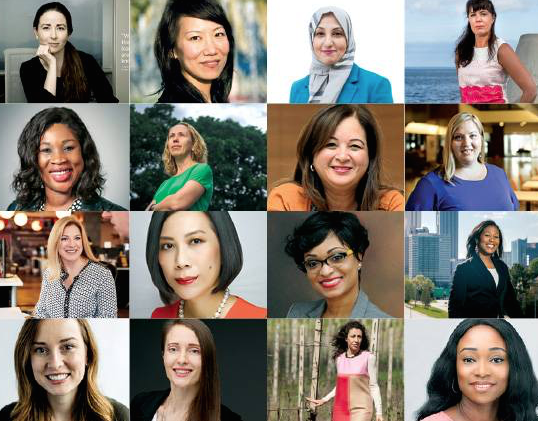
by Cyndee Miller There’s no denying the buzz around gender diversity and parity in the workplace over the last couple of years. Last May, when PM Network ran a cover story about the state of women in project management, we saw the issue taking on an “extraordinary and undeniable urgency, with demands for gender equality rising to a roar heard around the world.” From Washington, D.C., USA to Sydney, Australia, millions of people marched for the cause. In Spain alone, more than 5 million workers took part in a “feminist strike." And it looks this year will be the same. So after all the protests, after all the articles about equal pay in the workplace, after all the calls for female representation in the C-suite, how is it that the world has made so little progress? Indeed, by some measures, we’ve even slid back: Last year, proportionately fewer women participated in the labor force, according to the World Economic Forum’s (WEF) latest Global Gender Gap Report. And the situation may get even worse in a workplace increasingly driven by rapidly changing technology. Working with LinkedIn, WEF found women represent only 22 percent of the artificial intelligence (AI) workforce and that they’re less likely to be in senior roles or signal expertise in high-profile, emerging AI skills. At the current rate of change, WEF predicts it will take 202 years to achieve economic parity. Two centuries? That’s spectacularly depressing. In some ways, the project management profession may serve as a blueprint for achieving greater workforce inclusivity. Women are now a fixture in the profession, often leading prominent or priority projects. Check out that picture above. Those are just some of the powerful female project and program managers featured in PM Network in the past year alone. These women delivered results, from rebuilding a veterans’ healthcare facility decimated by Hurricane Katrina to testing a viticulture robot on an Italian winery. They got it done. They made strategy a reality. The project management profession isn’t perfect, though. As in many other fields, wage disparities persist. There’s an approximately US$11,000 gap between average male and female project manager salaries in the United States, according to the latest edition of PMI’s Earning Power: Project Management Salary Survey. China follows a similar pattern: CNY220,036 for men versus CNY193,502 for women, on average. So what needs to change? A big part of the problem comes down to actually recognizing there’s a problem. PMI 2019 Pulse of the Profession data show 65 percent of male respondents say women face “no major obstacles” in project management today. Only 39 percent of women agreed with that. The blinders have to come off if organizations are going to attract the best project talent and capitalize on the full value women bring to the management ranks. And that’s going to take some real effort. “Diversity, gender equality, it’s not something that changes overnight—because people’s opinions don’t change overnight, unfortunately,” says Kush Dhillon, engagement manager at Capgemini in London, England. “It’s a learning process.” It’s also a process that must be fully supported by senior leaders committed to making it an ongoing conversation. “And through that, I absolutely fundamentally believe—and it’s been proven—that the business will do better, the people in your business will be happier,” she says. Ms. Dhillon is part of the upcoming episode, “Empowering Women and Girls” on Projectified™ With PMI. I got a sneak preview and strongly recommend you download it next Wednesday (13 March). After all, the discussion should go on long after we mark International Women’s Day today. (And while you’re at it, you should also check out “Women in Project Leadership — Gaining Ground” from last June.) You can also head over to fellow Voices blogger Jen Skrabak, PfMP, PMP, who recently took a look at three cognitive biases holding women back. Get this right and the effects would be massive. According to the Women in Work Index 2019 from PwC, if Organization for Economic Co-operation and Development countries matched their female workforces to that of Sweden—which has a 69 percent female employment rate—the total GDP boost could be as much as US$6 trillion. In the meantime, the reporter in me wants to hear about your experiences. Do women in project management still face significant obstacles? Are you seeing improvement? |
How to Lean In—and Thrive—in Project Management
|
Over nearly two decades in project management, I’ve learned a number of strategies to make my voice heard and advance in my career. Much of that success has come by “leaning in,” as Sheryl Sandberg advocates. As a woman in project management, I believe the following are key:
International Women’s Day is March 8, and this year’s theme is #BalanceforBetter. Please share your thoughts on how we celebrate the achievement of women while we continue to strive for balance for women socially, economically and culturally around the world. |
.jpg) By Jen Skrabak, PMP, PfMP
By Jen Skrabak, PMP, PfMPDon’t Fear Organizational Politics — Master Them
| Imagine you're a project manager reporting to a senior director of a subsidiary, with a dotted line to a group director in the HQ. In a meeting, you're caught in their crossfire. What would you do? If you’re wondering whether getting involved in the politics is mandatory, the answer is yes. What if you wish to stay away? You can, but you’ll put your career at risk. There’s no need to be afraid of organizational politics. Often the top performers are those who have mastered the art. In the organizational hierarchy, there is a level beyond which winning at politics is more important than mastering any technical skills. What Are Organizational Politics?Workplace politics are simply the differences between people at work—whether they’re contrasting opinions or conflicts of interest. They’re important, because you need these politics to:
What Aren’t Organizational Politics?Politics aren’t about cheating or taking advantage of other people. They are not about:
It is not about me over you (win-lose), but both of us together (win-win). Why Are Organizational Politics Inevitable?You can’t avoid them, because the following are all sources of politics:
Some of these factors are always present in an office, making politics inevitable. How to Win in Organizational PoliticsThe most common reactions to politics at work are either fight or flight, which can have harmful consequences. Remember, we always have a choice to approach the situation and then hold on, understand or work out a viable solution. Here are few steps you can take: Know Enterprise Environmental Factors:The first step is to understand the source. You can put together a winning solution if you understand factors influencing your project execution, such as organizational culture, organizational structure, various communication channels, organizational policies, individual behavior and risk tolerance of stakeholders. Analyze Stakeholders:Politics always come down to the people who are involved. Until we understand their interests, power, influence, buy-in and support, it may not be easy to prepare a strategy. There are various tools like the power/interest grid, buy-in/influence grid, stakeholder engagement matrix, etc. that help in stakeholder analysis and preparing strategies. There are tools like power/interest grid, buy-in/influence grid, stakeholder engagement matrix etc. that help in stakeholder analysis and preparing strategies. In fact, it is a good idea to always maintain a stakeholder register so you have information ready to quickly deal with a situation. Discover Hidden Agendas:Hidden agenda aren’t always as bad as they appear. Many times a personal objective is driving someone’s actions. Therefore, it is necessary to talk to the people and understand the driving factors behind their opinion and actions to strengthen your strategy. Think Win-Win:Somehow, we are encouraged to think that someone has to lose in order for us to win. We see our colleagues as rivals instead of as our team members. This may be because of the organization’s politics. We have to find a solution that not only makes you win, but others too. This may not be easy, but understanding other people’s point of view and putting your feet in their shoes will help you find a win-win solution. Build your network:One of the best ways to do this is through networking, which builds relationships. This will help you better understand other people’s viewpoints and get their support in facilitating a solution. Networking is also very effective in getting buy-in and reaching consensus. By taking these steps, you can propose win-win solutions and steer your projects to success. What ideas do you have for dealing with organizational politics? Please share your thoughts in the comments below. I look forward to reading about your experiences.
|
What’s Holding Women Back in Project Management?
|
By Jen Skrabak, PfMP, PMP As a woman who’s worked for the past 18-plus years in project, program and portfolio management, as well as building and leading enterprise project management offices for Fortune 500 companies, I wanted to address the topic of women in project management. In the United States, women hold 38 percent of manager roles, according to a study conducted by McKinsey in partnership with LeanIn.Org. And while women have made gains in some STEM fields, particularly healthcare and life sciences, they are underrepresented in many others. U.S. women hold 25 percent of computer jobs, and just 14 percent of those in engineering, according to the Pew Research Center. In project management, as in other professions, women earn less than men. For project managers in the United States, men earn an average US$11,000 more annually than women, according to PMI’s Earning Power: Project Management Salary Survey. Historically, women have been pigeonholed in project administrative or project coordination roles instead of project management roles, and the key question is “Why?” We’ve all heard that we need to “think differently,” and as Sheryl Sandberg advocated in her book, Lean In: Women, Work, and the Will to Lead, women need to raise their hands, project confidence, be at the table and physically lean in to make themselves heard. The dictionary definition of “lean in” means to press into something. So when faced with an overwhelming force such as wind, you need to lean toward the force rather than away in order to not be blown away. “Lean in” can be a metaphor for asserting yourself as a leader in project management. As women, we may be held back by self-doubt, our speaking voice or body language that conveys a lack of self-confidence. The advice here is not limited to women; people of color can “lean in,” too. There are three key cognitive biases that may hold women back in project management. The key is to recognize that these exist, and work to build awareness while overcoming them:
By understanding and recognizing these biases, we can work to defeat them. I’ll explore these topics more in my next post, which will coincide with International Women’s Day on March 8. How do you combat biases in the workplace? |
.jpg)
Are You Neglecting Your Professional Development?
| By Conrado Morlan
“An investment in knowledge always pays the best interest.” ―Benjamin Franklin I’ve heard from colleagues in project management that they don’t have access to professional development opportunities to help them improve and increase their capabilities. That led me to do some research. I found Training magazine's Training Industry Report, which is recognized as the training industry’s most trusted source of data on budgets, staffing and programs in the United States. It found that U.S. companies spent over US$90 billion on training and development activities in 2017, which represents a year-over-year increase of 32.5 percent. With that information on hand, I took the opportunity to ask my colleagues if the companies they work for are among the organizations spending money on training and professional development. Some of them were fortunate to work for companies with professional development budgets, but they didn’t take the training due to their workload or personal reasons. In other words, the opportunity was there but it was neglected. For those who worked for companies without professional development dollars, their main complaint was that the company did not appreciate them and the opportunities to develop more capabilities were so limited. I asked them: Who takes charge of your professional development? You, or the company you work for? Many of them responded that the responsibility fell to the company they work for, because training would help create a more competitive workforce, increased employee retention and higher employee engagement. I agree on all the benefits the company would get, but ultimately the individual is responsible for their professional development. I have worked for both types of companies. In the ones with development budgets, I saw former colleagues neglecting opportunities because “they did not have time,” they did not like to travel or simply because they felt it was not needed. In the ones without budgets, I heard the same claims mentioned above. While working for the latter type of company, I took ownership of my professional development. Instead of seeing roadblocks, I saw opportunities, which led me to do the following:
So do not solely hold the company you work for responsible for your growth. Take charge of your professional development. After all, if you do not invest in yourself, nobody will. How do you take charge of your own professional development? |
1.jpg)


