


Register for our next “Discover PMI - Ask Us Anything! Webinar
Categories:
webinar
Categories: webinar


|
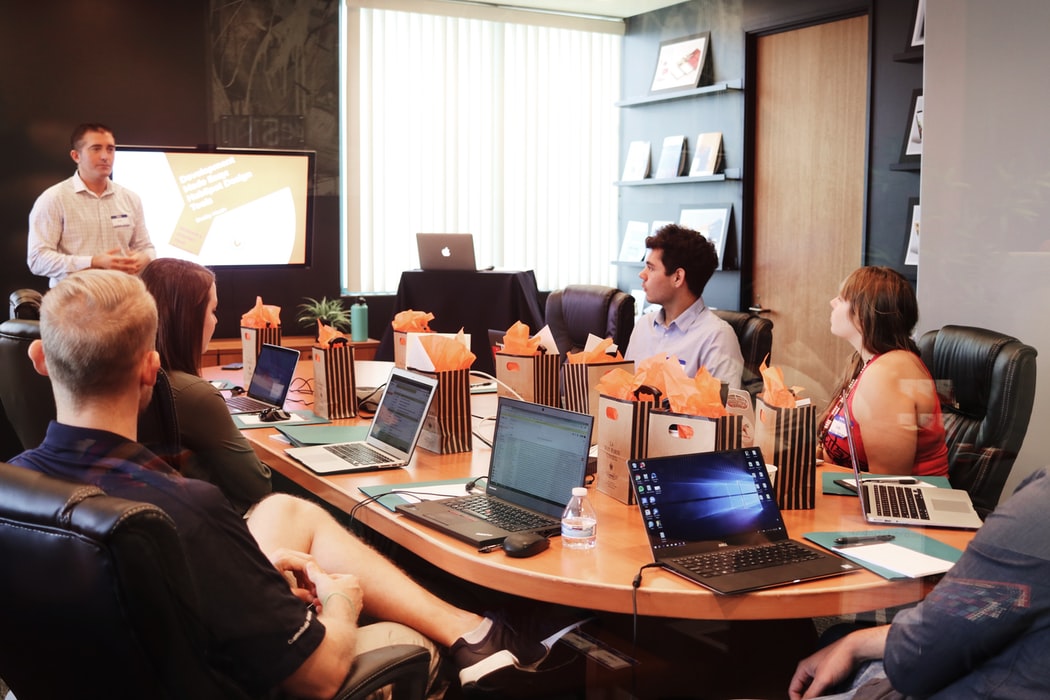
Our next “Discover PMI - Ask Us Anything!” webinar, is scheduled for Tuesday, 19 November 2019 at 12:00PM EST. As previously posted, the format, which is executed through non-PDU bearing webinars, is meant to encourage conversation with various PMI departments. Simply put, members having a one hour Q&A session with a particular PMI department. We're thrilled to have guest speaker, Shari Rathet, along with her fellow colleagues, guide you in understanding the different types of content available and how to access them. They will demonstrate how we have recently improved the PMI.org search function and how to make your own contribution to this valuable collection and share your expertise with other practitioners. PMI Members can register at the following link: https://www.projectmanagement.com/webinars/567133/Powering-Your-Career-with-PMI--Explore-the-PMI-Job-Board-to-Power-Your-Chttps://www.projectmanagement.com/webinars/586102/All-Things-Project-Management--Navigating-PMI-s-Knowledge-Resources-. We hope you will join us! As always, Our project is YOU. Your successes and setbacks, your passions and peeves—we want to hear about them all, and help you get to where you're going today and tomorrow. We hope these webinar series guide you in the right direction. As always, your feedback and ideas are most welcome! |

The Communication Net: Navigating Project Teams with an Active Listening Approach
|
by Maria Isabel Specht, PMBOK® Guide-Seventh Edition Development Team member When I retired from the petroleum industry after 31 years as a researcher and project manager in Venezuela’s hyper-inflated economic conditions, it would have been easy for me to accept my son’s offer to support me and stay at home. Instead, I took on the new phase of my life with a curiosity that has left me continuing to develop as a project manager, an educator, and even a mom and a grandma. That journey, and the growth I’ve experienced, have inspired me to develop a new project management mantra: projects are led by people, done by people, and made for people. I entered my retirement with an intellectual curiosity that led me to pursue education in neuro-linguistics programming (NLP). I realized that I could still improve the way that I communicate, even after a full career in a competitive industry. I learned to develop active listening skills that allowed me to do something I call “designing my conversations.” This means I work to listen and respond in my interactions, and to understand the unique circumstances of the people I communicate with. It also means I focus on achieving specific goals through my conversations. My colleagues at NLP School noticed my interest and recommended I consider additional training as an ontology coach. I began to have a realization: communication and project delivery are deeply related. I began applying more of my communication tools in project environments. With the help of two philosopher mentors, I envisioned projects as a net of conversations. In these conversations, people are bringing their own backgrounds, their emotions, their fears and their personal goals. By understanding the people’s motivations, I am able to listen and understand better–and this has led me to better project outcomes. When project leaders view their projects as nets, they can coordinate efforts and understand impacts across the project. They become more effective. On the other hand, when I looked into projects that showed no success, I considered that there must be something we were not considering. I asked myself, “What if we are not considering that a main focus of projects is people?” The success of projects is based on people–and people can be successful if they have empowering conversations. As project leaders, we need to endorse our team members by actively listening to them and valuing them. We have an opportunity to create this environment on our teams, which will increase the team’s effectiveness and lead to better outcomes. Even though we are in a hostile economic environment in Venezuela, we are still having fun on our project teams because we have a sense of community, we are working in collaboration, and we deserve it. I see messages about the communication processes – emitters and receivers, but what about the emotions? I propose that a fundamental principle of project management is to nurture a project environment that values individual commitment, collaboration, and communication. Now, I work at the university level as a “divergent teacher”—I do not deliver a master class of lectures to my students. I teach my students, aspiring mechanical engineers, through projects. And as I teach them, I encourage them to apply active listening techniques and to design their conversations. Sometimes, they apply these skills on our in-class project teams. Other times, they take these skills into their personal lives and report out on communications with their others. I joke with my students that even my son is one of my stakeholders. The next generation of project leaders will be more impactful—and better off—if they are able to navigate in the complex web of project communications using active listening and designed conversations. This leads to the coordination of actions for making decisions, building relationships, evaluating new possibilities, and creating new realities. |
Stakeholder Engagement
|
By: Maricarmen Suarez, PMBOK® Guide–Seventh Edition Development Team member Is project management a science or an art? While we could debate this fun question for decades, I think we can all agree that there are elements of both. Our profession continues to evolve with a focus on quality, globalization of reach, and the velocity of change—we have seen it all. But first things first, at the center of it all, we see one thing in common—people. I genuinely believe that it is those human interactions that help us deliver value through project management. Consequently, a fundamental principle of project management seems to be stakeholder engagement. Anyone that is impacted by changes can be considered a stakeholder. It is critical to define who our stakeholders are, acknowledge their motives and define their engagement, as well as understand their level of involvement and sphere of influence. As a practitioner who is continuously assessing the stakeholder pool, I ask myself daily that old question: “where should I spend my time and energy? With the optimists? The naysayers? Or the ones sitting on the fence?” I’m not sure there is a right answer to that, but my experience has taught me that the best solution is “all of the above.” The optimist will always have a positive, can-do attitude. They help you move your initiative forward and, depending on their level, they can prove to be an invaluable resource to influence others. As for the naysayers, it is essential to understand their drivers, i.e., what motivates them? Why are they against the project? What would it take to get them to a middle ground? Is there an unidentified risk, either opportunity or threat, that may have been overlooked? By no means, am I suggesting that everyone can or should be converted to the “right” side of an initiative; but as a project leader, my role is to ensure that everyone has a voice and that needs are met. I guarantee that while the naysayers may never be cheerleaders beaming with support, they have enough to be able to compromise and not derail or stop our initiatives. That leaves the ones on the fence—those on the middle ground that can go either way but are choosing to stay on the sidelines to see what happens next. These stakeholders are the ones I find myself spending more time and energy with. Simply because I consider them sponges. The fence-sitters feed off of other stakeholders. While I can’t control every channel and every interaction of these stakeholders, I can ensure they have the right amount of information to make an informed decision. Some best practices I use to proactively engage stakeholders include:
I consider stakeholder engagement a pivotal principle—projects are undertaken by people, for people. As practitioners, we have a unique opportunity to engage and serve stakeholders proactively. As they say in the flight safety briefings, always put your own oxygen mask on first, before helping others. |

Speakers Announced for PMI® Business Analysis Virtual Conference 2019!
|
Now are you convinced? We hope so! Please click here to register. We assure that you will not regret this wonderful opportunity, all the while, earning 6 PDUs! |


Change is a Given. How we Respond is the Issue.
|
Nick Clemens, PMBOK® Guide–Seventh Edition Development Team member As a project manager I find myself immersed in uncertainties and change. People roll on and off my program teams, my management chain changes frequently, and my customer base is in flux. I am a contractor for a larger US Federal Department and even within the US Federal bureaucracy change comes quick and often. I think for large bureaucracies the problem is not change, it’s here and must be dealt with. The problem is adaption and response. The same is true for projects. Project leaders must adapt and overcome. Our response as project leaders must insure the on-time delivery of our products and services within project constraints. This is how we deliver benefits that create value for our customers and companies alike. And for those who like to deliver incrementally, I’m also talking to you. Implicit in the idea of a Minimal Viable Product (MVP) is the delivery of a benefit that creates inherent value for both the user and the supplying enterprise. So how do we keep track of where we are going with everything changing around us? To paraphrase the Cheshire Cat in Lewis Carroll’s Alice’s Adventures in Wonderland, If you don't know where you're going, any road can take you there. The answer is to go back to basics. Basic project management principles provide us with a framework to guide us when our projects are troubled. The PMBOK® Guide–Seventh Edition development team is taking just that approach in updating The Standard for Project Management. We are looking at a better way to guide project leaders using a principles-based approach that will allow flexible responses to an environment fraught with change and uncertainty. So, what’s a project management principle that could help us to navigate our complex environments and keep track of where we are going? It has to do with “systems thinking” and is related to a management principle from the risk area, “work to balance threats and opportunities.” The principle I am thinking of is around the idea of Think Holistically. Holistic thinking tells us to get out of the weeds, to see the forest for the trees. In other words, as a project leader have a vision for your project. That vision should include your project’s purpose, value to be delivered, impact to the business environment, and its effect on the people involved. Holistic thinking also includes understanding the trade-off space to ensure the team delivers outputs that will drive outcomes. It allows self-organization of work but keeps the pieces integrated. Holistic thinking challenges assumptions and mental models to broaden the possible solution space. Whether managing a group of work packages to a project plan or integrating a couple of scrum teams to deliver a MVP according to a release plan, the challenge to the project leader is the same—keeping on track to meet our customer’s vision and expectations and delivering outcomes, even if the precise end goal is not fully defined at present. I didn’t say it would be easy. In most cases the days of the practically perfect project plans went out with the departure of Mary Poppins, not in the most recent Disney sequel, but in the original 1964 movie! To say the least, a principles-based approach to project management has been a long time coming. So, think holistically to keep the focus of your project 100% aligned with your customer’s vision and expectations. Remember as the project leader your job is to deliver and create value for your customers and company. Everything else is in the weeds. The key is to recognize, evaluate, and respond to the dynamic circumstances within and surrounding the project delivery systems as the systems interact and react with each other. |



