


The Art of Asking Questions


| As project managers, our role is to get work done through other people. This means we not only need the right people on the team, but we need the humility to admit that there are many people who know much more than we do. “When I started out as a project manager, I would listen intently to the information being shared as I was introduced to a project team. There were always many terms, acronyms, best practices, deliverables, and methodologies that I did not fully comprehend or that were contrary to what I had previously encountered,” reflects Louise Chalupiak, Project Managers Without Borders volunteer and co-host of the TechGenix Xtreme podcast. She recalls how she would quietly listen and take notes, all the while thinking, “don’t worry, it will all make sense as I become more engaged.” And sometimes it did. The problem is that sometimes it didn’t. As a project manager with a similar mindset, you may have experience playing “fix and repair” with issues that could have been avoided if only you had asked the right questions. In developing the newest Project Managers Without Borders initiative, the WaterRico Project, Eric Schempp and his team had many opportunities to practice the art of asking questions. The WaterRico project was an evolutionary process in trying to understand what the Rotary Club [Centennial Colorado chapter] had in mind and what their goals were. I think there was a learning experience for all of us involved.” The team and project stakeholders used standard project management methodology to define the requirements of the project and to delineate the must-haves from the nice-to-haves in developing the ideas for the project.
Here are a few tips for asking questions:
Most importantly, also remember TO BE ABLE TO ASK A QUESTION CLEARLY IS TWO‐THIRDS OF THE WAY TO GETTING IT ANSWERED John Ruskin
The role of the project manager is based on research and communication. Project managers help scope out the vision of the project and help partners to narrow down the project so the outcomes can be realized. This all starts with asking questions, and it is never too early in the project to begin. |
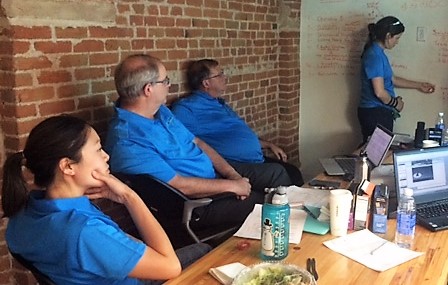 “We understood we wanted to do a water project. But what that meant, we weren’t quite sure,” reflects Schempp. Through research to answer their questions and asking stakeholders about their needs, the team narrowed the scope and goals of the WarterRico project.
 Lending Your Expertise When You Have Limited Time
“Everyone is interested in
|


Millennials: Your Best Resources for Project Management in the World of NGOs
| Unless you have been living in a different galaxy for the past decade, you have probably heard of Millennials and how they are conquering the workplace. However, who are these individuals with a cool sounding name, what are the traits that define them and, more important for us, how can they impact the project management space and, in particular, project management in the world of NGOs? Simply put, Millennials are all those who entered their adulthood at the same time they entered the second millennium, that is, everyone who belongs to the generation born between the 80s and the 90s. Just like your humble servant writing today’s blog post, by the way. When Millennials were growing up, so too was the now familiar @ symbol. The internet was just starting to gain adoption in its frenetic way to become a commodity and a necessity. Altavista, mIRC, the first Nokia mobile phones, oh, what an exciting time to be alive! Millennials were at the middle of it when the history of humanity suddenly become split in two periods: BG, AG – Before Google and After Google. Welcome to the future, 2018 AG. It’s no wonder then, that Millennials are known for their increased use and familiarity with communications, media, and digital technologies, to the point that they have even been called the “thumb tribe” or “thumb generation,” meaning that this group is more adept at texting using the thumbs than talking on the phone! Adding to the previous, not only are the Millennials one of the most ethnically and racially diverse generation – one of the many effects of globalization – but they are also considered to be one of the most formally educated, with a natural impact on their view of the economy, religion, and politics. From a workplace perspective, there are also significant differences between generations that should be acknowledged. While previous generations tend to value loyalty at work, a steady career path, and a nice pay check at the end of the month, Millennials resonate primarily with job satisfaction and personal realization, placing an emphasis on meaningful work rather than compensation, and in an improved work-life balance rather than a stable career. Bearing this in mind, you cannot expect to project manage a Millennial in the same way you manage someone older and achieve the same results at the end. So, if you have a Millennial in your project, here are some tips on how to build a win-win scenario for both parties:
Further to the above, it’s easy to understand why Millennials may as well be your best resource for project management in a world of NGOs! Where else can one find a better place where resources are scarce, thus requiring creative solutions and approaches while, at the same time, offering an opportunity for experimentation and for meaningful work towards a better world, enriched by purpose? Pretty much a Millennial’s dream! That’s surely why Susan Diec, herself a Millennial, has joined Project Managers Without Borders as a volunteer, a story that you can read here! Are you a Millennial? There are plenty of NGOs in need out there, come and join us. |
The Opportunity in Ambiguity
|
Most of us are pretty uncomfortable with uncertainty. Of course we are, we’re in project management. We like neat and tidy plans. We like the process to be defined, whether it’s waterfall, agile, a hybrid of the two, or something else. We want everything to be implemented perfectly, without using any of the contingency money that we fought hard to secure. At the end we like to check that box saying that the project was completed on time and under budget, realizing the expected benefits. But the projects we manage, and the business environment that we work within are not always perfect, in fact, they rarely are. More often than we’d like, we face ambiguity in goals, requirements, schedules, vision, or a variety of other areas within the project and work environment. We need to accept that with the ever-changing business landscape, ambiguity is something we have to deal with. It may even become more prevalent. However, we can flourish when we encounter ambiguity by viewing it as an opportunity rather than a nuisance or a threat. Simply recognizing an unclear situation as an opportunity creates an opportunity in itself. Being comfortable with a bit of ambiguity provides you with flexibility and freedom because you’re not following the playbook any longer. You’re not filling out the template, or going on to step C after steps A and B. You can view the situation as a turning point, a chance to take a new path, or to create a better one. Being comfortable in a rapidly changing world gives you an advantage, a flexibility that will be called upon often. From ambiguity, you are free to innovate, grow, and involve others in finding solutions.
As an example, just over a year ago Kris Troukens attended PMI’s Africa Congress and learned about challenges the local community was having with recurring flooding. It was a problem that had been in existence for many decades and it was not clear how to address it. People were struggling to define the essence of what needed to be done, though many had experienced unpleasant consequences from the floods. After gaining an understanding of the magnitude of the problem, Kris recommended the conference organizers and PMI Ghana Chapter representatives initiate contact with all speakers who had addressed the subject and devise a scope statement that could be achieved with a few local and internationally based volunteers. This decision to forge a path through ambiguity and take the first step to clarify one essential component presented a grand opportunity for the community and volunteers supporting it - to recognize an approach and structure to address an important and challenging problem. The initial ambiguity allowed Kris to step forward and involve the appropriate other people to set the objective and clarify goals. With the direction set and a clear understanding of the goal and path to achieve it, the team was able to advance, and ultimately achieve success together. This is how we have an opportunity to step forward into the face of ambiguity, to provide ground rules and some level of clarity for ourselves and others. THIS is leadership. ----- Deanna Landers is a portfolio manager whose work in ambiguous environments offers many opportunities. She also founded Project Managers Without Borders. |

Increase NGO Value Through Project Closure
| Lessons learned and project closure reports are important organizational process assets that a project manager may find missing upon starting work with a new non-governmental organization (NGO) or non-profit organization (NPO). This historical information is useful for many activities such as on-boarding new members, explaining the mission of the organization to the community, or developing project charters. The final project report becomes an important advocacy tool and gives ideas for articles or stories to attract wider attention or to spread news about a particular situation. Additionally, performance information from previous projects can help make the best use of limited resources and funding. Three ways to bring value to the NGO through project closure:#1 Engage stakeholders to determine project or phase closure guidelines or requirements. An organization can guide its actions throughout the project by knowing what the expectations are for documenting project successes and failures from the beginning, when to gather lessons learned, and how to archive the project information for future use. These activities can be incorporated into the NGO’s monitoring & evaluation program. It may also open lines of communication to other stakeholders, including in the community the NGO operates, as input on reporting requirements are gathered. Work with the NGO, members of the community, and other stakeholders to determine their reporting needs. Then, suggest templates that may work well for their purposes. #2 Encourage documentation of project failures. Failure happens. That is the opening line on the Admitting Failure website. Formally closing an aborted or cancelled project is needed to continue critical thinking in the field where the organization works and to help other organizations succeed in those areas. At Admitting Failure, organizations share information as a way to bring “new levels of transparency, collaboration, and innovation across the for-purpose sector.” Project closure reports can provide NGOs with the project history that they can summarize and share on the website. The reports can also provide a foundation for developing a “Failure Report.” A how-to guide developed by Engineers Without Borders Canada can be found on Fail Forward’s website. #3 Promote dissemination of project success. Formally establishing a project’s closure helps the NGO redirect resources to the next project or project phase and guides communication to internal stakeholders, external funding bodies, and community members. Published peer-reviewed literature by non-profit and NGOs is not common (Allen, 2016). This is a gap in dissemination of information about potentially innovative interventions as evidence-based practices are often formed by peer-reviewed published literature and not unpublished studies, or grey literature. Even if an organization does not develop a scholarly article, the information can be used to inform future decisions on projects. Working with an NGO on its reporting needs is a great opportunity to exercise creative skills and to think beyond a standard report. It’s important to “consider the audience” and communicate the project findings in ways that best suit the stakeholders. You may not consider filming a video on the latest software development project, but this could be the perfect medium to supplement the closure report! In closing...A project closure or evaluation report supports the organization in formally documenting the end of the project. It can be used to promote awareness, develop project strategy, and disseminate knowledge in the field of work. Use your project management skills to help an NGO complete a project life cycle and to get a good start in its knowledge management practice
References Allen, L. (2016). Why Is There No Funding For Non-Communicable Diseases? Journal of Global Health Perspectives. Retrieved from http://jglobalhealth.org/article/why-is-there-no-funding-for-non-communicable-diseases/. Admitting Failure. www.admittingfailure.org. Accessed December 24, 2016. Fail Forward. www.failforward.org. Accessed December 24, 2016. Better Evaluation. www.betterevaluation.org. Accessed December 28, 2016.
Romiya Barry is a clinical research professional using the project management framework to improve patient care and community health. She is recognized by the Association of Clinical Research Professionals and PharmaTimes Inc. for her leadership in clinical project management. Romiya is on the Board of Directors for Health Horizons International, a healthcare NGO serving communities in the Dominican Republic. Connect with her on LinkedIn and Follow @romiyagbarry! |


