
Viewing Posts by Romiya Barry

Why Water?


|
Project Managers Without Borders (PMWB) is dedicated to educating project management professionals on practices for leveraging their skills and experiences as volunteers with non-profit and non-governmental organizations. With a focus on development projects initiated to improve the communities where they work, PMWB supports other non-profit organizations by matching project managers to their volunteer needs. In the four years of its founding, PMWB has partnered with Engineers Without Borders (EWB) and local chapters of Rotary Club International, among other organizations. The work of project managers and their team members has strengthened communications between community leaders and government policymakers through stakeholder engagement. Additionally, their work has helped communities research and implement sustainable solutions to some of their most pressing needs.
PMWB continues to seek ways project managers can support organizations in solving world problems.What PMWB has been able to accomplish in such a short amount of time is extraordinary. From 2016-17, PMWB—in cooperation with PMI Ghana Chapter--worked with communities in Ghana to tackle lingering floods in the
On the other side of the world, PMWB sought to tackle a completely different
Most recently, PMWB has partnered with Rotary Club of Centennial Colorado on the WaterRico Project. The team is working with the community in Moca, a small
A common theme of PMWB-led projects is water. But, why water?According to PMWB founder Deanna Landers, the organization was not founded with the sole intent to service water projects. However, in so many cases throughout the years, when PMWB seeks areas where they can make an impact, the topic of water often arises. Even when organizations set out to tackle other problems, such as the lack of a health system infrastructure in a community, the problem of water is uncovered as an unmet basic need. For example, Health Horizons International (HHI), a community-driven non-profit operating in the Dominican Republic, began in 2009 as a way to sustainably improve health in
Communities all over the globe are suffering from too much water, insufficient water, or poor quality water.This fact that has led the country leaders of the United Nations to designate equitable access to clean water and sanitation as Sustainable Development Goal (SDG) number 6. The experiences of HHI and PMWB reiterate the interrelatedness of the 17 global health and economic targets set by the United Nations. Through educating project managers and matching them to development projects aimed at improving global communities, PMWB is contributing—in a small part—to the achievement of the SDGs.
The work done by PMWB water projects volunteers may be a drop in the bucket, but the impact may be life changing.
|
.jpeg)


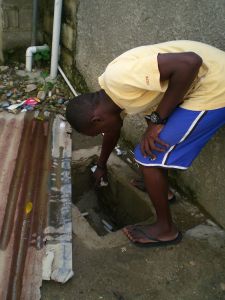 partnership with patients and their families in the community. Early in the development of the organization, it became clear that the health of the community could not be improved through medical services alone. Consistent and ready access to clean water was necessary to support critical health interventions. Through trial and error and many self-taught lessons, the leaders of HHI embarked on a water project to extend a water line into their partner community. In reflection, the project management expertise of PMWB volunteers would have helped the leaders to better plan, prepare, and manage the delivery of their water project as well as improve the impact to the community.
The Art of Asking Questions
| As project managers, our role is to get work done through other people. This means we not only need the right people on the team, but we need the humility to admit that there are many people who know much more than we do. “When I started out as a project manager, I would listen intently to the information being shared as I was introduced to a project team. There were always many terms, acronyms, best practices, deliverables, and methodologies that I did not fully comprehend or that were contrary to what I had previously encountered,” reflects Louise Chalupiak, Project Managers Without Borders volunteer and co-host of the TechGenix Xtreme podcast. She recalls how she would quietly listen and take notes, all the while thinking, “don’t worry, it will all make sense as I become more engaged.” And sometimes it did. The problem is that sometimes it didn’t. As a project manager with a similar mindset, you may have experience playing “fix and repair” with issues that could have been avoided if only you had asked the right questions. In developing the newest Project Managers Without Borders initiative, the WaterRico Project, Eric Schempp and his team had many opportunities to practice the art of asking questions. The WaterRico project was an evolutionary process in trying to understand what the Rotary Club [Centennial Colorado chapter] had in mind and what their goals were. I think there was a learning experience for all of us involved.” The team and project stakeholders used standard project management methodology to define the requirements of the project and to delineate the must-haves from the nice-to-haves in developing the ideas for the project.
Here are a few tips for asking questions:
Most importantly, also remember TO BE ABLE TO ASK A QUESTION CLEARLY IS TWO‐THIRDS OF THE WAY TO GETTING IT ANSWERED John Ruskin
The role of the project manager is based on research and communication. Project managers help scope out the vision of the project and help partners to narrow down the project so the outcomes can be realized. This all starts with asking questions, and it is never too early in the project to begin. |
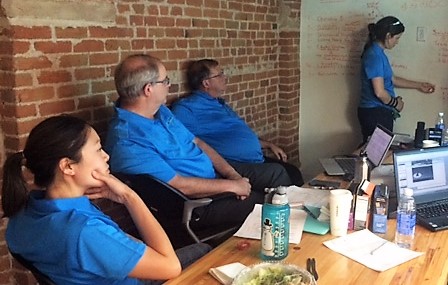 “We understood we wanted to do a water project. But what that meant, we weren’t quite sure,” reflects Schempp. Through research to answer their questions and asking stakeholders about their needs, the team narrowed the scope and goals of the WarterRico project.
 Lending Your Expertise When You Have Limited Time
“Everyone is interested in
|


Increase NGO Value Through Project Closure
| Lessons learned and project closure reports are important organizational process assets that a project manager may find missing upon starting work with a new non-governmental organization (NGO) or non-profit organization (NPO). This historical information is useful for many activities such as on-boarding new members, explaining the mission of the organization to the community, or developing project charters. The final project report becomes an important advocacy tool and gives ideas for articles or stories to attract wider attention or to spread news about a particular situation. Additionally, performance information from previous projects can help make the best use of limited resources and funding. Three ways to bring value to the NGO through project closure:#1 Engage stakeholders to determine project or phase closure guidelines or requirements. An organization can guide its actions throughout the project by knowing what the expectations are for documenting project successes and failures from the beginning, when to gather lessons learned, and how to archive the project information for future use. These activities can be incorporated into the NGO’s monitoring & evaluation program. It may also open lines of communication to other stakeholders, including in the community the NGO operates, as input on reporting requirements are gathered. Work with the NGO, members of the community, and other stakeholders to determine their reporting needs. Then, suggest templates that may work well for their purposes. #2 Encourage documentation of project failures. Failure happens. That is the opening line on the Admitting Failure website. Formally closing an aborted or cancelled project is needed to continue critical thinking in the field where the organization works and to help other organizations succeed in those areas. At Admitting Failure, organizations share information as a way to bring “new levels of transparency, collaboration, and innovation across the for-purpose sector.” Project closure reports can provide NGOs with the project history that they can summarize and share on the website. The reports can also provide a foundation for developing a “Failure Report.” A how-to guide developed by Engineers Without Borders Canada can be found on Fail Forward’s website. #3 Promote dissemination of project success. Formally establishing a project’s closure helps the NGO redirect resources to the next project or project phase and guides communication to internal stakeholders, external funding bodies, and community members. Published peer-reviewed literature by non-profit and NGOs is not common (Allen, 2016). This is a gap in dissemination of information about potentially innovative interventions as evidence-based practices are often formed by peer-reviewed published literature and not unpublished studies, or grey literature. Even if an organization does not develop a scholarly article, the information can be used to inform future decisions on projects. Working with an NGO on its reporting needs is a great opportunity to exercise creative skills and to think beyond a standard report. It’s important to “consider the audience” and communicate the project findings in ways that best suit the stakeholders. You may not consider filming a video on the latest software development project, but this could be the perfect medium to supplement the closure report! In closing...A project closure or evaluation report supports the organization in formally documenting the end of the project. It can be used to promote awareness, develop project strategy, and disseminate knowledge in the field of work. Use your project management skills to help an NGO complete a project life cycle and to get a good start in its knowledge management practice
References Allen, L. (2016). Why Is There No Funding For Non-Communicable Diseases? Journal of Global Health Perspectives. Retrieved from http://jglobalhealth.org/article/why-is-there-no-funding-for-non-communicable-diseases/. Admitting Failure. www.admittingfailure.org. Accessed December 24, 2016. Fail Forward. www.failforward.org. Accessed December 24, 2016. Better Evaluation. www.betterevaluation.org. Accessed December 28, 2016.
Romiya Barry is a clinical research professional using the project management framework to improve patient care and community health. She is recognized by the Association of Clinical Research Professionals and PharmaTimes Inc. for her leadership in clinical project management. Romiya is on the Board of Directors for Health Horizons International, a healthcare NGO serving communities in the Dominican Republic. Connect with her on LinkedIn and Follow @romiyagbarry! |
Accra Flooding Initiative: A Real-Life Example of PMWB at Work
|
Project managers work to connect problem-solvers with problems. So, it may seem natural to find certified Project Management Professional Kris Troukens learning about a problem and contacting Project Managers Without Borders (PMWB) to help solve it. As Director at Large for PMWB, Kris is leading a collaborative program between PMWB and the Ghana Branch of Project Management Institute. The collaboration is aiming to tackle the recurrent flooding program in the Accra region of Ghana. Kris and the program team are exemplifying a real-world application of project management skills to support community leaders solve their problems. Their work on the Accra Flooding Initiative reflects themes project managers may be familiar with in their everyday professional roles.
A Complex ProblemKris highlights how a single natural event can be complex and have unfortunately detrimental consequences for a community. The criticality of the situation can create an urgency to motivate change. Accra is flooded at least once a year; in bad years this happens more than once. The loss of life is important each time. However, the year 2015 was particularly bad, as a petrol station exploded because of the floods, thus causing in itself about 180 casualties.
Collaboration in Innovation DevelopmentKris realizes the Accra Flooding is an example of a world problem that could benefit from the knowledge and expertise of project management. During the PMI Africa conference in Accra, I had the opportunity to talk about this recurring problem with several city officials and authorities. Several other initiatives had been tried in the past, but none made any significant progress. With the help and knowledge of the local PMI chapter leaders, we decided to try and do something to find a possible solution. Today, we are concentrating our efforts on two things. The first phase is to inform all stakeholders, and create a "forum" where these different parties communicate efficiently together. The second phase is the creation of detailed technical plans (WBS in project terms). It is not our ambition to actually execute these plans ourselves, but to provide very useful input to guide local authorities and agencies as they start improvements. Beyond the Triple ConstraintProject Managers are familiar with the triple constraint of time-quality-costs. As with many development projects, there are other internal and external factors that must also be equally balanced. For the Accra Initiative Team, ‘time’ is a self-imposed construct, allowing the team to develop the program without too much pressure. However, careful stakeholder management is one of the most critical constraints in the project. Stakeholder engagement in development projects is often complex. There are often several players with a multitude of expectations. Having the right level of collaboration is key to supporting the success of the project. Beyond project managers, we are teaming up with engineers and experts from the water-treatment industries. These are the main areas where actions plans will need to be compiled. However, other more general project management skills are also required. For example when a topic such as "how to develop a garbage collection system from scratch" is on the table. Some of the other relationships we are managing include working with city and government officials. This is sometimes very sensitive, and we don't want to upset anybody. So our wording and planning needs to happen carefully. For example, when holding the international workshops we try to engage the Ambassador for Ghana in the host city. PMWB acts as the coordinator of the "stakeholder platform" as well as the organizer of the workshops that will deliver the WBS [work breakdown structure] plans. These workshops are happening in various international cities, with the help of local PMI chapters. When managing the relationships, we don’t use any project management or stakeholder management tools in particular--just common sense and lots of energy! Respect is of the essence. In other countries and other continents things are happening differently than in some of our "Western" countries. But I noticed that with mutual respect you can come a long way. A Personal Commitment to Making the World a Better PlaceApplying project management skills to your community or to another community is an impactful way to learn how to drive innovation. Kris’s words show this is also a way to develop soft skills such as empathy and leadership as well as to foster growth as a global citizen. This project matters to me because of some of the personal stories that I heard in Accra. People at the conference were personally involved at the recent floods, and some kind of desperation was hanging in the air that no tangible progress can be seen to resolve the floods. My work on this project has changed me personally. I’ve learned to appreciate another country, and another continent. Relating this to project management steps as they are applied at home is a very rich experience. And I made lots of new and dear friends, for which I will be eternally grateful.
As exemplified by the PMWB logo, the Accra Flood Initiative brings together the hands of various people reaching from around the world to provide integrated support to the world’s communities. Kris and the PMWB team are showing us how the knowledge and skills developed as project management professionals will transform ideas to outcomes. To keep updated about the Accra Initiative, visit the project site http://pmwbi.org/site/index.php/projects/africa. There you can sign up for the newsletter, lend your expertise, or make a donation. Special thanks to Kris Troukens for sharing his story! Kris can be contacted at [email protected].
Romiya Barry is a clinical research professional using the project management framework to improve patient care and community health. She is recognized by the Association of Clinical Research Professionals and PharmaTimes Inc. for her leadership in clinical project management. Romiya is on the Board of Directors for Health Horizons International, a healthcare NGO serving communities in the Dominican Republic. Connect with her on LinkedIn and Follow @romiyagbarry! |




