


Beware Reverse Delegation


| Decision-making is an important part of what project leaders do. But that doesn’t mean they should make all the decisions. You have talented people on your project team. Right? They have the technical skills and knowledge needed to execute the plan, to deliver value, to make stakeholders happy. But the other day, a couple members of the team asked you if they should go with technical option A or B. What do you do? In many cases, the best answer is to choose neither. That’s because there are times when you should not decide, specifically in areas of expertise where the decision is better delegated. By making the decision in these situations, you are practicing "reverse delegation," and it can cause problems down the road. When you make a decision that someone else has the expertise or experience to make, you are diminishing their ownership of the solution—and their investment in the entire project, for that matter. Worse, you’re shutting down an opportunity to build confidence in your team members that will help when other issues need to be faced in the future. It's easy to fall into the reverse delegation trap, though—especially if you came up from a technical background. If you’ve become a project leader after years of working on technical issues, you might want to continue to oversee those decisions on your team. But remember, those technical folks on your team are like you once were, and they probably have more current knowledge about certain aspects of the project than you do. So, make a conscious decision to delegate more decisions. First, recognize that team members have a natural inclination to consult you. They know the project manager is the one person putting their reputation on the line for the project, and they want to know what you think. But remind team members of their role and value on the project. Of course, it is still your responsibility as a project leader to examine whether there is an underlying problem that might hinder your team’s ability to make decisions. Ask yourself these questions and correct accordingly: 1. Do team members understand stakeholder values and project priorities? Set the stage early for good decisions by communicating clearly about the project charter, scope and stakeholder expectations—and how they relate to the decision criteria of cost, schedule and quality. 2. Do team members feel empowered to make decisions? Consider whether they are comfortable with and confident in their position. Some people want to give decisions back to the project manager so that they are free of the consequences. And there will always be cases when you should still be the decider. If the team can't agree, you need to break the deadlock so the project can proceed. Does one approach carry more risk than another, for example? But do this as infrequently as possible because ultimately it takes away some of the empowerment you had hoped to use to your project’s advantage. You’ve been on teams, so you already know from experience that many, if not most, decisions are best made closest to where the actual work is being done. Now’s your turn as a leader to make sure that happens on your projects. |
Changemakers and Gymnastic Enterprises
| There isn’t much good that can be said about COVID-19, but it appears that many organizations, project leaders and teams rose to the challenges it posed to their work. All of us are doing things differently than we did 16 or 17 months ago before offices closed and travel ceased. Our organizations are planning, managing and delivering projects differently, too. And in measurable, demonstrative ways, that’s actually turned out to be a good thing—or at least the start of something good. Forced to pivot suddenly in March 2020, many organizations and teams became more focused on outcomes than processes. It was the only way to keep critical initiatives up and running, to meet strategic goals, to stay in the game. In doing so, a new kind of organization is emerging—something Project Management Institute’s new report, Pulse of the Profession 2021: Beyond Agility, calls a “gymnastic enterprise.” These gymnastic organizations are empowering their people to become "changemakers" who, regardless of their role, are inspired and equipped to turn ideas into reality. This happens when people continuously get better at what they do, by building a holistic portfolio of skills. And it happens when they're supported by a strong organizational culture, strong leaders, and a strong talent management function. Here are some key findings from the report, released last month: >> Despite the pandemic, organizations and their people found new ways of working and delivering value, with digital transformation leading the charge. And although many planned projects were put on hold, of those that did forge ahead, more met original goals and business intent, more were completed within budget and on time, and wasted investment due to poor project performance declined compared to last year's survey. >> Gymnastic enterprises were more likely to have high levels of organizational agility (48 percent versus 27 percent) and to use standardized risk management practices. They were able to adapt faster to the pandemic, being far more likely to have undergone business change in 2020. And they were much more likely to have seen increased productivity (71 percent versus 53 percent) and better project outcomes in 2020—in turn, resulting in less wasted investment, according to the report. Gymnastic enterprises are empowering their people to work smarter in three key ways: 1. Mastering different ways of working—whether that’s agile, predictive, or hybrid approaches, or a range of tech-enhanced tools 2. Elevating people skills—what the report calls power skills—to ensure effective leadership and communication 3. Building business acumen to create well-rounded employees who have deep expertise and can see the bigger picture. The report explores these new ways of working: >> Gymnastic enterprises are more likely than traditional enterprises to use agile and hybrid approaches, and less likely to use waterfall. Yet it isn’t as simple as moving away from waterfall, but rather taking a more balanced and customized approach for the project at hand. >> Gymnastic enterprises are outpacing traditional enterprises in the use of cloud solutions, the Internet of Things, AI and 5G mobile internet to manage projects. But more importantly, they're using technology to augment human skills and help their people continuously improve, prioritizing the enterprise-wide adoption of complex problem-solving techniques; AI-driven tools; on-demand, microlearning apps; and career assessment tools. Ultimately, it comes down to a people first approach. With their focus on augmenting human skills, and on creative collaboration, gymnastic enterprises put the highest priority on collaborative leadership. They also prize adaptability, an innovative mindset and empathy. But building an environment where changemakers thrive doesn’t just magically happen. The role of organizational culture cannot be understated. Gymnastic enterprises are far more likely than traditional enterprises to prioritize delivering customer value, aligning with organizational values, and embracing digital solutions, according to the report. Where gymnastic enterprises aren't doing better than their traditional counterparts, however, is diversity at the top. For example, just 44 percent have at least one female leader in the C-Suite. But they're working to plug the gap: 63 percent are putting a high priority on fostering a culture of diversity, equity and inclusion, versus 51 percent of traditional enterprises. So there’s still very important work to be done. There always is. But many organizations, with changemakers at the forefront, are moving in the right direction. You can download the full report here. |
Our Future Is A Project
| Five megatrends will shape our world in 2021 and beyond. Are your projects in the mix? There is still so much to do (and not do), and millions upon millions more vaccine shots to administer, but citizens and businesses alike are starting to contemplate a post-pandemic reality—one in which schools and restaurants are open; movies, concerts and ballgames are back on the calendar; and, yes, project teams are sharing a pizza and collaborating in person. 2020 was as chaotic as it gets, with COVID-19 a constant shadow. And yet, there was more—much more—going on, from political and social unrest to economic upheaval, from artificial intelligence to natural disasters. These realities are all intertwined with the global pandemic, but they won’t go away when the masks come off. And no organization, no matter how laser-focused on its market or service, can afford to ignore them as they move forward with existing and future projects. To that point, Project Management Institute has released Megatrends 2021, a timely report that identifies five global trends reshaping our world:
In the report’s introduction, PMI president and CEO Sunil Prashara states: “As this year made clear, change is inevitable. But by understanding the drivers behind the volatility, organizations and their leaders can thrive in the Project Economy, delivering positive social impact at a time when it’s needed most.” Based on research, industry data and interviews with project leaders, the report summarizes each of the five megatrends and then offers guidance on ways that organizations can address these developments through their projects and their approach to executing them. In short, organizations must:
To do any of this, we need change-makers—project leaders, the report concludes, that rely on three critical capabilities: 1. New ways of working, including agile, waterfall and hybrid approaches; microlearning apps, and AI-driven tools. 2. Power skills such as collaborative leadership, innovative mindsets and empathy. 3. Business acumen, including an understanding of how work relates to strategy. Be sure to check out the entire Megatrends 2021 report—and share it with your teams, your CEO, your clients, your friends and family. We’re all in this together. And projects can make a difference on what the future looks like. |
The Great Intangible
| Inspiration is the great intangible that can push teams to greater heights. Can you instill it? It’s true: money can motivate some people. So can fear. But at the end of the day, if someone does not want to do something, they most likely won't. They most definitely won't do it well. Every project leader knows the frustration of trying to motivate an underperforming or unwilling team member. But there are ways to cultivate an atmosphere where motivation has a chance to grow, where so-called “lost causes” can find their value. It happens when leaders recognize individuality, be inclusive and build trust. One of the best ways to motivate people is to include them in decisions. If someone has been excluded from a decision that affects their work, they’re not going to feel that they are a contributing, respected member of the team. Inclusion can inspire a non-engaged team member to get more involved. Inclusion goes hand in hand with treating each team member as an individual. In project work, people are motivated by different things and at different times. Some people, for example, enjoy making decisions with quick results; they feel most comfortable toward the end of a project when daily decisions bring them nearer the finish line. Others thrive on generating ideas and are happiest at the beginning of a project, when people are brainstorming and defining the work ahead. The key to keeping people motivated is to accommodate differing work approaches. Look at the goals throughout the project and at the people who are going to be most influential and beneficial. That shifts as you proceed through the project. You don't change the team. You phase on and off people based on what they're driven by. In order to motivate people, you really have to understand what people want. You've got to offer them something that touches their heart, their passion. To help people connect with their inner drive, project managers should provide clear expectations, direction in the work, opportunities to perform, open and timely feedback, rewards and ongoing support. They should involve them in preparing plans and in deciding, as a team, what the rewards for their work will be. Finally, trust-building fuels and sustains motivation. A team works best when its members trust the project manager and each other. Demonstrating trustworthiness means recognizing that people make mistakes and do not deserve punishment when they do. In an environment where people trust their managers and each other, they feel empowered to take initiative in their work. Spend time with each person on your team. Really listen to their ideas, opinions and concerns. It's also important to respect their commitments to other projects. And even more important to show that you acknowledge their lives outside of work. Remember, inspiration may be the great intangible. But it requires tangible commitment and action from you. |
Women in a Leading Role
Categories:
Women in PM
Categories: Women in PM
| Senior healthcare executive and author Jackie Gaines shares advice and support for experienced and aspiring women leaders. Today’s project leaders have their work cut out for them as they navigate through the pandemic and face unprecedented levels of chaos. There’s little room for mistakes, uncertainty lurks around every corner, and people are anxious and worried. Still, this is the perfect time for women leaders to let their skills shine, says Jackie Gaines, an award-winning senior executive with more than 40 years of leadership experience. As command-and-control style of leadership is increasingly being replaced with a culture of collaboration, creativity, emotional intelligence, and engagement, it’s never been more important for women to embrace characteristics and abilities they have always brought to the table. “Women leaders don’t need to mimic masculine behaviors to do a great job,” says Gaines, author of Wearing the Yellow Suit: A Guide for Women in Leadership. “Not only do we have everything we need to lead on our own terms, our natural abilities and characteristics are exactly what organizations need now more than ever.” Gaines offers advice to women leaders—advice that men can and should also embrace: Act like the leader you strive to be. If you aren’t in a leadership role yet (and even if you are), think of each day at work as an audition for your future career as a leader. The better you act the part, the more likely you will be “cast” in the role someday. This includes not only your attitude, accomplishments and work ethic, but how you present yourself each day. Don’t confuse busyness with productivity or progress. Even if you’re the world’s greatest multitasker, resist the pull of distracting activities such as cleaning out your inbox or organizing files. You may pat yourself on the back afterward, but meanwhile you’ve put off that important but complicated project that you need to deliver. Remember, going after significant projects is what gets you noticed—and now more than ever, your concentrated efforts could make a lasting impact on the success of the organization. Be who you are. Whatever you do, don’t try to act like a man or anyone else, for that matter. Mimicking the attitudes (and dress codes) of your male counterparts won’t get you where you want to be, Gaines says. But stepping into the “real you” is freeing and enhances your effectiveness in any role. So be yourself—from your personal style to your personality—and let it show, even if only over a Zoom call! Speak your mind. You don’t have to be aggressive to make your point of view known. For leaders, assertiveness is an essential skill for success, and it’s a skill every woman can develop. Gaines recommends what she calls “respectful truth-telling,” which simply means expressing your feelings and needs in a direct and honest way. This is a good way to get the respect you desire along with what you want. Let your nurturing side show. Don’t underestimate the power of nurturing in moving an agenda forward. People will accomplish amazing things when they believe they are valued for their work and encouraged to grow. “Don’t hesitate to be your warm, encouraging, uplifting self at work. A nurturing leader can unlock that human potential in an organization and take it to a whole different level.” Keep cultivating strong relationships. “When the going gets tough, surround yourself with positive relationships in the workplace as well as in your personal life. Your network will inspire you and recharge your batteries when you feel burned out or discouraged. And they will celebrate with you when you and your organization achieve new milestones.” Don’t be afraid to ask for help. “Women are typically very comfortable reaching out to friends for advice, company, or someone to listen,” says Gaines. “This serves us well in business because we are more willing to say, ‘I need a hand,’ or, ‘Can I please get your input on this?’ After fighting for our career advances, asking for and receiving help when we need it is a common practice.” And help others in return. Because women are wired to nurture others and help them succeed, roles like mentoring and helping team members integrate meaning and purpose in their work come naturally. They also offer a safe place to vent frustrations and work through challenges as a woman leader.
Gaines concludes: “Women should feel proud of the attributes they bring to any organization. Our touch is unique and doesn’t have to be masked or perceived as a sign of weakness. We are effective leaders being fully who we are…leading our way.” |
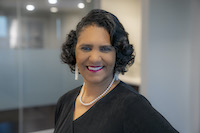 “Mentors can play a significant role in the successful onboarding of new female executives,” Gaines says. “New female leaders are usually in the minority and bumble around for months, sometimes years, before they connect with other female leaders in the organization. A planned connection could increase the comfort level in the early phase of employment and ease the transition into and understanding of organizational culture.”

