


Applying project management to an election run (part two)
Categories:
Project Management
Categories: Project Management


|
With a good understanding of the constraints for this work, this week's article will focus on three key knowledge areas, namely scope, schedule and cost and how those will be managed over the life of the project. There are three key deliverables for this project: candidate registration, the campaign itself and the post-campaign financial report. The first and last deliverables are well defined as the requirements for those are specified by the city's election officer and by the provincial guide for municipal elections. The first required me to get 25 endorsements from local residents, pay a nomination fee and complete some paperwork. The last will require me to complete a formal financial summary of campaign contributions and expenses and to submit it to the city by a specified deadline. As such, a predictive approach can be used for the management of both of these deliverables. Not having run for public office before, it would be unwise for me to attempt to define the full scope of the campaign deliverable up front. Based on the time and budget remaining, certain work packages may be added, dropped or reprioritized. Therefore, an adaptive approach will make the most sense for completing this deliverable. Outside of any restrictions imposed by the city or province, I have significant latitude on how to proceed. I have three objectives:
Given the limited budget I have set for the project, the specific levers I use will be based on maximizing the "bang for the buck". I've reviewed the financial statements from the candidates in the most recent election as well as solicited ideas from my volunteer team. I have elected to go with:
These tactics will leave me with just under 25% of my budget. This will be kept in reserve to be used for any cheap, quick wins which are identified closer to the election date. Each of the deliverables has a set time window. Candidate nominations can be submitted anytime between May 2 to August 19. Campaigning can commence anytime from the time when nomination papers have been filed and formally accepted to the election date which is October 24. Signs can be placed on lawns from September 9 and must be removed three days after the election date. And financial statements for the campaign are required to be submitted no later than March 31, 2023. Having these key dates defined up front simplifies the planning process. For example, the constraint on how early signs can be placed will also set the date for when I'd need to have door hangers and lawn signs available to be given out. Cost management is quite simple as I will only be paying for the procured campaign products or services. My time and that of my volunteer team is not being estimated, tracked or expensed. In next week's (final) article of this series, I will cover the key project risks as well as the responses implemented to address them. |
Applying project management to an election run (part one)
Categories:
Project Management
Categories: Project Management
|
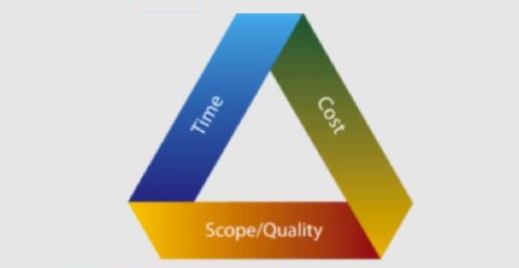
This initiative would meet most operational definitions for what constitutes a project. It is time-bound as election day is October 24. It is a unique endeavor as running for office is different each time one does it. And it will (hopefully!) produce the valuable result of my receiving the most votes by my neighbors within my ward. As I've written previously, it is important to understand what constraints exist on a project as well as which constraint is the most critical. In the case of this project, many usual constraints apply including: Time: the main accomplishment for the project will need to be completed no later than the end of election day Cost: election rules mandate the maximum amount which a candidate can contribute towards their campaign or can spend as expenses. Given that there isn't a significant financial return on investment for this project, I have set a modest limit on personal contributions and campaign expenses which is well within the limits set by the rules. As such, there is some flexibility for cost. Scope: there is quite a bit of flexibility regarding both what you can run for (e.g. mayor, city councillor in one of multiple wards) as well as how you go about convincing citizens to vote for you. Quality: the election rules do provide clear guidance on the types of activities which are not permitted such as paying people to vote for you or using city resources to further your campaign. There are also municipal by-laws for street signs which provide quality requirements such as content, size, placement, and timing for placing and removing signs. Resources: while there aren't any constraints on materials or equipment (so long as they will fit within the costs allocated), people's time is the primary resource constraint for this project. However, as I do have a few neighbours who have indicated that they would be happy to support my campaign, there is some flexibility here. Knowledge: while knowledge is an enabler, limited knowledge can act as a constraint. There are two limits which apply to this project:
The good thing is that while knowledge constraints are a major limiting factor, reducing their impact is quite achievable within the time line of this project. Having provided my analysis of the constraints I'm facing, next week's article will cover the approach I'm using to manage the different PMBOK knowledge areas for this project. |
 Last year I wrote
 How does your team run their standups?
|
One of the more common topics for such events is to discuss the backlog of short term team work. But such discussions can be held in a few different ways. To ensure that everyone has a chance to have their say, one approach might be to discuss incomplete work on a person-by-person basis. While this has the benefit of ensuring that everyone's voice is heard and gives each team member the opportunity to raise any concerns they have or confirm any assumptions they might be making, it can also result in team members who have already spoken disengaging from what is being discussed by the team members who come after them. While this would not be of much concern if each team member's work is independent of others, in most cases there are likely to be dependencies between the team members at either a work item or an activity level. In such cases, if a team member has "tuned out" the conversation, they might end up missing something which was important to their work or they might miss the chance to correct an invalid assumption being made by the others. An alternative which addresses this downside is to go work item by work item. This is likely to keep most team members engaged longer than the person-by-person approach, especially when multiple team members need to collaborate together to complete a work item. However, when some team members have finished the work items they have pulled and are now actively supporting others in the completion of those "foreign" work items, not everyone on the team might get the chance to speak up. Where work items go through a well defined work flow, another option is to discuss work items by the delivery phase they are in. Assuming team members are working on items across different phases, this will reduce the likelihood of a team member getting disengaged from the general conversation, even if they have already finished discussion the work items in the current phase. Most work management tools will provide a method to organize the items within the columns of a work board so the team might discuss the incomplete ones in the order they are presented. However, a more efficient approach might be to prioritize the vital few which really merit discussion. There are three common ways in which this could be done: By cost of delay - this would include considerations such as business value, risk reduction, dependencies to upcoming work items or the ability to exploit an opportunity By work item aging - assuming the team has reached sufficient maturity to have just a few different work item sizes then the team could focus on discussing the active work items which are outside normal aging expectations for their size By work item status - this could be done by starting with blocked work items, then those with identified impediments, and then (if warranted) the remaining ones. Many of the teams I'd worked with had used a person-by-person method for their coordination events but I wanted to understand what the distribution was across the different approaches. I ran a one-week poll in PMI's LinkedIn Project, Program and Portfolio Management discussion group and in the ProjectManagement.com community. Out of the 369 responses received, 66% used a work item-by-work item approach, 20% went person-by-person, 11% discussed work items by delivery stage and 3% had some other method. In the latter case, I had requested respondents to provide details, but the comments in most cases reflected a prioritized work item-by-work item approach. Regardless of how your team coordinates their work, it is important that such events aren't perceived as a waste of time by the team or by key stakeholders. Discussing the effectiveness and efficiency of all standard events within process improvement sessions such as retrospectives is one way to ensure this doesn't happen. |
 Whether you call them Scrums, standups or huddles, one way to plan-as-you-go with an adaptive approach is to hold coordination events on a regular basis to ensure that everyone is working in an aligned manner and on the most important work.
Are your PMs drowning in paperwork?
|
There are (at least) three factors which contribute to the administrative burden:
It is to be expected that as the complexity or size of the project increases, paper work will increase, albeit at an incremental rate. If the organization's policies and standards are flexible and fit for purpose, then the mandated documentation or practices will also scale in line with the size or complexity of the project. When project management costs can be directly compensated such as when a project is done for a paying client or when the sponsoring division for an internal project is required to cover all labor costs, once the complexity or size of a project exceeds a threshold, a project manager may be provided administrative support via a project analyst or similar role. This is a common practice in companies which are operating at a higher level of delivery maturity. But when project management costs cannot be recouped, the project manager is left to fend for themselves. I ran a one-week poll in PMI's Project, Program and Portfolio Management discussion group and the ProjectManagement.com community to understand how much effort was being spent on paperwork. I received 1068 responses to this poll so I must have touched a nerve! Here's the breakdown of the results:
So roughly one third of project managers are spending more than half of their time on administrative work. It is fair to expect that a project manager would be spending some of their time doing administrative activities but how much is reasonable? If we look at it from an opportunity cost and a cost/benefit perspective, if there are more valuable activities which a project manager could be doing which they are unable to because of mandated paper work or if the benefits of their doing this paperwork are outweighed by their labor costs, then it is too much. And while the project manager is pushing paper, it is possible that certain risks emerge or are realized which could have been avoided if they were able to focus on more strategic work. This problem could be tackled in two steps. The first is to ensure that the administrative work is minimally sufficient. Once that leaning out has been done, the second is to monitor the project manager's administrative effort and provide them with support once it exceeds a reasonable threshold. |
 One of the unfortunate perceptions which many project managers face when trying to do their jobs is that some stakeholders perceive that they are just bureaucratic paper-pushers. While there are certainly some ineffective project managers who put a greater emphasis on administrative activities than the real job of leading, with most of the practitioners I've worked with, this is not how they see their role.
Who makes the rules for your team?
Categories:
Project Management
Categories: Project Management
|
The same is true when a team starts to work together for the first time. Whether it is done proactively when the team assembles or is done as a reaction to unhealthy conflicts, having a basic set of working agreements can help to accelerate a team's transition out of the storming and norming phases of development. While we often think of working agreements as covering team member interactions such as how to deal with conflict, the communication methods to be used for different situations or logistics for regular meetings, a good set of ground rules will also cover the teams way of delivering value. For example, the Definition of Ready or a Definition of Done are two examples of delivery working agreements. But how do ground rules get defined? In my past experience, I've encountered four scenarios:
Most of the teams I've witnessed fall into one of the first two scenarios. Highly mature, self-managing teams will transition from the second to the third scenario. I've rarely seen the fourth scenario, and mostly that was with teams who had novice leaders. I ran a one-week poll in PMI's LinkedIn Project, Program and Portfolio Management discussion group as well as the ProjectManagement.com community. Unlike some of my recent polls, this topic drew a large number of responses: 236. 53% of the votes were cast for the leader as a facilitator, 22% for the team defining rules on their own, 16% of respondents indicated that no rules were explicitly defined and the remaining 9% were the team leader defining the rules. It is encouraging that three-quarters of the responses indicated some degree of self-organization and team autonomy, but that still leaves a quarter of teams either having rules imposed which might reduce their motivation or having no rules at all which increases the likelihood and duration of interpersonal conflicts. "Rules and responsibilities: these are the ties that bind us." - Neil Gaiman |
 Playing a board game without all participants having a consistent understanding of the rules is a frustrating, time-wasting experience.

