Viewing Posts by Mario Trentim


21st Century Skills and Digital Skills: Citizen Development Skills for Life


|
As the world changes, new and transformed professions arise. We are now at a point when it is very challenging for the people and organizations to make sense of the current situation because the pandemic turned our world upside-down. Meanwhile, we need awareness that “what brought us here won´t get us there”, to paraphrase Marshall Goldsmith.
We must acquire new competencies and skills urgently.
I am a project manager and a PMI volunteer since 2008, which means I was fortunate to take part in the evolution of project management morphing into a life skill. We are now on the verge of a significant change: Citizen Development and Digital Skills. In this article, I will discuss how digital skills are connected to the 21st-century skills established by UNESCO in the early 2010s. And I will suggest a roadmap for PMI volunteers, professionals, educators, and parents, to prepare our next generations to the future of work.
21st Century Skills Since the emergence of technology changes and globalization, it has been argued that formal education must embrace new forms of learning to build competencies needed to tackle more complex challenges. Pedagogy changed to foster participation and emphasize project and problem-based learning (LUNA SCOTT, 2015), but it still relied more on synchronous in-person classes. Although e-learning was a possibility for a long time, educators and schools struggled to create a remote-first education. Research about digital skills, technology literacy, computer programming, and related topics started to surface more robust evidence that we are failing to prepare our kids for the future of work. Laar et al. (2017) provide a systematic literature review to emphasize the importance of digital skills.
Considering digital transformation started back in 2008 with cloud services, educational models and systems are outdated. The job market already noticed that formal education is not sufficient. And that´s the reason why short duration courses, micro-learning, and self-paced study are growing at a fast rate in recent years. The pandemic in 2020 and 2021 impacted schools and universities severely. Classes were interrupted, educators were disrupted, and students are confused and bored. Was it possible to anticipate change and reinvent education before the COVID crisis?
Roadmap to Prepare Future Generations The answer to the previous questions is Yes and No. Yes, because we were able to see that educational systems and curricula were outdated. No, because there is always strong resistance and attachment to the status quo. The best time for change was in the past. The second best time is now. And here is the roadmap to prepare future generations, digital native toddlers and young adults, equipping them with new skills and competencies needed:
I had the opportunity to help schools and educational nonprofits during the pandemic. One of the biggest mistakes I notice in schools that combine in-person and remote learning is that they focus on in-person because it is easy. As a result, the kids studying from home feel bored and excluded. If schools want to change education, they need much more than a webcam recording room with the professor and some students. It is necessary to rethink and remodel the curricula, adapting classes to shorter durations, defining asynchronous and synchronous learning, and more. The secret to being successful is to adopt a remote-first mindset: if the remote students are learning and engaged, all the students are learning and engaged. Focusing on teaching and leading at a distance is a game-changer, but we must have a different breed of educators.
I´ve mentioned that some professions are at risk, and all the occupations must be reinvented as new technologies digitally transform them. Since coding skills and computer literacy are in high demand for the future of work, educators must cultivate digital skills. Not only learn how to stream classes and use learning management systems but also become citizen developers themselves. I will discuss this further in another article. Microsoft Power Platform: School Teacher uses Power Apps to Transform Classroom Management and Motivate Students
Mendix: Building the Digital University
I´ve been experimenting with education for two decades now as a Microsoft Innovative Educator Expert. One of the most powerful ways to learn something is by doing and explaining what you are doing. That being said, I structure my lectures in three different types: foundations, practitioner, and advanced. The foundation classes are comprised of self-paced learning, reading, and asynchronous learning. The student gets a common understanding by accessing introductory materials that prepare them for the live class (synchronous). The practitioner classes are hands-on, using a collaboration space, we devise experiments, simulations. These classes promote critical thinking and collaboration. Finally, the advanced classes focus on case studies, benchmarking, and sometimes significant challenges or unsolvable problems. These classes are designed to promote innovation and creativity. You probably think that all I said does not apply to you. But I tested it with low-income and high-income students, toddlers, undergrad, and even MBA students. It works and there are communities of educators discussing how to reinvent education combined with technology. Currently, you can teach geography, chemistry, history, and more, using Minecraft for Education. And you can develop a variety of other skills with Scratch programing.
How You Can Help With CD Education First, check out references like Serious Games and Edutainment Applications (Jain, 2011). Then join a community of educators like MIEE Programs or others, depending on your technology choices. Third, and most importantly, get acquainted with the PMI Citizen Development Framework and join a community of practice. I hope that soon we have groups of volunteers building the Citizen Development Skills for Life, similar to what we did in the past with PM Skills for Life. Let me know your thoughts below. |


Five Tips to Quickstart your Citizen Developer Career
|
In my previous article, I described the difference between "doing" and "the management of doing." In a way, citizen development is a broad discipline utilizing business analysis concepts, agile project management, software development, innovation, lean startup, and technology to create the future of work by leveraging digital transformation in all life and business areas. Too much for your brain? Don't panic. This article will lay out a simple plan based on five tips to quickstart your citizen developer career.
Understanding the "Big Picture" Citizen development is here to stay. And the PMI Community plays an essential role in shaping what comes next since we are a community of change-makers (project managers, business analysts, agilists, and more). Citizen development is more than a framework and is more than a toolkit. We may understand citizen development as a life skill since every person engages with different technologies daily. Digital literacy is required if you are a student trying to attend online classes and deliver homework. Digital skills are even more critical to your job, considering you have to collaborate and work productively in an entirely new way with virtual and hybrid teams. And digital maturity is foundational to business models and organizational strategy because stakeholders' experience and behavior changed completely (digital employee experience, digital customer experience, and more).
So, before your profession and career are disrupted, what should you do to become a citizen developer?
Five Tips to Help you Become a Citizen Developer
Every time I find a new topic of interest that might impact my work or my organization, I look for a foundational course from an accredited source. Information is so abundant nowadays that you become quickly overwhelmed by Blog posts and Youtube videos on a particular topic. If you don't have any background, you will waste a lot of time figuring out what citizen development is from sparse materials. Unless you have a technology background or some familiarity with software development, I don't recommend unsupervised learning by yourself.
Figure 1 – Citizen Developer Foundation Course
Figure 2 – Citizen Development Handbook
So, tip #1 is to look for a book and training. What will you learn from the references above? You will learn the Citizen Development Framework, equipping you with tools and techniques, processes, and steps to define, plan, organize, and manage citizen development projects. What's next? You will need a low-code / no-code platform to experiment, prototype and build your applications.
As I explained in my previous article, a no-code / low-code platform allows you to develop applications without being proficient in a programming language (Low-Code vs. Citizen Development). Instead of writing code (Figure 3), a low-code platform allows you to choose and configure components by simply dragging and dropping what you need.
Figure 3 – Programming Language (Wikipedia.org)
Figure 4 – Low-Code Platform, Microsoft Power Platform example.
To experiment with a low-code platform, you have to pick one of your choices. That's the reason why the first step is to get a foundation course. You will learn what citizen development is, why it is essential, and what platforms you can choose. Below there is a list of low-code platforms for you to start exploring.
Although I will provide you more examples and guidance on my future blog posts, it is time to join a community of practice and get to know your IT team.
One of the primary reasons behind the citizen development revolution is the shortage of professional developers. As technology moves to the center of business models and the world run on software, more and more products and services need technology. End-users need help from IT to develop applications for a variety of reasons. In the past, the so-called power-users were people from the business with some IT experience, developing solutions to solve their departments' needs. These solutions could be those monstrous spreadsheets or other applications, sometimes causing more harm than good because shadow-IT might be very dangerous. It would be best if you got to know your IT team as soon as possible. They are probably already experimenting with citizen development and using low-code platforms for software development. They will be capable of helping you understand when and how to use citizen development to your needs. Also, bear in mind that some low-code applications might be so complex and large that you would need to go for the Assisted path or IT Delivery path, both described at the PMI Citizen Development framework (Figure 5).
Figure 5 – Hyper-Agile SDLC Paths (PMI.org)
I will describe the Hyper-Agile SDLC in detail and provide examples in future blog posts. For now, you have to understand that the Fast Track path is adequate for medium/low complexity applications that you can build on your own without help from an IT department. My next tip is to focus on problems and opportunities at hand in your business unit to acquire citizen development skills. Keep in touch with your IT team for guidance.
When I mention "citizen development," many people get confused and do not know where to start. The best way to learn citizen development is to focus on specific problems you want to solve related to your organization. Take employee experience, for example. Because of the pandemic, most of the organizations adopted remote work. Not all organizations had the time or competencies to plan appropriately. The final result is less than satisfactory. Imagine you worked at a small office with 50 people. You probably didn't need a specific application for the employees to select a health plan. They could stand up and walk to the Human Resources person (or team) and pick a health plan from a spreadsheet. Now that your company grew to 100 employees, all of them working from home, it is time-consuming and frustrating trying to make a video call or sending an email to the Human Resources team to select your health plan. There you have an excellent idea for a citizen development project!
Figure 6 – Health Plan Selector, Microsoft Power Apps
There are many low-code sample applications focused on human resources, onboarding and hiring processes, reimbursement. Or you can build your app from scratch. You will also find more examples for operations, sales, and any other area or processes in your organization. Don't forget to work closely with your IT team and to continue sharpening your skills.
Last tip: citizen development is a lifelong learning journey. As you get more experienced with the PMI Citizen Development Framework and proficient in using specific low-code platforms from different vendors, you may choose different paths. One career path might be to become a citizen development architect, responsible for large citizen development initiatives, with broad knowledge and experience to architect complex solutions. Another career path might be to become a citizen development strategist, someone who is thinking of digital strategies and digital transformation to your business and your organization as a whole. You may provide guidance and coaching to other citizen developers in your company since some organizations establish Citizen Development Centers of Excellence and Digital Transformation Offices, a topic I will discuss next week in my article. Stay tuned.
Join the conversation below in the comments and let me know your thoughts. Also, feel free to reach out to me at Linkedin.com/in/trentim.
|


Low-Code vs Citizen Development: Doing and the Management of Doing
|
I often receive questions related to technical aspects of low-code software development and architecture as if these topics were part of citizen development. In this article, I want to address the difference between “doing” and “the management of doing”. Considering “citizen development” is a new concept, an analogy with project management might be useful. Take for example an engineering project, is it mandatory that the project manager is an Engineer? The answer is no.
Low-code Software Development Low-code is a visual approach to software development. How is that possible? Remember a couple of years ago when you wanted to create a website? You had to write the instructions using HTML:
Figure 1 – HTML example.
Or maybe you would use PHP, a programming language, to develop your website. Low-code means that you can drag and drop components to build your application. In the example of a website, you may use a low-code platform like Wordpress, Wix, and others.
Figure 2 – WordPress Theme (Thimpress.com)
Low-code platforms are evolving. With the aid of artificial intelligence, you can develop a website by answering a few questions with zero-code, using Wix ADI for example. And you don´t have even to drag and drop components using a low-code editor.
In summary, low-code abstracts and automates every step of the application lifecycle to enable rapid delivery of a variety of software solutions, not only simple websites. In my next posts, I will provide low-code examples in different industries, processes, and professions. According to IBM Research, “Software development refers to a set of computer science activities dedicated to the process of creating, designing, deploying and supporting software.”
In other words, software development, either low-code or pro-code, refers to a set of computer science technical activities.
Figure 4 – Systems engineering processes overview (Trentim, 2015)
As a technical discipline, software development includes designing and building the final result. Figure 4 describes a high-level overview of the technical processes to develop a system. There are best practices and approaches tailored to software development
Software development is the “doing”. Citizen development is the “management of doing”.
While software development focuses on architecture and best practices to design, build, deploy, and service an application, citizen development, in analogy to project management, focuses on understanding the needs, engaging stakeholders, combining best practices to manage the project constraints delivering value.
Citizen Development Because it is a new concept, there are various definitions and interpretations of “citizen development.” According to Gartner, “a citizen developer is a user who creates new business applications for consumption by others using development and runtime environments sanctioned by corporate IT.” The PMI Citizen Development framework takes a step further. A citizen developer is someone who applies business analysis, project management, and agile project management best practices combined with lean approaches and prototyping with the help of technical experts and IT, as needed, to make digital transformation a reality. In other words, it is much more than low-code software development. A citizen developer can understand how a variety of technologies, including the Internet of Things, Artificial Intelligence, and more, are impacting business models, processes, and the way we work. A citizen developer manages “technology and transformational projects,” keeping an eye on the big picture and trends.
Figure 5 – Citizen development.
If you pay attention the Figure 5, you will find steps beyond the software development cycle (“the doing” or application development). A citizen developer might work in partnership with professional developers and IT professionals to build the solution. The citizen developer might be responsible for feasibility and value delivery, besides assembling the team and organizing the work, following best practices from the PMI Citizen Development framework.
As you can imagine, the “citizen developer” role, profession, or function has yet to be defined and tailored by organizations according to their needs.
In some organizations, all team members are citizen developers, meaning they understand the PMI CD framework and technologies (including, but not restricted to, low-code). Other organizations may have business analysts and business users embracing citizen development competencies. Project managers can benefit by acquiring citizen development skills and working closely with citizen developers.
Conclusion PMI is embarking on a journey to transform the way we work. Citizen development is a framework, and it is also a broader concept. To conclude with an analogy, remember the Agile Manifesto and the revolution that started agile practices? Back then, agility was people working on small IT projects. Currently, we have agile Human Resources, agile organizations, and agility are everywhere. Agile is a mindset, a collection of behaviors and practices that are not confined to project teams. It is a way of work.
Citizen development is a new revolution to transform agile and business processes by accelerating technology adoption and digital transformation.
Stay tuned because next week, I will publish a new article with tips and tricks on starting your career as a citizen developer. Let me know your thoughts on the comments below.
|
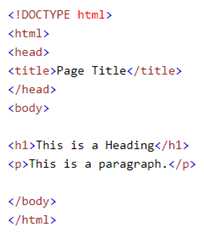
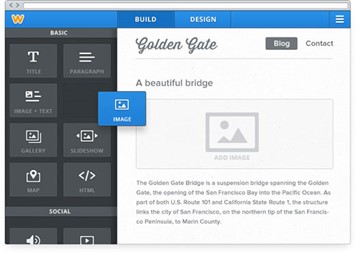
 Figure 3 – Creating a website with ADI or Editor at Wix.com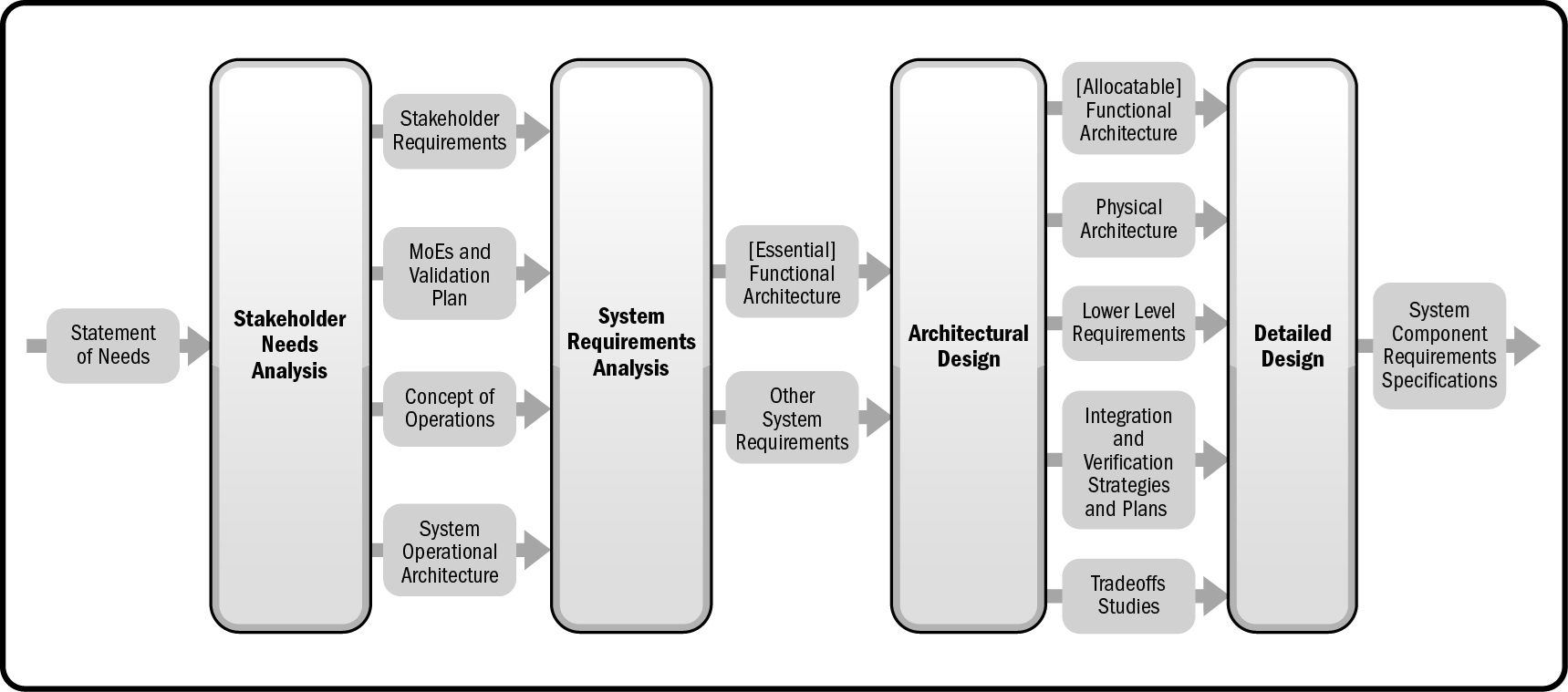

Reinventing Project Management with Citizen Development: Will Project Managers Lose Their Job?
|
So, you are a project manager, and you´ve been hearing a lot about citizen development. You are probably asking yourself, “What´s in it for me?” Maybe you think that this is IT-only and focused on professional developers. Be cautious though, some people had similar thoughts about Agile twenty years ago. Well, let´s face it: the project management profession is changing. And if you want to boost your employability and maintain yourself as a relevant contributor to your company, keep reading this article before it is too late!
80% of Project Management Tasks Will be Eliminated Back in 2019, Gartner said, “Eighty Percent of Today´s Project Management Tasks will be Eliminated by 2030 as Artificial Intelligence Takes Over”. I remember an extensive discussion at that time, and most project managers were incredulous. They argued that project management is a human activity that a machine cannot perform. Other human activities are also being disrupted and automated. Take human resources and people management in the era of big data and machine learning, for example. The rise of “digital leadership,” highly effective virtual teams, and online collaboration are undeniable truths.
If 80% of PM tasks will be eliminated, will project managers lose their jobs?
The answer is yes and no. You will lose your “old job,” but you can reinvent your profession and disrupt yourself, opening a new landscape of opportunities: citizen development and the future of project management. Before I give you the long answer, it is essential to emphasize that humanity is transforming fast. Peter Diamandis, the author of the best-seller book “Abundance,” says that we live in a time of more opportunity and abundance than ever before. According to Diamandis:
Abundance means more projects. Consequently, project managers are in high demand. The Project Economy, according to PMI.org, is one in which people have the skills and capabilities they need to turn ideas into reality. “The future of work is fluid, dynamics and goal-oriented; project leaders will be in high demand.” (Cindy Anderson)
We, project managers, will not lose our jobs. Project managers are in high demand and will be in even higher demand because we need people capable of navigating complexities, managing uncertainties, and delivering value to stakeholders through successful completion of projects, delivery of products and services.
What Shall I do, as a Project Manager, to Stay Relevant? Project Management Offices, project managers, and other stakeholders are increasingly reliant on technology to execute their work. Citizen development is critical to democratize digital transformation, impacting business models and the way we work. Project managers, business analysts, and project team members are change-makers. To stay relevant, increasing our employability, we need to acquire new skills and competencies, revisiting our experience, and connecting the dots to find better ways to deliver value.
You don´t have to look for another profession. You have to reinvent your job by adopting a citizen development mindset, embedding technology into your project management processes and activities.
A Final Word and Actionable Steps Back in 2001, Clayton Christensen wrote the book “The Innovator´s Dilemma: When Great Technologies Cause Great Firms to Fail”. Technologies are now disrupting professions and career because they change the way we work. Citizen development is a wake-up call to all professions. Project managers, change-makers, shall lead breakthroughs not only with innovative products and services but mainly with methodologies and frameworks. The first step is to adopt a growth mindset (Dweck, 2015). The second step is to become aware of the transformations impacting your profession and organizations. Stay tunned on the Citizen Developers community at ProjectManagement.com and revisit The Project Economy website at PMI.org. Finaly, the third step is to start your citizen developer journey.
Join the conversation below and let me know your thoughts. Next week, I will provide real-life examples about the “PMO of the Future” and how project managers are applying citizen development to improve project management processes and results. |
Project Management Past and Present: Setting the Stage for Citizen Developer
|
As the project management profession developed and matured, more and more organizations understood that project management is indispensable to business results. Project management is a life skill, enabling people and organizations to turn ideas into results. This article will guide you on a journey to describe why and how project management changed overtime, discussing future applications and implications of hybrid approaches, citizen development, PMOs, and agile organizations.
Early Days of Project ManagementCan you imagine a time in which there was no job title "project manager"? There was a time in which project management did not exist as a discipline or profession. Back in the 1960s, practitioners started to collaborate in compiling best practices because of large engineering projects. Since then, "for at least six decades, project management (PM) has been an established discipline with well-subscribed bodies of practitioners and commonly accepted methodologies and standards such as PMBOK® and PRINCE2® (Padalkar and Gopinath, 2016)."
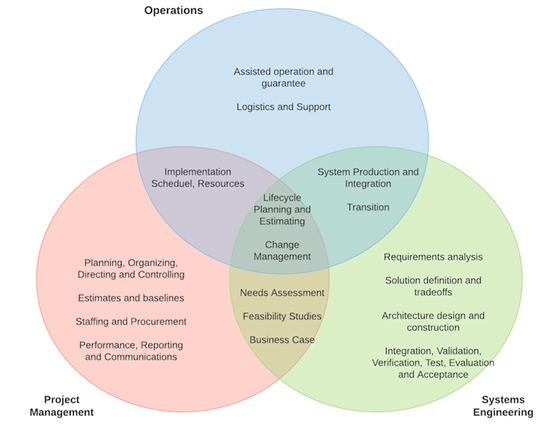
Figure 1 – Operations, systems engineering, and project management processes.
Traditional project management approaches included many process tools and techniques because they were initially designed to manage large engineering projects interfacing with operations and systems engineering (Figure 1). On top of that, engineering and development strategies from the past adopted waterfall approaches and sequential phases. In 2001, the Agile Manifesto started a revolution in software development and project management. At that time, agile projects were associated with small or medium IT projects, while traditional approaches were associated with large engineering projects. Even though both approaches could have been tailored, adapted, blended, and connected, this was not a reality until the next decade.
Current and Emergent Practices in Project ManagementBetween 2010 and 2020, we expanded our understanding of project management. PM's field is diffuse and multi-disciplinary and offers a considerable body of literature in related areas like agile project management, strategy execution, business analysis, and more. There are various methods and frameworks, and we realized that we could build our hybrid methods. But how?
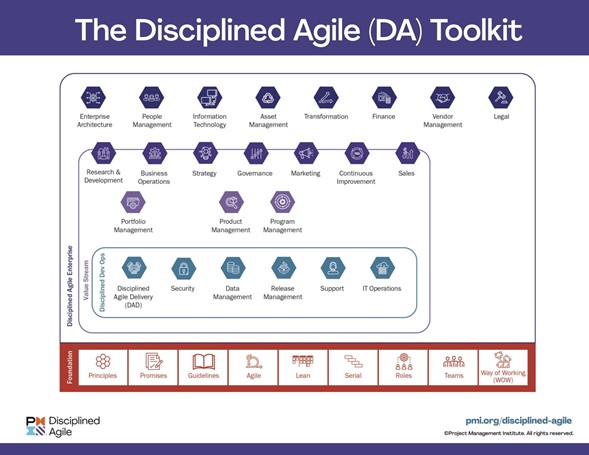
Figure 2 – Disciplined agile toolkit (PMI) Disciplined Agile (Figure 2) is a toolkit to help people and organizations to fully and truly become agile by combining different execution approaches, including serial and agile, to the other business processes in an integrated fashion. Describing DA in detail is beyond this article's scope, but that leads us to "What's next?"
The Future of Project Management – Citizen Development?We started the project management revolution, making project management indispensable for business results sixty years ago. At that time, project management was bureaucratic and prescriptive, as it should have been to manage large engineering projects in hierarchical and structured organizations based on Taylorism. The Agile Manifesto and agile approaches sparked another revolution toward flexible and adaptable project management. As a result, we have multiple "ways to Rome." There are so much content and guidance that it is difficult to know how and where to start. In a volatile, uncertain, complex, and ambiguous world, attention and cognitive bandwidth are the most important assets to every person and, consequently, to every company. To that extent, the future of project management, the future of management, and the future of work must rely on technology to empower people to achieve more. Digital transformation means organizations can embed their processes into customized and integrated tools, making technology central to every business model. It is not about efficiency only; it is about new behaviors (employee experience, customer experience, stakeholders experience). Automation and digitization are just the beginning. We need people capable of continuously strategizing and implementing digital transformation, which implies that project management and citizen development go hand-in-hand with business areas and business processes. My conclusion is that the Citizen Development Revolution is the next big thing in project management. We, PMs, BAs, are change-makers. And the PMI Citizen Development framework combines those disciplines, as I will explain in my article next week.
Please leave your comments and thoughts below. |