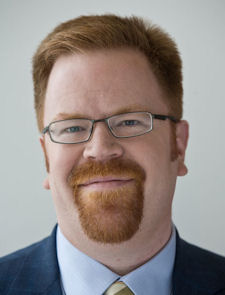
Mark Mullaly is president of Interthink Consulting Incorporated, an organizational development and change firm specializing in the creation of effective organizational project management solutions. Since 1990, it has worked with companies throughout North America to develop, enhance and implement effective project management tools, processes, structures and capabilities. Mark was most recently co-lead investigator of the Value of Project Management research project sponsored by PMI. You can read more of his writing at markmullaly.com.
One of the favorite arguments of project managers everywhere is whether a project manager's skills are transportable. Often, the question is framed as: Can a project manager move from an IT project today to a construction project tomorrow? Or an engineering project the day after?
Practically speaking, however, the problem is more pernicious, and the expectations of specialization seem to be evolving toward the very rigid and precise. Far more common a question is: Can a project manager move from an ERP project today to a CRM one tomorrow? Or from an SAP project to an Oracle Financials one?
Examples of this can be found weekly in want ads, online job sites and HR postings. Requirements for project managers are moving well beyond an understanding of project management principles and some experience in the subject area to very detailed and specific expectations.
An example was a career posting that I saw recently stating that the successful project manager must have experience in implementing SAP plant management and asset management modules in a municipal government environment of not less than 2,000 employees. In another time, this would have been evidence that the government in question had a consultant in mind, and were writing the qualifications in such a way as to ensure that no other person was likely to qualify. Given the prevalence of postings such as this, however, it is easy to begin to think that they're actually serious.
We seem to live in a world of increasing specialization. The value once placed upon generalist skills is rapidly being subsumed to a greater and greater degree by narrow, specialist niches of expertise. Customers are not demanding transportable skills and a demonstrated ability to operate in environments analogous to theirs; they want to hire people that have done exactly what they are looking for in precisely the same environment for an identical organization.
In recent years, we have become exceptionally good at replacing planned communication with technology. What we may not have noticed at the time was the gradual disappearance of the conversations we never planned to have.
Knowing how project management works and knowing how to be a project manager aren't quite the same thing.
The PMI Greece Chapter has been finding ways to help students bridge that gap.
When driving clarity decisions, are you clear on who gets a vote, and who doesn’t need to be in the room? If you have a reputation for cutting through the ambiguity noise, you might be like Diane the Driver.
Part of the reason for the increasing desire for specialist skills, of course, is that customers are getting fed up with their projects being delivered late and over budget while failing to deliver on what was actually expected. The prevalent thinking seems to be that "If I get someone that has done exactly what I want already, the problems that all my other projects face will miraculously disappear." While understandable, this assumption is nonetheless horribly misguided. For this statement to be true, the requirements, the customers, the project team, the technical environment and the existing processes, solutions and databases would have to be perfectly identical. While having managed an identical project will certainly create an awareness of some of the issues that will be encountered, by no means is this alone a guarantee of project success.
There is, in fact, a significant danger to demanding that project managers be drawn from a narrowly specialized background. By hiring them for their previous experience on similar projects, you are immediately establishing an expectation that the approach you seek is one that is nearly identical to the one taken earlier. The danger is very much one of being careful what you ask for--because you just might get it.
Just because an approach worked in one environment does not mean that it will be successful in another one. By assuming that a new project is identical to a previous one, there is a very real danger that significant differences in stakeholder expectations and requirements will be ignored or actively suppressed. Project outcomes must support the structures, processes, people and existing systems in an organization. Even projects that are designed to be plug-and-play--large scale systems like ERP and CRM that impose their processes rather than adapting to yours--result in very different implementations in what are arguably very similar organizations. And for very good reasons.
Where I have most often found myself in trouble in projects is in fact where I have made an assumption based upon my perspective, experience or bias--without consulting with someone whose knowledge was far more immediate and relevant. Even where my answer was exactly the same as theirs, I have encountered resistance and challenge. While the answer is important, how you get that answer can be equally (or even more) important. The act of consultation creates ownership of outcomes, provides reassurance of progress and demonstrates shared commitment. Without being consulted, stakeholders can only infer and assume--a pathway that should be avoided at all costs. What I have found to be a far better strategy is to feign complete ignorance and ask for a detailed explanation of what is required, regardless of how much I may already actually know about the subject.
There is a very real danger that organizations are setting up their projects for likely failure by establishing expectations of specialist expertise. The value that any project manager must bring to the table is an ability to first understand and then manage the delivery of stakeholder expectations. While technical specialization has its place, I would argue that it is far more important to possess the ability to consult, collaborate with, influence and motivate stakeholders and team members. Business expertise is the role of the subject matter expert. Technical expertise is the role of the analyst, architect and programmer. The ability to co-ordinate both is the true value of the project manager.
Next month: The PMP: How Much Value Does It Really Offer?
Mark Mullaly is president of Interthink Consulting Incorporated, an organizational development and change firm specializing in the creation of effective organizational project management solutions. Since 1990, it has worked with companies throughoutNorth Americato develop, enhance and implement effective project management tools, processes, structures and capabilities. Mark is also the author of Interthink's Project Management Process Model (PM2), a maturity model that has been used to assess over 550 companies worldwide.